
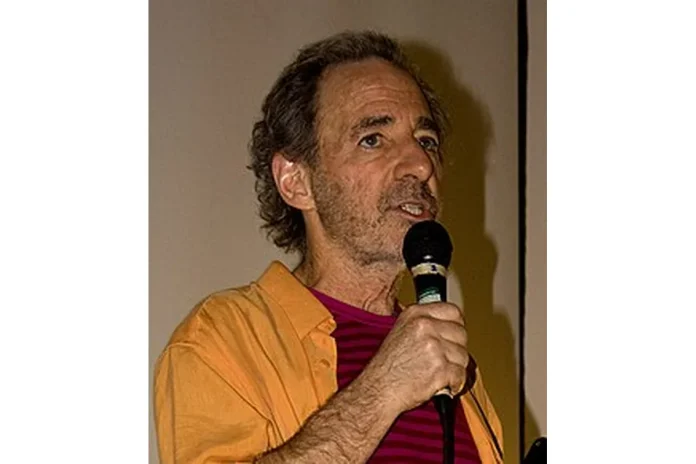
Harry Julius Shearer Bio
Harry Julius Shearer, born on December 23, 1943, is an American actor, comedian, musician, radio host, writer, and producer whose career has stretched from child roles in the early 1950s to a long-running presence in American entertainment. Born in Los Angeles, California, he first gained notice as a writer and performer on Saturday Night Live, co-created the beloved film This Is Spinal Tap, and became a defining voice on the animated series The Simpsons, where he has portrayed dozens of characters for more than three decades.
Beyond screen work, Shearer co-founded the radio comedy group The Credibility Gap, has appeared in films including The Truman Show and A Mighty Wind, directed the documentary The Big Uneasy, and has hosted the public radio program Le Show since 1983. His versatility across film, television, theatre, and radio has made him one of the most distinctive and enduring performers of his generation.
Early Life and Background
Harry Julius Shearer was born on December 23, 1943, in Los Angeles, California, the son of Dora, a bookkeeper, and Mack Shearer, a trained opera singer who ran a gas station. His parents were Jewish immigrants from Poland and Austria who had escaped Nazi-occupied Europe and met in Havana, Cuba before settling in the United States. Shearer grew up in the West Adams neighborhood of Los Angeles, where his family often listened to radio programs together, including Bob and Ray and a weekly show produced by the Jewish Theological Seminary of America.
His father died when Shearer was twelve years old, and he had his Bar Mitzvah the following year. Shearer’s path into entertainment began at age four, when his piano teacher’s daughter worked as a child actress. The teacher later became a children’s agent and took young Shearer to an audition for the radio show The Jack Benny Program. He received the role at age seven. Voice actor Mel Blanc, a regular on The Jack Benny Show, became an early mentor, and Shearer has credited Blanc with shaping his approach to comedic performance.
Shearer attended Los Angeles High School before enrolling at the University of California, Los Angeles, where he studied political science and edited the campus humor magazine, Satyr. He later attended Harvard University for a year of graduate study and worked at the state legislature in Sacramento. From 1967 to 1968, he taught English and social studies at a high school before leaving the profession following disagreements with the administration.
Path to Celebrity
Shearer’s first film appearances came as a child actor in Abbott and Costello Go to Mars and The Robe, both released in 1953. In 1957, he played the precursor to the Eddie Haskell character in the pilot episode of the television series Leave It to Beaver, though he and his family chose not to continue with the series so he could have a more normal childhood. Throughout his teenage years he continued to take on occasional work in television, film, and radio, building a foundation that would support a much larger career in adulthood.
His transition into professional comedy began in 1969 when he joined The Credibility Gap, a radio comedy group that included David Lander, Richard Beebe, and Michael McKean. The group performed at KRLA in Pasadena and later at clubs and concert venues after their radio show was canceled. After The Credibility Gap disbanded in 1976, Shearer worked with Albert Brooks, producing one of Brooks’ albums and co-writing the film Real Life in 1979. He also wrote for Martin Mull’s television series Fernwood 2 Night during this period, establishing himself as both a writer and performer.
In 1979, Shearer was hired as a writer and cast member on Saturday Night Live, becoming one of the first additions to the original 1975 cast. Recommended by Al Franken to series creator Lorne Michaels, Shearer became a recognizable name in television comedy before his most iconic role was still to come.
Harry Julius Shearer Career
Early Career (1951–1978)
Harry Julius Shearer began working in entertainment in 1951 as a child performer, with credits in radio, television, and film throughout the 1950s. His earliest notable roles included appearances on The Jack Benny Program at age seven and small parts in films such as Abbott and Costello Go to Mars and The Robe in 1953.
By the late 1960s, Shearer had shifted his focus to writing and comedy. After graduating from UCLA and briefly attending Harvard, he joined The Credibility Gap in 1969. The radio comedy group performed news parody and satire and released material that helped establish Shearer’s reputation as a sharp comedic voice. The group disbanded in 1976, after which Shearer began collaborating with Albert Brooks and writing for television, setting the stage for his move into feature films and network comedy.
Breakthrough (1979–1989)
Shearer’s first major breakthrough came when he was hired as a writer and performer on Saturday Night Live in 1979. He worked on the show during the 1979 to 1980 season and returned for the 1984 to 1985 season, contributing to one of the most influential comedy programs in American television history.
His next defining project arrived in 1984 when he co-created, co-wrote, and co-starred in This Is Spinal Tap, Rob Reiner’s satirical rockumentary. Shearer played the bass player Derek Smalls alongside Michael McKean and Christopher Guest. The film was only a modest theatrical success at first but later developed a lasting cult following. It was ranked 29th on the American Film Institute’s list of the top 100 comedy movies in American cinema and was selected for preservation in the United States National Film Registry by the Library of Congress. The three actors also released three Spinal Tap albums and continued to perform as the band for years afterward.
In 1989, Shearer joined the cast of the animated sitcom The Simpsons at the invitation of creator Matt Groening. Although initially reluctant because he had heard voice acting was isolating, Shearer agreed after learning the cast would record their lines together. His work on the program would go on to define much of his public identity.
Notable Works and Milestones
Shearer’s signature work is his long-running voice performance on The Simpsons, where he portrays Mr. Burns, Waylon Smithers, Ned Flanders, Reverend Lovejoy, Principal Skinner, Kent Brockman, Otto Mann, and many other characters. He also remains widely recognized for This Is Spinal Tap, which helped establish the mockumentary format in popular film, and for his role in the folk music mockumentary A Mighty Wind. He has earned a Primetime Emmy Award for Outstanding Character Voice-Over Performance for the season 25 episode Four Regrettings and a Funeral, becoming the last of the six regular voice actors from The Simpsons to win the award.
Harry Julius Shearer Award Nominations
Across his decades-long career in television, film, and radio, Harry Julius Shearer has earned recognition from several major industry organizations. His work on The Simpsons and his satirical public radio program Le Show has resulted in nominations for Primetime Emmy Awards and Grammy Awards, reflecting his standing among his peers in comedy and voice performance.
Harry Julius Shearer Awards Won
Harry Julius Shearer has won a Primetime Emmy Award for Outstanding Character Voice-Over Performance for his work on The Simpsons, specifically for the season 25 episode Four Regrettings and a Funeral. The award cemented his reputation as one of the most accomplished voice actors in American television.
Harry Julius Shearer Family
Harry Julius Shearer was born to Mack Shearer, a trained opera singer who also ran a gas station, and Dora, a bookkeeper. His parents were Jewish immigrants from Poland and Austria respectively, and they met in Havana, Cuba before settling in the United States. His father died when Shearer was twelve years old.
Personal Life
Shearer married folk singer Penelope Nichols in 1974, and the couple divorced in 1977. He has been married to Welsh singer-songwriter Judith Owen since 1993, and the couple launched their own record label, Courgette Records, in 2005. Shearer primarily resides in the French Quarter of New Orleans, Louisiana, and also maintains homes in Santa Monica, California, and Notting Hill, London. He first visited New Orleans in 1988 and has attended the New Orleans Jazz and Heritage Festival every year since.