
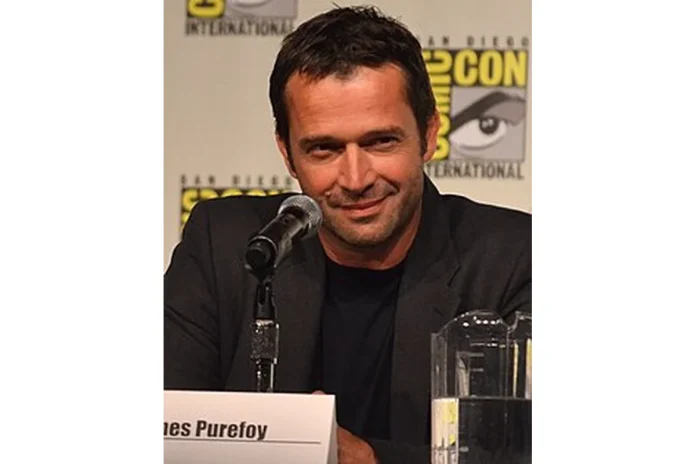
James Purefoy Bio
James Brian Mark Purefoy is an English actor whose work spans theatre, film and television. He gained prominence playing Mark Antony in HBO’s Rome and has starred in a variety of period dramas and thrillers, including The Following. A stage-trained performer, Purefoy has performed with the Royal Shakespeare Company and on London’s West End, bringing classical training to modern roles. On television, he has led Hap and Leonard for SundanceTV and joined Altered Carbon as Laurens Bancroft, while featuring in Pennyworth as Captain Gulliver ‘Gully’ Troy. His film work includes A Knight’s Tale and V for Vendetta. With a career stretching from the stage to blockbuster franchises, Purefoy is known for his versatility, intensity and long-standing presence in British and international productions.
Early Life and Background
James Brian Mark Purefoy was born on 3 June 1964 in Taunton, Somerset, England. He is the eldest son of Anthony Chetwynd Purefoy and Shirley Taylor. Purefoy boarded at Sherborne School but left with only one O-level qualification.
Determined to improve his education, Purefoy attended night school and earned 11 additional O-levels before completing his A-levels at Brooklands College in Weybridge. He worked as a porter at Yeovil District Hospital before deciding to pursue acting professionally. Purefoy later studied at the Central School of Speech and Drama, where he earned a Bachelor of Arts degree.
During his formative years, Purefoy developed political views that differed from his father’s conservative leanings. His father worked for the Conservative Party, and the two engaged in long discussions about politics. These early experiences shaped Purefoy’s perspective as a young radical actor preparing to enter the professional theatre world.
Path to Acting
Purefoy’s professional acting career began in 1987 following his training at the Central School of Speech and Drama. His early roles included Romeo in Romeo and Juliet in Leatherhead, Walter in Mary Morgan at the Riverside Studios, and Alan Strang in Equus on tour. These performances established his reputation as a promising stage actor capable of handling demanding classical roles.
In 1988, Purefoy joined the prestigious Royal Shakespeare Company, marking a significant milestone in his early career. With the RSC, he appeared in productions including The Constant Couple, Macbeth, The Tempest, and The Man Who Came to Dinner. He also portrayed Edgar in King Lear, demonstrating his range within the classical repertoire.
Purefoy continued to build his stage credentials throughout the 1990s with roles at major British theatres. He played Laertes in Hamlet at the Bristol Old Vic in 1991, appeared in productions at the Hampstead Theatre and Globe Theatre, and performed Biff in Death of a Salesman at the West Yorkshire Playhouse alongside Ken Stott and Jude Law. This extensive theatre background provided the foundation for his transition into television and film work.
James Purefoy Career
Early Career (1987-2000)
Purefoy made his television debut in 1991, playing James McCarthy in The Boscombe Valley Mystery, an episode of Granada’s The Case-Book of Sherlock Holmes. This early television role showcased his ability to handle period material. In 1997, he gained wider recognition as Nicholas Jenkins in the four-part Channel 4 miniseries A Dance to the Music of Time, establishing himself as a reliable presence in British costume dramas.
Throughout the late 1990s, Purefoy appeared in numerous television productions including Sharpe’s Sword, The Tenant of Wildfell Hall, The Prince and the Pauper, and The Mayor of Casterbridge. His film work during this period included Tom Bertram in the 1999 production of Mansfield Park. Purefoy was also screen tested for the role of James Bond in 1995 for GoldenEye, though the role ultimately went to Pierce Brosnan. His name continued to circulate as a potential Bond candidate throughout the early 2000s.
Breakthrough (2001-2006)
Purefoy achieved significant international recognition with his role as Edward, the Black Prince in the 2001 film A Knight’s Tale. The film’s commercial success introduced him to a global audience. In 2004, he appeared as Rawdon Crawley in Vanity Fair alongside Reese Witherspoon, further cementing his reputation in period film adaptations.
The most significant breakthrough of Purefoy’s career came with his portrayal of Mark Antony in the HBO/BBC historical drama Rome, which premiered in 2005. His performance as the ambitious Roman general received critical acclaim and became his signature role. The series ran for two seasons and established Purefoy as a leading actor in prestigious television productions.
In 2006, Purefoy was originally cast as the title character in V for Vendetta but left the production six weeks into filming due to creative differences. Parts of his performance remain in the final film, though he was replaced by Hugo Weaving. Despite this setback, the year proved pivotal as Purefoy’s profile continued to rise following the success of Rome.
Notable Works and Milestones
In 2009, Purefoy starred as the titular character in Solomon Kane, an adaptation of Robert E. Howard’s pulp hero. That same year, he headlined the NBC series The Philanthropist as billionaire Teddy Rist. His career reached new heights in 2013 when he starred as Joe Carroll, a charismatic serial killer, in the Fox thriller series The Following, playing the antagonist to Kevin Bacon’s lead character.
From 2016 to 2018, Purefoy starred as Hap Collins in the SundanceTV series Hap and Leonard. In 2018, he portrayed Laurens Bancroft in the first season of Netflix’s Altered Carbon. Most recently, he joined the cast of Pennyworth in its second season as Captain Gulliver Troy, continuing into the third season in 2022. Purefoy has also appeared in A Discovery of Witches as Lord Phillipe de Clermont and portrayed the father of the Mitford sisters in the 2025 series Outrageous.
James Purefoy Award Nominations
Throughout his career spanning theatre, television and film, James Purefoy has delivered acclaimed performances across various genres. While he has received recognition from critics and audiences alike for his work in productions ranging from the Royal Shakespeare Company to HBO’s Rome, specific award nominations information is not available from the verified sources provided.
James Purefoy Awards Won
James Purefoy has built a distinguished career with notable performances in classical theatre, television dramas and feature films. His portrayal of Mark Antony in Rome remains one of his most celebrated roles. While he has received professional recognition throughout his decades-long career, specific awards won information is not available from the verified sources provided.
James Purefoy Family
James Purefoy is the son of Anthony Chetwynd Purefoy and Shirley Taylor. His father worked for the Conservative Party, and Purefoy has described having long political discussions with him during his youth despite their differing views. Purefoy is the eldest son in the family.
Personal Life
Purefoy married actress Holly Aird in 1996. The couple had one son together before divorcing in 2002. In 2014, Purefoy married art historian Jessica Adams. They have three children together: a daughter and two sons. Purefoy divides his time between his professional commitments and his family life.