
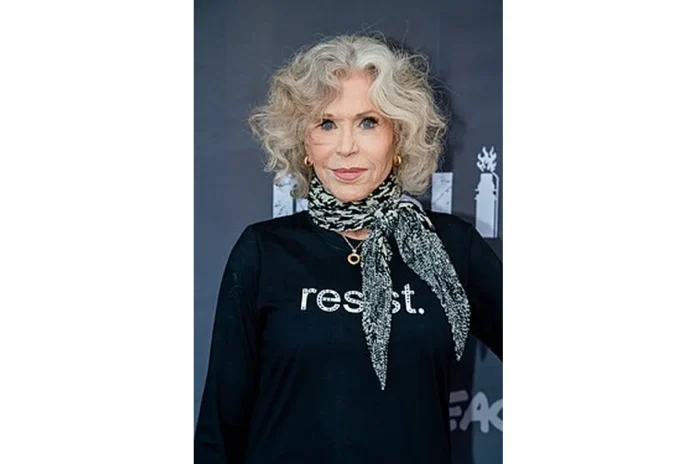
Jane Fonda Bio
Jane Seymour Fonda (born December 21, 1937) is an American actress and activist whose career has spanned seven decades across stage, film, and television. She rose to prominence in the 1960s and 1970s with a string of acclaimed performances and became a prominent public figure for her political activism during the Vietnam War era. Fonda has won two Academy Awards for Best Actress for Klute (1971) and Coming Home (1978), and she has earned nominations and honors across Golden Globes, BAFTA, and Emmys. Beyond acting, she pioneered fitness training with the Jane Fonda Workout and has built a lifelong body of work as a producer, author, and advocate for women’s rights, environmental causes, and global humanitarian issues.
Early Life and Background
Jane Seymour Fonda was born on December 21, 1937, at Doctors Hospital in Yorkville, Manhattan, in New York City. Her parents were Canadian-born socialite Frances Ford Seymour and American actor Henry Fonda, and her younger brother, Peter Fonda, also became an actor. She was named for Jane Seymour, the third wife of King Henry VIII, and grew up in a household shaped by her father’s stardom and her mother’s fragile mental health. In 1950, when Fonda was twelve years old, her mother died by suicide while undergoing treatment at a psychiatric hospital in Beacon, New York. That same year, her father married socialite Susan Blanchard.
Fonda attended Greenwich Academy in Greenwich, Connecticut, the Emma Willard School in Troy, New York, and Vassar College in Poughkeepsie, New York. Before pursuing acting, she worked as a model and appeared twice on the cover of Vogue magazine. Her interest in performance deepened in 1954, when she joined her father on stage at the Omaha Community Playhouse in a charity production of The Country Girl. After dropping out of Vassar, she spent six months in Paris studying art.
Upon returning to the United States in 1958, Fonda met actor and acting teacher Lee Strasberg, who told her that she had real talent. The encounter marked a turning point in her life and redirected her focus toward acting at the Actors Studio in New York. That same determination carried her into her professional debut and laid the foundation for a career that would soon span film, stage, and television.
Path to Acting
Fonda made her professional stage debut in 1959 and quickly moved into film, appearing in early roles that introduced her to American audiences. She made her screen debut in the romantic comedy Tall Story (1960) and earned a Tony Award nomination for Best Featured Actress in a Play for the 1960 Broadway production There Was a Little Girl. During the early 1960s, she averaged nearly two films a year, building a reputation through comedies and dramas including Period of Adjustment (1962), Sunday in New York (1963), and Walk on the Wild Side (1962), the latter earning her a Golden Globe for Most Promising Newcomer.
Her breakthrough arrived with the comedy Western Cat Ballou (1965), co-starring Lee Marvin, which received five Academy Award nominations and placed Fonda among the top box-office draws of the year. She followed it with The Chase (1966) opposite Robert Redford and Marlon Brando, and the science fiction spoof Barbarella (1968), which established her as a major screen presence. Her performance in the drama They Shoot Horses, Don’t They? (1969) earned her first Academy Award nomination for Best Actress and marked a pivotal artistic shift toward more demanding roles.
Jane Fonda Career
Early Career (1959-1969)
Fonda’s earliest work in stage and film established her as one of the most talked-about new performers of the era. Her Tony-nominated Broadway debut and screen debut in Tall Story (1960) drew immediate attention, and her 1960s filmography combined studio comedies with international projects filmed in France. In Walk on the Wild Side, her portrayal of a prostitute earned her a Golden Globe Award for Most Promising Newcomer, and she soon became a regular presence on the lists of top-grossing stars.
By the end of the decade, Fonda had earned her first Academy Award nomination for Best Actress for They Shoot Horses, Don’t They? (1969), a critical success that redefined her career. She had also become a recognizable cultural figure, balancing mainstream stardom with independent and politically engaged projects.
Breakthrough (1970-1979)
Fonda’s first Academy Award for Best Actress came in 1971 for her portrayal of a high-priced call girl in Alan J. Pakula’s neo-noir thriller Klute, a role widely regarded as one of the defining performances of her career. She then starred in A Doll’s House (1973), Tout Va Bien (1972) for Jean-Luc Godard, and a series of commercially successful films that included Fun with Dick and Jane (1977), Julia (1977), and California Suite (1978). Her portrayal of playwright Lillian Hellman in Julia earned her a BAFTA Award, a Golden Globe, and another Academy Award nomination.
In 1978, Fonda won her second Academy Award for Best Actress for Coming Home, in which she played a woman in love with a disabled Vietnam War veteran. The film was both a critical and commercial success, and she followed it with The China Syndrome (1979), The Electric Horseman (1979), and 9 to 5 (1980). By the late 1970s, the Motion Picture Herald ranked her as Hollywood’s most bankable actress.
The 1980s brought continued acclaim. Fonda appeared with her father Henry Fonda in On Golden Pond (1981), a film she helped develop and which brought her father his only Academy Award for Best Actor. She won a Primetime Emmy Award for Outstanding Lead Actress in a Limited or Anthology Series or Movie for The Dollmaker (1984), and earned additional Academy Award nominations for The Morning After (1986) and Agnes of God (1985).
Notable Works and Milestones
Fonda’s signature works include Klute (1971), Coming Home (1978), They Shoot Horses, Don’t They? (1969), Julia (1977), 9 to 5 (1980), and On Golden Pond (1981). She also earned recognition for later performances in Monster-in-Law (2005), Youth (2015), Our Souls at Night (2017), and Book Club (2018). Her seven Academy Award nominations, two Academy Award wins, two BAFTA Awards, eight Golden Globe Awards, and one Primetime Emmy Award underscore the scale of her achievement across more than six decades.
Jane Fonda Award Nominations
Jane Fonda has received a remarkable range of nominations across film and television over the course of her career. Verified nominations from official records include her Best Actress nomination at the 1980 Academy Awards for The China Syndrome (1979), and her BAFTA Award nomination for Best Actor in a Leading Role at the 1991 ceremony for Born on the Fourth of July (1989). She has also earned multiple nominations at the Golden Globes, Emmys, and Tony Awards across the decades, reflecting consistent recognition from major industry organizations.
Jane Fonda Awards Won
Fonda has won two Academy Awards for Best Actress, the first for Klute in 1971 and the second for Coming Home in 1978. She has also received BAFTA Awards, Golden Globe Awards, a Primetime Emmy Award, and a range of honorary honors, including the AFI Life Achievement Award in 2014 and the Cecil B. DeMille Award in 2021. Her two Oscar wins for Klute (1971) and Coming Home (1978) remain the cornerstone of her competitive awards record.
| Award | Wins | Year |
|---|---|---|
| Academy Award for Best Actress (Klute) | 1 | 1972 |
| Academy Award for Best Actress (Coming Home) | 1 | 1979 |
Jane Fonda Family
Jane Fonda is the daughter of actor Henry Fonda and socialite Frances Ford Seymour, and the younger sister of actor Peter Fonda. Her niece, Bridget Fonda, is also an actress, continuing the family’s deep ties to the film industry. Fonda married French film director Roger Vadim in 1965 and had a daughter, Vanessa Vadim, born on September 28, 1968. She later married political activist Tom Hayden in 1973, and their son, Troy O’Donovan Garity, was born on July 7, 1973.
Personal Life
Fonda married Roger Vadim in 1965, divorced him in 1973, then married Tom Hayden the same year and divorced him in 1990. She married media mogul Ted Turner in 1991, divorced him in 2001, and later had a long-term relationship with record producer Richard Perry from 2009 to 2017. In 1982, she and Hayden unofficially adopted a teenager, Mary Luana Williams. Beyond her family life, Fonda has channeled her public profile into decades of activism for civil rights, women’s rights, environmental causes, and opposition to the Iraq War.