
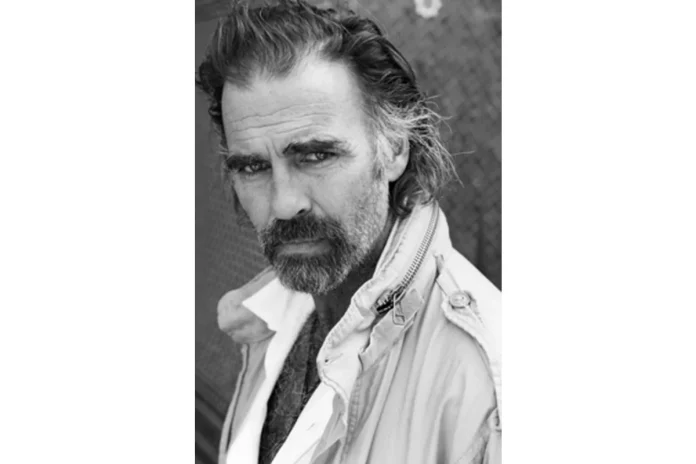
Jeff Fahey Bio
Jeffrey David Fahey (born November 29, 1952) is an American actor whose career has spanned film and television for more than four decades. Born in Olean, New York, into an Irish-American family, Fahey traveled widely as a teenager before returning to the United States to pursue acting. He first gained widespread recognition with roles such as Duane Duke in Psycho III (1986), Pete Verill in White Hunter Black Heart (1990), and Jobe Smith in The Lawnmower Man (1992).
Fahey later reached a new generation of audiences as Captain Frank Lapidus on the ABC series Lost (2008–2010). He has built a long-running creative partnership with director Robert Rodriguez, appearing in Planet Terror (2007), Machete (2010), and Alita: Battle Angel (2019). His body of work demonstrates a striking range across genres, formats, and continents.
Early Life and Background
Jeffrey David Fahey was born on November 29, 1952, in Olean, New York. He was the sixth of thirteen siblings in an Irish-American family. His mother, Jane, was a homemaker, while his father, Frank Fahey, worked at a clothing store. The family later moved to Buffalo, New York, where Fahey was raised from the age of ten.
He attended Father Baker’s high school in Buffalo, where he first encountered performance and discipline that would later shape his artistic life. At the age of 17, Fahey left home and began a long period of travel and self-discovery. He hitchhiked to Alaska, backpacked through Europe, and worked on an Israeli kibbutz. These formative experiences gave him a broad worldview before he committed to a career on stage and screen.
Path to Acting
Fahey began his professional performing career relatively late, winning a full scholarship to study dance at the Joffrey Ballet School at the age of 25. The rigorous training he received there provided a strong physical and emotional foundation for his later work as an actor. He went on to perform in theaters across the United States and on Broadway, sharpening his craft through stage roles.
His first major television role came when he was cast as Gary Corelli on the long-running soap opera One Life to Live. The daily demands of serial drama helped him develop the consistency and emotional range that would define his screen presence. This early television work positioned Fahey for a transition into feature films in the mid-1980s.
Jeff Fahey Career
Early Career (1980–1985)
Fahey began working professionally in 1980, building his resume through stage productions and small screen appearances. His training at the Joffrey Ballet School and his work on Broadway gave him a versatile performance base that translated well to camera work. Television provided his first consistent platform, most notably through his role on One Life to Live.
In 1985, Fahey received his first major film role as Tyree in the Western Silverado. The film, which featured an ensemble cast, introduced him to feature filmmaking and established him as a presence worth watching in period pieces. That same year, his profile continued to grow with a memorable guest appearance on Miami Vice, in which he played gun dealer Eddie Kaye in the third-season premiere.
Breakthrough (1986–1995)
Fahey’s breakthrough arrived in 1986 when he co-starred with Anthony Perkins in Psycho III, playing Duane Duke, a money-desperate guitarist hired by Norman Bates. The role placed him inside one of the most iconic horror franchises in cinema history and earned him notice from critics and genre fans alike. The following year, he appeared in additional projects that cemented his reputation as a reliable screen performer.
In 1990, Fahey starred in both Impulse and White Hunter Black Heart, with the latter directed by Clint Eastwood and featuring him as Pete Verill. The films placed him opposite major directors and leading stars, further elevating his standing. He also played the title role in the 1990 television movie Parker Kane opposite Marisa Tomei.
In 1992, Fahey starred alongside Pierce Brosnan in the science fiction thriller The Lawnmower Man, playing the troubled Jobe Smith. The role became one of his most recognized performances and remains a touchstone of his filmography. He continued to diversify with the 1995 adventure film Eye of the Wolf, directed by Arnaud Sélignac and based on the novel KAZAN by James Oliver Curwood, and with his lead role as Winston McBride on the ABC series The Marshal.
Notable Works and Milestones
Fahey’s signature works include Psycho III, White Hunter Black Heart, and The Lawnmower Man, each of which showcased different sides of his range, from horror and drama to science fiction. His collaborations with Robert Rodriguez, including Planet Terror (2007), Machete (2010), and Alita: Battle Angel (2019), further highlighted his adaptability across decades of filmmaking. His portrayal of Captain Frank Lapidus on Lost brought him to a global television audience and remains one of his most recognizable roles.
Jeff Fahey Award Nominations
Publicly verifiable nomination records for Jeff Fahey are limited, and the available sources do not provide a clear, comprehensive list of nominations across his career. Based on the materials reviewed, no specific award nominations can be confirmed at this time.
Jeff Fahey Awards Won
Jeff Fahey received the Humanitarian Award at the Monaco Streaming Film Festival in 2022, recognizing his long-standing humanitarian efforts. These efforts have included time spent in Afghanistan in 2006 and 2007 supporting the American University of Afghanistan and launching a project to assist orphans in Kabul. He has also worked with the U.S. Committee for Refugees and Immigrants, focusing on the practice of warehousing and advocating on behalf of Sahrawi refugees in Algeria.
Jeff Fahey Family
Jeff Fahey was raised in a large Irish-American family as the sixth of thirteen siblings. His mother, Jane, was a homemaker, and his father, Frank Fahey, worked at a clothing store. The family provided a working-class foundation in Olean and later Buffalo, New York, that shaped his early years.
Personal Life
Jeff Fahey has been married to Rosetta Faye Harris since 1984. The couple has maintained a long-term partnership away from the spotlight of Hollywood. Fahey has also been widely recognized for his humanitarian work, which has become an important part of his life beyond acting.