
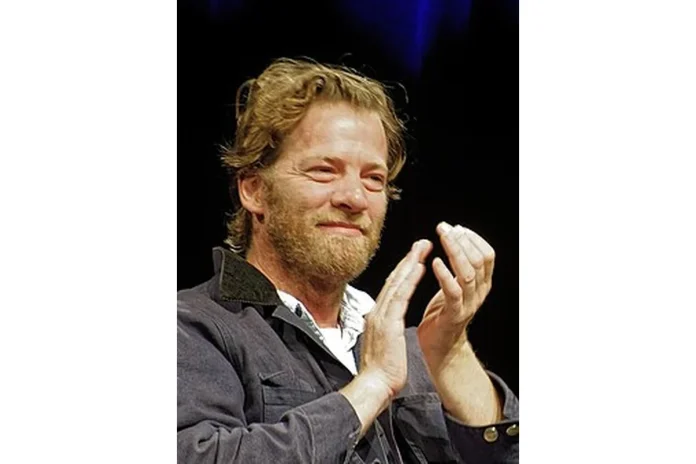
Jefferson Hall Bio
Jefferson Hall (born 6 December 1977) is an English actor trained at the Royal Central School of Speech and Drama. Hall has built a diverse television and film career since 2005, appearing in historical sagas, science fiction and mainstream films. He is occasionally credited as Robert Hall in earlier work and is best known for television roles including Hugh of the Vale in Game of Thrones and the twin characters Jason Lannister and Tyland Lannister in House of the Dragon, as well as for film appearances in Tenet and Oppenheimer.
Hall’s work spans children’s genre television, large-scale period dramas and supporting roles in major motion pictures. His training in London informs a stage-grounded approach that he applies to both screen work and genre productions. His career demonstrates steady progression from supporting television parts toward recurring and high-profile ensemble roles in prestige projects.
Early Life and Background
Jefferson Hall was born on 6 December 1977 in Coventry, England. He grew up in the United Kingdom and later pursued formal dramatic training in London. The move to a conservatory environment provided technical training in voice, movement and scene work that shaped his approach as a screen performer.
Hall trained at the Royal Central School of Speech and Drama, where he completed study toward a Bachelor degree in performance. That education established foundational skills that he later applied across television series and feature films, enabling him to move between genre productions and period drama with equal facility.
Early credits in Hall’s career showed a predisposition for character roles and ensemble casts. He was occasionally credited as Robert Hall in his earlier screen appearances, a credit that appears in some records from the start of his professional work. The conservatory training and early screen work together set the stage for steady professional growth beginning in the mid-2000s.
Path to Celebrity
Hall’s path to wider recognition followed a sequence of supporting appearances on British television and in international co-productions. He gained visibility through recurring television work that allowed casting directors to see his capacity for physical performance and period-style characterization. These early opportunities included genre projects aimed at younger audiences and larger-scale historical series.
Between 2011 and the mid-2010s Hall began to secure parts in internationally distributed series, which raised his profile outside the United Kingdom. His ability to inhabit distinct character types—ranging from a medieval soldier to a modern supporting figure in a film—helped him transition from national television to projects with broader audiences.
Hall’s casting in ensemble and recurring roles opened the way to higher-profile supporting parts in feature films. The combination of conservatory training, steady television work and an ability to adapt to different production demands contributed to his steady rise within television casting circles and film production teams.
Jefferson Hall Career
Early Career (2005–2011)
Jefferson Hall’s professional screen career commenced in 2005. During the first phase of his career he accumulated a range of supporting credits that emphasized reliability and versatility in ensemble casts. These early years established him as a character actor capable of meeting the demands of period pieces and genre storytelling.
In this period Hall’s credits include roles that placed him in historical and fantasy settings, where his training supported the physical and vocal requirements of period work. These roles laid the groundwork for casting in larger international productions that followed in the next phase of his career.
Breakthrough (2011–present)
Hall’s visibility increased with television appearances on internationally successful series. He played Hugh of the Vale in Game of Thrones, a series that became a global entertainment phenomenon and brought attention to many supporting performers. That appearance is among the earliest high-profile entries in his screen résumé.
He next reached younger audiences as Varg in Wizards vs Aliens on CBBC and appeared as Torstein in Vikings, a recurring role in a widely distributed historical drama. These parts across distinct series highlighted Hall’s range and positioned him for continued television success through the 2010s. His work on Vikings and Wizards vs Aliens demonstrated competence with action-driven storytelling and character-focused scenes.
Hall expanded his film credits with a supporting role as Aaron Korey in Halloween (2018) and appeared in Christopher Nolan’s Tenet (2020). He continued to work in both television and film with casting that leveraged his experience in ensemble settings and period material. In 2022 he joined HBO’s House of the Dragon playing the twin characters Jason Lannister and Tyland Lannister, roles that call for a controlled distinction between two related characters within a complex narrative.
In 2023 Hall appeared in Oppenheimer, portraying Haakon Chevalier in a major feature film. That appearance further extended his profile in high-profile theatrical releases and continues a pattern of alternating between television series and significant film projects. His screen work in the 2020s reflects a trajectory toward recurring parts in prestige television alongside notable supporting roles in contemporary cinema.
Notable Works and Milestones
Significant entries in Jefferson Hall’s body of work include his portrayal of Hugh of the Vale in Game of Thrones, Torstein in Vikings, Varg in Wizards vs Aliens, the twin roles Jason Lannister and Tyland Lannister in House of the Dragon, and film appearances in Halloween, Tenet and Oppenheimer. These roles mark milestones in his transition from early supporting parts to recurring television characters and recognized supporting film roles. Across these projects, Hall’s conservatory training and experience in period and genre productions remain evident in his performances.