
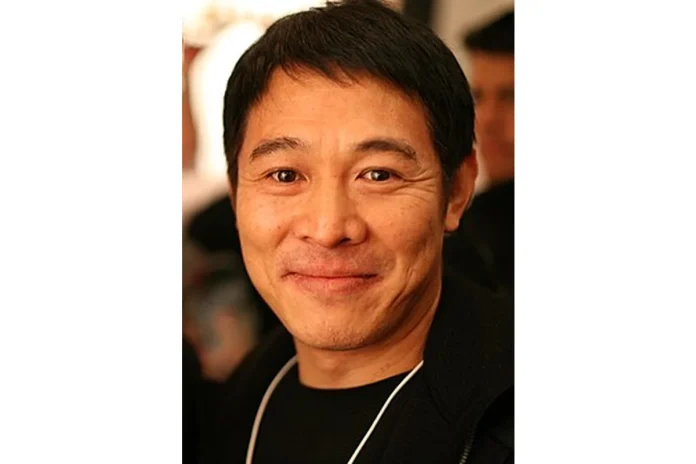
Jet Li Bio
Jet Li Lianjie, born Li Lianjie on 26 April 1963 in Beijing, China, is a martial artist, actor, and philanthropist whose career has spanned more than forty years. Widely regarded as one of the most iconic Chinese film stars and one of the greatest martial artists in the history of cinema, Jet Li is credited with reviving the Hong Kong kungfu film genre. He has worked as a film producer and director in addition to his work in front of the camera, and he is recognized internationally for both his athletic achievements and his charitable efforts.
Trained from childhood in the Chinese sport of wushu, Jet Li became a national champion before transitioning to the screen with his 1982 debut in the film Shaolin Temple. Over the following decades he built a filmography that bridges mainland China, Hong Kong, and Hollywood, and he has also devoted significant time to philanthropy through the One Foundation and other humanitarian causes.
Early Life and Background
Jet Li was born in Beijing as the youngest of two boys and two girls. His ancestral home is in Shenyang, in the province of Liaoning. When he was two years old, his father died, and the family lived in poverty during his early years.
His talent for wushu was noticed at the age of eight while he was practicing at a summer course at the Beijing Sports and Exercise School, which is now known as Beijing Sport University. Renowned coaches Li Junfeng and Wu Bin made extra efforts to help the young athlete develop, and Wu Bin even bought food for Jet Li’s family to boost his protein intake. At the age of eleven, Jet Li became a member of the 1974 China national wushu team, which traveled to the United States during the era of ping-pong diplomacy and performed in Hawaii, San Francisco, New York, Washington, D.C., Mexico City, and Hong Kong. When the group performed for President Richard Nixon, Jet Li famously replied to an offer to become his personal bodyguard by saying that he wanted to defend his one billion Chinese countrymen.
After the Beijing Wushu Team was founded in November 1974, Jet Li became a member and went on to become the national all-around champion four times between 1975 and 1979. He mastered several styles of wushu, especially changquan and fanziquan, and also studied baguazhang, taijiquan, xingyiquan, zuiquan, yingzhaoquan, and tanglangquan, along with weapons including gunshu, daoshu, jianshu, and sanjiegun. He retired from competitive wushu at the age of eighteen because of a knee injury, then served briefly as an assistant coach for the Beijing Wushu Team. In 2023, he was inducted into the Martial Arts History Museum Hall of Fame.
Path to Celebrity
Jet Li’s fame as a competitive wushu champion opened the door to a career in film, beginning in mainland China and then expanding into Hong Kong. He acquired his screen name in 1982 in the Philippines, where a publicity company found his real name difficult to pronounce and chose Jet Li as a name that suggested a fast-rising career. The nickname also echoed a childhood nickname, Jet, given to him by his coaches for his speed and grace while training with the Beijing Wushu Team.
He made his film debut in the 1982 Hong Kong film Shaolin Temple, which broke box office records in China by grossing CN¥161,578,014 and selling an estimated 500 million tickets. The sequel Kids From Shaolin sold an estimated 490 million tickets, becoming the highest-grossing film in China in 1984. These early successes established Jet Li as a leading action star across Asia and laid the foundation for his later international career.
Jet Li Career
Early Career (1982–1990)
Following the success of Shaolin Temple, Jet Li appeared in two sequels in 1984 and 1986, expanding his fan base across the Chinese-speaking world. He took his first step behind the camera with Born to Defence in 1988, which served as his directorial debut, and he continued to build his reputation with films such as Dragon Fight in 1989.
During this period he also developed the martial arts foundation that would define his later film work, drawing on the changquan and weapons training he had honed as a wushu champion. His early films were enormously popular in Asian markets, and by the end of the decade he was one of the most recognized action stars in the region.
Breakthrough (1991–2000)
Jet Li cemented his leading-man status with the Once Upon a Time in China series from 1991 to 1993, in which he portrayed the Chinese folk hero Wong Fei-hung. He followed this with a string of well-received martial arts films, including Swordsman II in 1992, Fong Sai-yuk in 1993, Fist of Legend in 1994, High Risk in 1995, Black Mask in 1996, and Hitman in 1998.
He made his Hollywood debut in 1998 as a villain in Lethal Weapon 4, then took his first Hollywood leading role in Romeo Must Die in 2000 alongside singer Aaliyah. In 1998 he was also presented with the Visionary Award by East West Players, the oldest Asian American theatre in the United States, with the award presented by filmmaker John Woo. The award recognized artists who have raised the visibility of the Asian Pacific American community through theatre, film, and television.
Notable Works and Milestones
Among Jet Li’s most celebrated works is the 2002 wuxia epic Hero, directed by Zhang Yimou, which became the highest-grossing motion picture in Chinese film history at the time and remains one of the most critically acclaimed films of his career. He later delivered widely praised performances in the martial arts drama Fearless in 2006, in which he portrayed the real-life martial artist Huo Yuanjia, and in the period war film The Warlords in 2007, for which he won the Hong Kong Film Award for Best Actor. Other signature works include Fist of Legend, the Once Upon a Time in China series, and his portrayal of the Silent Monk in The Forbidden Kingdom in 2008, which marked his first on-screen collaboration with Jackie Chan.
Jet Li Award Nominations
Throughout his career, Jet Li has been recognized by industry organizations in Asia and the United States through nominations tied to his film work and his contributions to Asian American visibility in entertainment. His receipt of the Visionary Award from East West Players in 1998, presented by filmmaker John Woo, reflects the broader industry acknowledgment of his impact on Asian representation in film and theatre.
Jet Li Awards Won
Jet Li’s most prominent verified award is the Hong Kong Film Award for Best Actor, which he earned for his performance in the 2007 period war film The Warlords. He has also been honored as the first Goodwill Ambassador of the International Federation of Red Cross and Red Crescent Societies, a role he accepted in September 2010 in recognition of his humanitarian work. In 2023, he was inducted into the Martial Arts History Museum Hall of Fame.
Jet Li Family
Jet Li married his Beijing Wushu Team fellow member and Kids From Shaolin co-star Huang Qiuyan in 1987, and the couple had two daughters, Si and Taimi. He later met actress Nina Li Chi during the filming of Dragon Fight in 1989, and he divorced Huang Qiuyan in 1990.
In 1999, Jet Li married Nina Li Chi at his villa in Arcadia, California, which he owned from 1998 to 2004. The couple have two daughters, Jane, born in 2000, and Jada, born in 2002.
Personal Life
In 1997, Jet Li obtained United States citizenship, which he renounced in April 2009. In July 2009, an executive chairperson of the One Foundation confirmed that he had become a Singaporean citizen, and he confirmed his Singaporean citizenship in 2011. In 1998, he converted to Tibetan Buddhism while promoting Lethal Weapon 4 in Taiwan, and his master is Lho Kunsang.
In 2013, Jet Li revealed that he had been living with hyperthyroidism for the previous three years, and in 2016 he stated that he was accepting fewer film offers because of his charity work rather than his illness, from which he had recovered. He enjoys playing badminton and table tennis, riding his bicycle, reading, and meditating, and he collects rare Tibetan beads. He has lived in Singapore.