
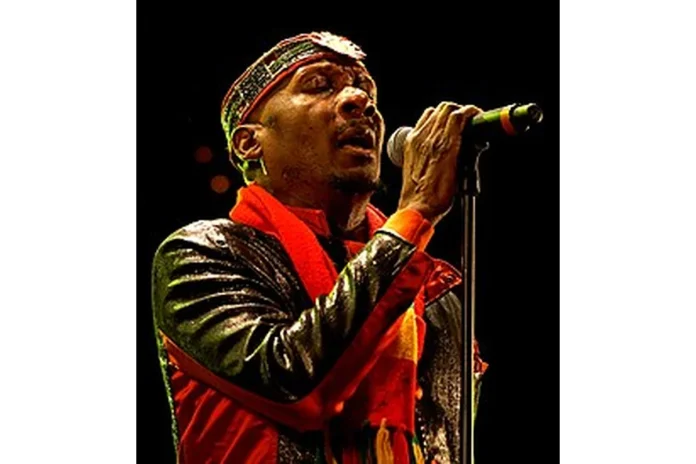
Jimmy Cliff Bio
Jimmy Cliff, born James Chambers on 30 July 1944 in Saint James, Jamaica, was a Jamaican singer, musician and songwriter who played a central role in popularising ska, rocksteady, soul and reggae across the world. Rising to fame in the 1960s with tracks such as “Wonderful World, Beautiful People” and “Many Rivers to Cross”, he later starred in the landmark 1972 film The Harder They Come, whose soundtrack introduced Jamaican music to global audiences. Across a career that began in 1962 and continued for more than six decades, he won two Grammy Awards, received Jamaica’s Order of Merit and was inducted into the Rock and Roll Hall of Fame in 2010.
Cliff is widely remembered as one of only two Jamaicans in the Rock and Roll Hall of Fame, the other being Bob Marley, and as a global ambassador for reggae. He died on 24 November 2025 in Kingston, Jamaica, at the age of 81, following a period of hospitalisation.
Early Life and Background
Jimmy Cliff was born James Chambers on 30 July 1944 in the parish of Saint James, Jamaica, the second youngest of nine children in his family. He began writing songs while still attending primary school in Saint James, drawing early inspiration from a neighbour’s sound system that played the popular music of the day. Growing up in a large household in rural Jamaica shaped his appreciation for community gatherings and the music that brought people together.
When he was fourteen years old, his father took him to Kingston, the capital city and the centre of Jamaica’s music industry. It was there that he adopted the stage name Jimmy Cliff, an allusion to the career heights he hoped to scale. The move to Kingston placed him at the heart of a thriving cultural scene that would soon produce some of the most influential sounds of the twentieth century.
Although formal details of his schooling remain limited, his formative years in Kingston introduced him to producers, performers and recording studios. This early exposure to the professional music world laid the groundwork for a career that would later carry Jamaican sounds to international audiences.
Path to Music
As a teenager in Kingston, Jimmy Cliff sought out producers while he was still at school, trying without success to get his songs recorded, and he entered local talent contests. In a well-known story, he pushed his way into a closing record store and restaurant and convinced the producer Leslie Kong to enter the recording business, starting with him. After two early singles that failed to make much impression, his career took off when “Hurricane Hattie” became a hit while he was seventeen years old. The record was produced by Kong, with whom Cliff remained closely tied until Kong’s death from a heart attack in 1971.
Cliff’s early local singles included “King of Kings”, “Dearest Beverley”, “Miss Jamaica” and “Pride and Passion”. In 1964 he was chosen as one of Jamaica’s representatives at the 1964 New York World’s Fair, and that same year he was featured in the program This Is Ska! alongside Prince Buster, Toots and the Maytals, and Byron Lee and the Dragonaires. He later signed to Island Records and moved to the United Kingdom, where the label initially attempted to position him for rock audiences.
His international debut album, Hard Road to Travel, was released in 1967 to strong reviews and included “Waterfall”, a song co-written by members of the band Nirvana, which became a hit in Brazil and won the International Song Festival. This period of training, festival work and cross-cultural exposure set the stage for his breakthrough as a global recording artist.
Jimmy Cliff Career
Early Career (1962–1969)
Jimmy Cliff’s recording career began in 1962, when he was still a teenager in Kingston. Working with producer Leslie Kong, he released a string of local singles before breaking through with “Hurricane Hattie”. Over the next several years he built a steady following in Jamaica, appeared at international events such as the 1964 New York World’s Fair, and was featured on the popular program This Is Ska!. He signed to Island Records, relocated to the United Kingdom, and released his first international album, Hard Road to Travel, in 1967.
During this period Cliff also scored unexpected global hits with songs such as “Waterfall”, which won the International Song Festival and found a wide audience in Brazil. These early successes established him as a Jamaican artist capable of crossing borders and reaching listeners far beyond the Caribbean.
Breakthrough (1969–1975)
Cliff’s international profile grew rapidly in the late 1960s and early 1970s. The single “Wonderful World, Beautiful People” in 1969 and “Vietnam” in 1970 reached audiences around the world, while “Many Rivers to Cross”, released in 1969, became one of his signature songs and was later covered by artists including Cher, UB40 and John Lennon. His 1970 cover of Cat Stevens’s “Wild World” reached number eight on the UK Singles Chart, further expanding his reach.
In 1972, Cliff took the lead role of Vincent “Ivanhoe” Martin, known as Rhyging, in Perry Henzell’s classic reggae film The Harder They Come. The film, which told the story of a young man who turns to a life of crime after failing to break into the music business, broke box office records in Jamaica on its release. Its soundtrack album sold strongly around the world, bringing reggae to an international audience for the first time. The film made its debut at London’s Gaumont cinema in Notting Hill on 1 September 1972. In 1976, Cliff performed “The Harder They Come”, “Many Rivers to Cross” and “Wahjahka Man” on the first season of Saturday Night Live, episode 12, hosted by Dick Cavett.
Notable Works and Milestones
Among Jimmy Cliff’s most celebrated works are “Many Rivers to Cross” (1969), the film The Harder They Come (1972), the single “Wild World” (1970), his 1993 cover of Johnny Nash’s “I Can See Clearly Now” from the Cool Runnings soundtrack, and “Reggae Night” (1983). The Harder They Come soundtrack was added to the United States Library of Congress’s National Recording Registry in 2020, recognising its lasting cultural significance. In 1995, Cliff released a collaboration with Lebo M on “Hakuna Matata” from the soundtrack of The Lion King.
Jimmy Cliff Award Nominations
Jimmy Cliff received seven Grammy Award nominations during his career, spanning reggae and related categories. He was also recognised with national honours in Jamaica and was inducted into the Rock and Roll Hall of Fame in 2010 following a nomination announced on 15 December 2009.
Jimmy Cliff Awards Won
Jimmy Cliff won two Grammy Awards, both in the category of Best Reggae Album. The first win came for the album Cliff Hanger in 1985, and the second was awarded for the album Rebirth in 2012, which was recorded with producer Tim Armstrong. In 2003, the Jamaican government under Prime Minister P. J. Patterson awarded Cliff the Order of Merit, the nation’s highest honour for the arts and sciences, in recognition of his contributions to film and music.
Jimmy Cliff Family
Jimmy Cliff was married to Latifa Chambers, with whom he had a daughter named Lilty and a son named Aken. He fathered a daughter, Odessa Chambers, with the British film director Bluette Abrahams, with whom he was in a relationship. In 1992, he became the father of the Brazilian actress and singer Nabiyah Be through a relationship with the psychologist Sônia Gomes.
Personal Life
Cliff was briefly a member of the Rastafari movement before converting to Islam from Christianity; in a 2013 interview, however, he described a universal outlook on life and said he did not align himself with any particular movement or religion, adding that he believed in science. He pursued a deliberate strategy of crossing cultural and racial lines, covering well-known pop and rock songs and placing his music in popular films to reach a mainstream audience while remaining true to his reggae roots. He died on 24 November 2025 in Kingston, Jamaica, from pneumonia after being hospitalised following a seizure. Prime Minister Andrew Holness publicly stated that Cliff’s music had lifted people through hard times, inspired generations, and helped to shape the global respect Jamaica enjoys today.