
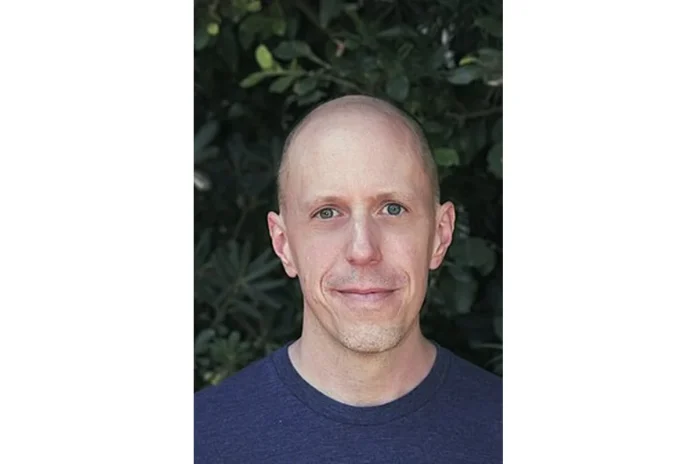
John August Bio
John August (born August 4, 1970) is an American screenwriter, director, producer, and novelist known for his screenplays and collaborations on films including Go, Big Fish, Charlie and the Chocolate Factory, and Aladdin, and for the Arlo Finch middle‑grade novels. He writes, directs and produces for film and television, hosts the Scriptnotes podcast, and runs Quote‑Unquote Apps, a software company that builds tools for writers and filmmakers.
Early Life and Background
John August was born John Tilton Meise in Boulder, Colorado, in 1970 and later adopted the surname August, drawn from his father’s middle name and his birth month. He earned a degree in journalism from Drake University in Des Moines, Iowa, and participated in a summer film program at Stanford, where he decided to pursue screenwriting professionally.
August went on to earn an MFA in film from the University of Southern California’s Peter Stark Producing Program. While at USC he wrote the romantic tragedy Here and Now, a script that helped him secure agent representation and launched his entry into the film industry.
Path to Celebrity
August’s early professional work began in the late 1990s, with his career taking shape as he moved from script development to produced features. His first produced feature credit came on the 1999 crime comedy Go, on which he served as a writer, co‑producer and second unit director, establishing relationships in Hollywood and demonstrating his ability to work across writing and production roles.
Between television development, animated features, and studio assignments, August built a reputation as a versatile writer. His adaptation of Daniel Wallace’s novel became the Tim Burton film Big Fish, an early high‑profile credit that raised his profile and led to further collaborations on major studio projects and adaptations.
John August Career
Early Career (1998–2003)
August’s first produced feature was Go (1999), a multi‑threaded crime comedy directed by Doug Liman; August also received producing and second unit directing credits on the project. He created the television series D.C. in 2000 for The WB, serving as co‑executive producer, and worked on studio features including Titan A.E. and Charlie’s Angels during this period.
In 2003 August’s adaptation of Big Fish was released as a Tim Burton film; the screenplay earned him a BAFTA Award nomination for Best Adapted Screenplay and marked a turning point in his profile as a writer capable of adapting distinctive literary material for mainstream directors and audiences.
Tim Burton Collaborations (2003–2005)
August collaborated with director Tim Burton on multiple projects. After Big Fish (2003) he contributed to Charlie and the Chocolate Factory (2005), for which his lyrics for “Wonka’s Welcome Song” earned a Grammy nomination for Best Song Written for Visual Media. He also worked with Burton on the stop‑motion feature Corpse Bride (2005).
Those collaborations showed August’s ability to adapt varied source material—adult literary fable, children’s literature, and animated stories—while working within the distinctive visual and tonal frameworks of a single director across projects.
Quote‑Unquote Apps Era (2010–Present)
August founded Quote‑Unquote Apps in 2010, producing software and utilities for writers and filmmakers including FDX Reader, Highland, Weekend Read and other tools. The company helped develop Fountain, a plain‑text screenplay format, and released software utilities that convert and manage screenplay files for writers and production professionals.
Alongside software development, August continued to write and produce for film: he served as an executive producer on Prince of Persia: The Sands of Time, received story credit on Dark Shadows, contributed to Frankenweenie (2012), and co‑wrote the screenplay for Disney’s Aladdin (2019). He also adapted Big Fish for the Broadway stage in 2013.
Directorial and Later Writing Era (2007–Present)
August made his feature directorial debut with The Nines (2007), a psychological science fiction film that premiered at the Sundance Film Festival and Venice Film Festival’s Critics’ Week; he wrote and directed the film. The Nines demonstrated his interest in high‑concept storytelling and in combining writing and directing responsibilities.
In the 2010s August expanded into middle‑grade fiction with the Arlo Finch series, a three‑book set published between 2018 and 2020 inspired by his scouting experiences. He also co‑hosts the Scriptnotes podcast with Craig Mazin, a weekly show on screenwriting and the film industry that has become a widely followed resource for writers.
Driving Style and Strengths
August’s strengths lie in adaptation, collaboration and craft‑focused communication. He adapts novels and existing properties with attention to voice and structure, collaborates repeatedly with directors and composers, and translates story ideas into production‑ready screenplays while also building tools and resources that support other writers.
Notable Events and Milestones
Key milestones in August’s career include a BAFTA nomination for Best Adapted Screenplay for Big Fish, a Grammy nomination for his lyrics in Charlie and the Chocolate Factory, and the WGA West Valentine Davies Award in 2016. The Nines premiered at Sundance, Big Fish became a Broadway musical, and August’s writer‑focused projects—podcasts, apps and Kickstarter campaigns—reached significant public engagement.
John August Career Wins
Across film, theater and writing communities, August’s verified honors include the 2016 WGAw Valentine Davies Award and nominations from BAFTA and the Grammy Awards. His career combines trade recognition for screenwriting with peer honors for community contributions and industry service.
Screenwriting Highlights
August’s screenplay adaptation of Big Fish earned a BAFTA nomination and remains a frequently cited credit in his filmography. His work on Charlie and the Chocolate Factory produced a Grammy nomination for the film’s song lyrics, and his co‑writing credit on Aladdin (2019) marked a return to large‑scale studio musicals and adaptations.
Other Wins & Perfromances
Beyond awards, August has notable successes in publishing, podcasting and product launches: the Arlo Finch novels were published between 2018 and 2020, his podcast Launch hit the top 10 on iTunes on release, and Kickstarter campaigns for writer‑oriented products raised substantial backing, including more than $158,000 for the Writer Emergency Pack.
John August Family
Family Background and Racing Lineage
Born John Tilton Meise, August later adopted his family name of August. He grew up in Colorado and pursued journalism and film studies before relocating to Los Angeles to build his career in screenwriting and filmmaking.
Personal Life
August lives in Los Angeles with his husband, Michael August, and their daughter. The couple married in 2008; the public record also notes that August lived in Paris for approximately a year from 2016 to 2017.
2025 Season Performance
No specific 2025 projects are listed in the verified inputs provided. John August remains an active writer, director, podcaster and software developer, continuing work across screenwriting, literary projects, the Scriptnotes podcast and Quote‑Unquote Apps tools.