
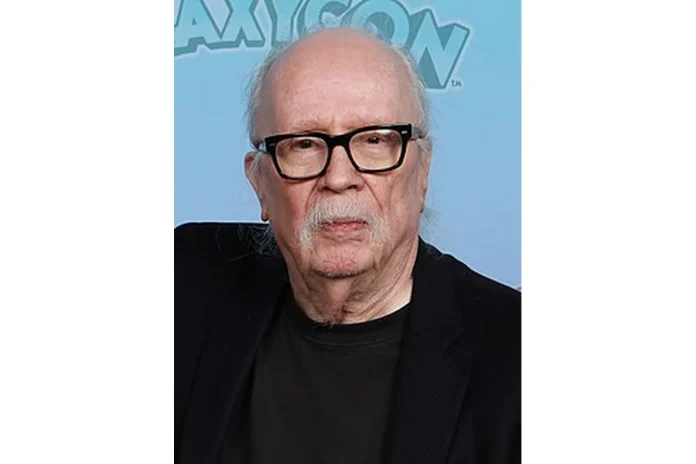
John Carpenter Bio
John Howard Carpenter, born on January 16, 1948, in Carthage, New York, is an American filmmaker, composer, and actor widely regarded as one of the most influential directors in horror, science fiction, and action cinema. Across a career that began in the late 1960s, Carpenter became known for directing, writing, and often scoring his own films, shaping a generation of genre storytelling with a distinctive blend of atmospheric tension and resourceful filmmaking.
He first gained widespread recognition with Halloween (1978), a low-budget slasher that became one of the most successful independent films of its era and helped define the modern slasher genre. Carpenter has continued to work as a composer, producer, and occasional director, building a filmography that includes cult classics such as The Thing, Escape from New York, Big Trouble in Little China, and They Live.
Early Life and Background
John Howard Carpenter was born on January 16, 1948, in Carthage, New York, to music professor Howard Ralph Carpenter and Milton Jean, née Carter. In 1953, the family relocated to Bowling Green, Kentucky, after his father accepted a position at Western Kentucky University, where the family lived in a log cabin on the campus. The musical environment of his upbringing, shaped by his father’s career as a music teacher, would later influence Carpenter’s lifelong interest in composing film scores.
From an early age, Carpenter developed a passion for cinema, particularly the westerns of Howard Hawks and John Ford, as well as 1950s low-budget horror films and high-budget science fiction such as Godzilla and Forbidden Planet. Before entering high school, he began experimenting with an 8 mm camera, producing short horror projects including the claymation piece Godzilla vs. Gorgo and the sci-fi western Terror from Space, which he made just before turning fourteen in 1962.
He graduated from College High School in Bowling Green, Kentucky, then enrolled at Western Kentucky University as an English major with a minor in History. After two years, eager to study filmmaking, which was not offered by any university in Kentucky at the time, he transferred to the University of Southern California’s School of Cinematic Arts in 1968. Carpenter ultimately left the program in his final semester to pursue his first feature film.
Path to Filmmaking
Carpenter’s earliest professional steps came during his studies at the USC School of Cinematic Arts. In 1969, he wrote and directed the eight-minute short Captain Voyeur, later rediscovered in the USC archives and recognized for foreshadowing themes from Halloween. The following year, he collaborated with producer John Longenecker on The Resurrection of Broncho Billy (1970), which earned an Academy Award for Best Live Action Short Film and was distributed theatrically by Universal Studios.
In 1974, Carpenter released his first feature as director, Dark Star, a science-fiction comedy he co-wrote with Dan O’Bannon. Made for only about $60,000, the film required Carpenter and O’Bannon to multitask across writing, producing, directing, acting, and scoring. O’Bannon’s later work on Star Wars and Alien drew on the visual effects techniques he developed on Dark Star. Carpenter followed this success with Assault on Precinct 13 (1976), a Howard Hawks-influenced thriller he wrote, directed, scored, and edited using the pseudonym John T. Chance. The film marked the beginning of his long collaboration with producer Debra Hill.
By the late 1970s, Carpenter had also directed the television film Someone’s Watching Me! and contributed the original screenplay that became Eyes of Laura Mars (1978), adapted with David Zelag Goodman. These projects laid the foundation for his move into studio-scale productions.
John Carpenter Career
Early Career (1969–1978)
Carpenter’s first significant theatrical work, Dark Star (1974), proved that he could craft ambitious science fiction on a shoestring budget. He expanded his reach with Assault on Precinct 13 (1976), a tight urban siege thriller that demonstrated his growing command of suspense and pacing. Both projects remain touchstones for low-budget genre filmmaking.
During this period, Carpenter also began building the collaborative relationships that would define his career, including his partnership with producer Debra Hill on Assault on Precinct 13. The pair would soon co-write Halloween (1978), the project that would launch him to international recognition.
Breakthrough (1978–1988)
Halloween (1978), co-written with Debra Hill, transformed Carpenter’s career. Made for roughly $300,000, the film grossed more than $65 million initially, becoming one of the most successful independent films ever released and a foundational text for the slasher genre. Carpenter’s minimalist, piano-driven Halloween Theme became instantly recognizable and remains a landmark in horror scoring. He began his long collaboration with actor Kurt Russell in 1979, directing the television film Elvis.
In the 1980s, Carpenter delivered a remarkable run of genre films. The Fog (1980), a ghostly revenge tale co-written with Debra Hill, grossed over $21 million on a $1 million budget. Escape from New York (1981), a science-fiction adventure starring Kurt Russell, earned both commercial success and critical acclaim. The Thing (1982), a stark remake of the 1951 Howard Hawks film, initially struggled at the box office but later gained recognition as one of the greatest horror films ever made. Christine (1983), an adaptation of Stephen King’s novel, performed well with audiences and critics alike, while Starman (1984) earned Oscar and Golden Globe nominations for Jeff Bridges and a Golden Globe nomination for Best Musical Score.
Later in the decade, Carpenter directed the action-comedy Big Trouble in Little China (1986) and the apocalyptic horror Prince of Darkness (1987). In 1988, he released They Live, a science-fiction satire that has since become a cult classic.
Notable Works and Milestones
Carpenter’s signature works from this era include Halloween, Escape from New York, The Thing, Christine, and Starman. His self-composed themes, particularly the Halloween Theme and the Assault on Precinct 13 score, became iconic in their own right, and his preference for widescreen Panavision anamorphic cinematography helped define the look of his films. The Thing was selected in 2008 by Empire magazine as one of the 500 Greatest Movies of All Time, and Halloween was selected for preservation in the United States National Film Registry in 2006.
John Carpenter Award Nominations
John Carpenter has received a range of award nominations throughout his career, including recognition from the Academy of Motion Picture Arts and Sciences and the Hollywood Foreign Press Association. The 1984 film Starman earned Oscar and Golden Globe nominations for actor Jeff Bridges, and a Golden Globe nomination for composer Jack Nitzsche. In 2019, the French Directors’ Guild honored Carpenter with the Golden Coach Award at the Cannes Film Festival, lauding him as a creative genius of raw, fantastic, and spectacular emotions. In December 2024, the Los Angeles Film Critics Association presented him with a Career Achievement Award.
John Carpenter Awards Won
Carpenter has earned recognition across film and music throughout his decades-long career. In 1970, his early short film The Resurrection of Broncho Billy won the Academy Award for Best Live Action Short Film. In 1998, he received the Saturn Award for Best Music for his score to Vampires. In 2010, he was honored with the Lifetime Award from the Freak Show Horror Film Festival. The French Directors’ Guild presented him with the Golden Coach Award at Cannes in 2019, and the Los Angeles Film Critics Association gave him a Career Achievement Award in 2024. On April 3, 2025, John Carpenter received a star on the Hollywood Walk of Fame.
John Carpenter Family
John Carpenter was born to Howard Ralph Carpenter, a music professor, and Milton Jean Carpenter, née Carter. His father worked at Western Kentucky University, where the family lived on campus in a log cabin during Carpenter’s childhood. The musical environment shaped by his father’s career sparked Carpenter’s lifelong interest in composing for film.
Carpenter and actress Adrienne Barbeau married on January 1, 1979, and divorced in 1984. Their son, Cody Carpenter, born on May 7, 1984, has pursued a career as a musician and composer, collaborating with his father on several projects. In 1990, Carpenter married film producer Sandy King, who has produced or served as script supervisor on many of his films, including In the Mouth of Madness, Village of the Damned, Vampires, and Ghosts of Mars. In 2013, King founded Storm King Comics, the publishing imprint through which Carpenter has produced horror, science fiction, and children’s comics.
Personal Life
John Carpenter holds a commercial pilot’s license and flies helicopters, often appearing in cameo roles as pilots in his own films. He has been an outspoken critic of unrestrained capitalism and a vocal opponent of Donald Trump, while describing his own political views as inconsistent. Beyond filmmaking and music, Carpenter has expressed admiration for video games such as Sonic Unleashed, Sonic Mania, and the F.E.A.R. series, and he served as narrator and story consultant on F.E.A.R. 3.
He and Sandy King co-wrote Cathedral, a graphic novel set for release on August 4, 2026, accompanied by a tie-in soundtrack album. Carpenter also continues to oversee his comic-book publishing through Storm King Comics and serves as executive producer on the reimagining of Escape from New York, which Zack Snyder is set to direct.