
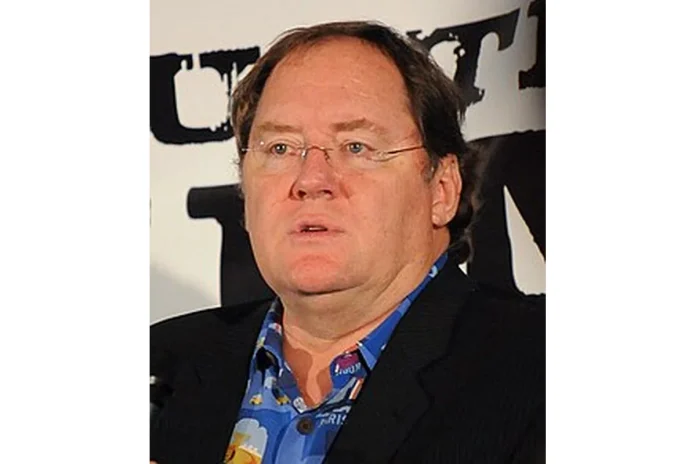
John Lasseter Bio
John Alan Lasseter (born January 12, 1957) is an American film director, producer, screenwriter, and animator. He is widely recognized as a pioneer of computer-generated feature films and is best known for his work on Toy Story, A Bug’s Life, Toy Story 2, Cars, and Cars 2. Lasseter co-founded Pixar Animation Studios, later served as chief creative officer of both Pixar and Walt Disney Animation Studios, and currently heads Skydance Animation.
Early Life and Background
John Alan Lasseter was born on January 12, 1957, in Los Angeles, California, and grew up in the suburb of Whittier. His mother, Jewell Mae Risley, was an art teacher at Bell Gardens High School, and his father, Paul Eual Lasseter, was a parts manager at a Chevrolet dealership. His mother’s profession contributed to his growing interest in art and animation, and he often drew cartoons during services at his family’s Church of Christ.
As a child, Lasseter raced home from school to watch Chuck Jones cartoons on television. While in high school, he read The Art of Animation by Bob Thomas, a book that explored Disney’s 1959 film Sleeping Beauty and inspired him to pursue animation himself. He also read Preston Blair’s animation book and made flipbooks based on Blair’s walk cycles, eventually using a friend’s Super 8 camera to shoot his earliest animation efforts. Lasseter is a fraternal twin, with a sister named Johanna Lasseter-Curtis who is six minutes older.
After graduating from Whittier High School in 1975, Lasseter enrolled as the second student in the Character Animation program at the California Institute of the Arts (CalArts). He was taught by three members of Disney’s Nine Old Men team, Eric Larson, Frank Thomas, and Ollie Johnston. His classmates included future animators and directors such as Brad Bird, John Musker, Henry Selick, Tim Burton, and Chris Buck. During his time at CalArts, he produced two animated shorts, Lady and the Lamp (1979) and Nitemare (1980), which each won the student Academy Award for Animation.
Path to Director
Lasseter’s path to directing began with hands-on experience at the Walt Disney Company. While still in school, he worked at Disneyland in Anaheim during summer breaks as a Jungle Cruise skipper, where he learned the basics of comedy and comic timing. Upon graduating from CalArts in 1979, he secured a job as an animator at Walt Disney Productions, largely because of the success of his student project Lady and the Lamp. The studio selected him from roughly 10,000 portfolios reviewed in the late 1970s.
At Disney, Lasseter contributed to projects such as Mickey’s Christmas Carol (1983) and a sequence for the shelved Musicana project. However, his growing enthusiasm for computer animation put him at odds with his supervisors, and his proposed test film mixing traditional and computer animation was canceled. Shortly afterward, he was let go from Disney Animation, ending his first major studio chapter.
John Lasseter Career
Early Career (1978-1986)
After leaving Disney, Lasseter joined the Lucasfilm Computer Graphics Group in the San Francisco Bay Area, where he collaborated with Ed Catmull, Alvy Ray Smith, and a team of computer science researchers. In 1984, he co-created The Adventures of André and Wally B., a groundbreaking short that proved character animation could be done on a computer. The film was presented at SIGGRAPH in 1984 and helped establish his reputation in the emerging field of CGI.
While at Lucasfilm, Lasseter worked with Industrial Light and Magic on Young Sherlock Holmes, where he created the first fully computer-generated photorealistic animated character, a stained-glass knight. When George Lucas sold the graphics division, it was spun off as Pixar in 1986 with Steve Jobs as majority shareholder. Lasseter served as a founding employee of Pixar, where he directed early shorts including Luxo Jr. (1986) and the Oscar-winning Tin Toy (1988).
Breakthrough (1986-2011)
Lasseter’s breakthrough came with Toy Story (1995), the first fully computer-animated feature film, which he directed. The film was a massive critical and commercial success and earned Lasseter a Special Achievement Academy Award. He went on to personally direct A Bug’s Life (1998), Toy Story 2 (1999), Cars (2006), and Cars 2 (2011), while serving as executive producer on other Pixar releases.
In 2006, Disney purchased Pixar and Lasseter was named chief creative officer of both Pixar and Walt Disney Animation Studios. He also served as principal creative adviser at Walt Disney Imagineering. In this leadership role, he oversaw major releases including Toy Story 3, Frozen, Zootopia, Finding Dory, and Incredibles 2. In 2011, he received a star on the Hollywood Walk of Fame.
Notable Works and Milestones
Among Lasseter’s most notable directorial works are Toy Story, A Bug’s Life, Toy Story 2, Cars, and Cars 2, all of which helped define the modern era of computer animation. He won the Academy Award for Best Animated Short Film for Tin Toy (1988) and a Special Achievement Academy Award for Toy Story (1995). He was also honored with the Winsor McCay Award in 2008 and received an Inkpot Award in 2009.
John Lasseter Award Nominations
John Lasseter has received multiple Academy Award nominations across his career. He was nominated for Best Original Screenplay for Toy Story, for Best Animated Feature for Monsters, Inc. and Cars, and for Best Animated Short Film for Luxo Jr. His contributions to the animation industry have been recognized by organizations such as the Academy of Motion Picture Arts and Sciences, where he served nine consecutive years on its board of governors from 2005 to 2014, ultimately as first vice president.
John Lasseter Awards Won
Lasseter has won two Academy Awards and several other prestigious honors during his career. He received the Academy Award for Best Animated Short Film for Tin Toy in 1989 and a Special Achievement Academy Award for Toy Story in 1996. He also received a Golden Globe Award in 2007, an Inkpot Award in 2009, and an Emmy Award during 2010-2011.
John Lasseter Family
John Lasseter is the son of Paul Eual Lasseter, a parts manager at a Chevrolet dealership, and Jewell Mae Risley, an art teacher at Bell Gardens High School. He has a fraternal twin sister, Johanna Lasseter-Curtis, who works as a baker in the Lake Tahoe area. The family encouraged his early passion for art, with his mother playing a key role in motivating him to pursue animation as a career.
Personal Life
John Lasseter has been married to Nancy Lasseter since 1988. The couple met at a computer graphics conference in San Francisco in 1985. Together they have four sons, in addition to Nancy’s son from a previous relationship. The Lasseters reside in Glen Ellen, California, where they own the Lasseter Family Winery. In 2009, Lasseter received an honorary doctorate from Pepperdine University, where he delivered the commencement address.