
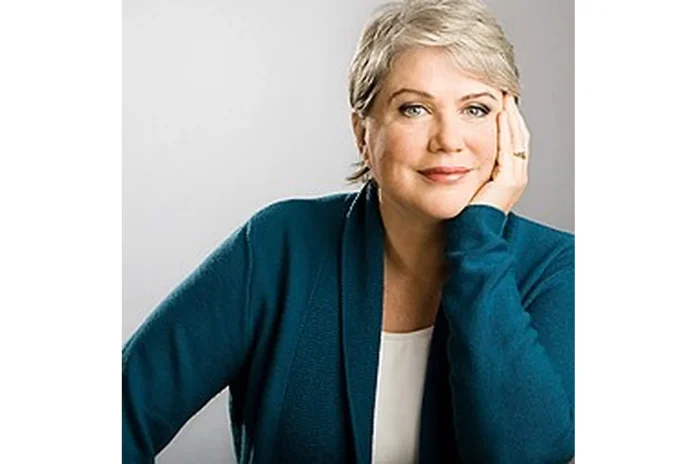
Julia Sweeney Bio
Julia Anne Sweeney, born October 10, 1959, in Spokane, Washington, is an American actress, comedian, and author whose career spans more than three decades across stage, film, and television. She first rose to national prominence as a cast member on the NBC sketch comedy series Saturday Night Live, where she created the iconic androgynous character Pat during a four-season run from 1990 to 1994. Beyond that defining role, Sweeney has built a diverse body of work that includes acclaimed one-woman shows blending humor with deeply personal storytelling, a starring role in the family film Stuart Little, voice acting in animated series, and recurring appearances on popular television dramas and comedies. She has also become a prominent public voice for secular humanism, speaking widely on atheism, science, and the separation of church and state.
Sweeney lives in Los Angeles, California, where she continues to write, perform, and advocate for nonreligious perspectives in public life. Her versatility as a performer has allowed her to move fluidly between comedic and dramatic work, from late-night sketch comedy to independent film to prestige television. She remains active in the entertainment industry while contributing to organizations such as the Center for Inquiry, where she serves on the board of directors. Her body of work reflects a consistent commitment to authenticity and a willingness to explore personal and cultural subjects with candor and wit.
Early Life and Background
Julia Anne Sweeney was born and raised in Spokane, Washington, the oldest of five children. Her father, Robert Mark Sweeney, worked as an attorney and federal prosecutor, while her mother, Jeraldine Ivers Sweeney, was a homemaker. The family maintained an Irish Catholic background that would later become a subject of reflection in her one-woman show Letting Go of God. She had two brothers, William Robert Sweeney and Michael Ivers Sweeney, both of whom have died, as well as a brother named Jim Sweeney and a sister named Meg Sweeney. Jim Sweeney later became a performer associated with the Groundlings comedy troupe, continuing a family thread in the performing arts.
As a child, Sweeney was drawn to imitating voices and inventing characters, early signs of the comedic talent that would define her adult career. She attended Marycliff High School and Gonzaga Preparatory School in Spokane, where she appeared in a number of plays and developed her skills as a young performer. She went on to graduate from the University of Washington with a double major in economics and European history, where she served as student body vice president and became a member of Delta Gamma sorority. After earning her degree, she moved to Los Angeles and worked as an accountant for Columbia Pictures and United Artists, a job that placed her inside the entertainment industry even before she began performing.
Path to Actress
Sweeney’s transition from accountant to performer began in 1988 when she enrolled in classes with the Groundlings, the Los Angeles-based improvisational comedy troupe known for developing some of the most distinctive comedic voices in American entertainment. She was soon selected to join the troupe’s prestigious Sunday Company, where she began writing and performing original characters. Her time at the Groundlings proved formative: it was there that she developed Mea Culpa, the title character of Mea’s Big Apology, which won the Best Written Play Award from L.A. Weekly in 1988. She also began developing the androgynous character Pat, which would later become her signature creation. This period of intensive improvisational training gave her the tools to move from behind-the-scenes comedy writing to in-front-of-the-camera performance at the highest level.
A pivotal moment came in 1989 when, during a Groundlings performance, she was spotted by representatives from Saturday Night Live and offered a spot as a featured player. She joined the regular cast the following year, launching a four-season tenure that made her a household name. The experience of building characters at the Groundlings translated directly to the demands of live sketch comedy, and her work there established the foundation for everything that followed in her career. After leaving Saturday Night Live, she channeled her experiences into one-woman shows that allowed her greater creative control and deeper personal exploration than sketch television could accommodate.
Julia Sweeney Career
Early Career (1988-1990)
During her early years in Los Angeles, Julia Sweeney balanced a demanding day job as an accountant for major film studios with night classes at the Groundlings, a schedule that speaks to the determination she brought to her transition into comedy. Her breakthrough came with the character Mea Culpa, which earned her the L.A. Weekly Best Written Play Award in 1988 and was later developed into a screenplay with collaborator Jim Emerson. These early accomplishments demonstrated her ability to create original comedic material that resonated with both critics and audiences. Her selection for Saturday Night Live in 1990 marked the culmination of this intensive period of training and development, moving her from local improv stages to a national television audience of millions.
Breakthrough (1990-1994)
Sweeney joined Saturday Night Live as a featured player in 1990 and became a full cast member the following year, remaining with the show for four seasons through 1994. Her most celebrated creation during this period was Pat, an androgynous character whose impossible-to-determine gender became the basis for a series of popular It’s Pat! sketches that became cultural touchstones of the early 1990s. The character’s ambiguity was the deliberate source of its comedy, inviting viewers to project their own assumptions onto Pat while Sweeney maintained a perfectly deadpan performance that made the sketches unforgettable. The popularity of the character eventually led to the 1994 feature film It’s Pat, directed by Adam Bernstein and produced by 20th Century Fox, though the film was both a critical and commercial disappointment, grossing only sixty thousand dollars against an eight million dollar budget.
During her Saturday Night Live tenure, Sweeney appeared alongside some of the most recognizable comedians of the era and contributed to a range of memorable sketches beyond the Pat character. Her ability to inhabit wildly different characters with conviction made her one of the most reliable players in the cast during those four seasons. After leaving the show in 1994, she carried the visibility and skills she had developed into a solo career that allowed her to explore more personal and experimental comedic territory than network sketch television typically permitted.
Notable Works and Milestones
Sweeney’s one-woman show God Said Ha!, which debuted in 1995 at San Francisco’s Magic Theater, stands as perhaps her most significant artistic achievement outside of Saturday Night Live. The show blended humor with raw honesty as she recounted her brother Michael’s battle with lymphoma and her own simultaneous cancer diagnosis, material she had first tested at the Los Angeles alternative comedy club the Un-Cabaret. The show transferred to Broadway and won the 1996 New York Comedy Festival Audience Award, while a CD recording earned her a Grammy nomination for Best Comedy Album. Miramax released a film version directed by Sweeney and produced by Quentin Tarantino in 1998, which won the Golden Space Needle Award at the Seattle International Film Festival. Excerpts from her Un-Cabaret performances were featured on episode 9 of This American Life in January 1996, and she has appeared on additional episodes of the program since that time.
Her role as Mrs. Keeper in the 1999 family film Stuart Little introduced her to a new generation of younger viewers and demonstrated her ability to work effectively in mainstream studio productions. In 2004, she voiced the character Brittany in the animated series Father of the Pride, and she would go on to provide voices for numerous other animated projects including Monsters University. Her recurring role on the series Shrill from 2019 to 2021 and her appearance on Work in Progress showcased her continued relevance in contemporary television comedy. She has also made notable guest appearances on Frasier, Brooklyn Nine-Nine, American Gods, and Sex and the City, the latter of which she also served as a consultant for its final three seasons. In 2025, she appeared in the documentary We Are Pat, directed by Ro Haber, which examined her iconic SNL character alongside broader conversations about trans and non-binary identity in comedy.
Julia Sweeney Award Nominations
Across her career, Julia Sweeney has earned recognition from a range of institutions spanning comedy, film, and audio recording. Her one-woman show God Said Ha! brought her a Grammy nomination for Best Comedy Album in 1996, acknowledging the strength of her recorded live performance. The same show also won the Audience Award at the 1996 New York Comedy Festival. These nominations reflect the high regard in which her solo performance work is held within the entertainment industry, bridging the worlds of stand-up comedy, autobiographical theatre, and audio storytelling.
Julia Sweeney Awards Won
Julia Sweeney has received several notable awards recognizing her distinctive contributions to comedy and film. Her one-woman show God Said Ha! won the Audience Award at the 1996 New York Comedy Festival, affirming the connection she established with live audiences through deeply personal storytelling. The film adaptation of God Said Ha! earned the Golden Space Needle Award at the 1998 Seattle International Film Festival, recognizing her work as both director and performer. Earlier in her career, her Groundlings-written character Mea Culpa won the L.A. Weekly Best Written Play Award in 1988, and in 2006 she received the Humanist Pioneer Award from the American Humanist Association for her advocacy and contributions to secular thought. The following table summarizes her verified award wins.
| Award | Wins | Year |
|---|---|---|
| New York Comedy Festival Audience Award | 1 | 1996 |
| Golden Space Needle Award, Seattle International Film Festival | 1 | 1998 |
Julia Sweeney Family
Julia Sweeney was born to Robert Mark Sweeney, an attorney and federal prosecutor, and Jeraldine Ivers Sweeney, a homemaker. She is the oldest of five children, with brothers William Robert Sweeney and Michael Ivers Sweeney, both deceased, and siblings Jim Sweeney and Meg Sweeney. Her brother Jim Sweeney is also a performer and was associated with the Groundlings comedy troupe. Sweeney’s family experiences, including the deaths of her brothers and her own health challenges, have been central themes in her autobiographical comedy work and have shaped the emotional core of her most acclaimed performances.
Personal Life
Sweeney is married to scientist Michael Blum, and the couple resides in Los Angeles, California. They have a daughter, whom they adopted from China. Sweeney has been open about her departure from the Catholic faith of her childhood, chronicling her journey toward atheism in her one-woman show Letting Go of God, which discusses the personal and intellectual process that led her to conclude that the universe functions without the need for a deity. She has become a prominent advocate for secular humanism and nonreligious acceptance, joining the board of directors of the Center for Inquiry in 2019. Her willingness to discuss faith, doubt, and secular life publicly has made her a significant figure in the American atheist and humanist communities, complementing her broader entertainment career.