
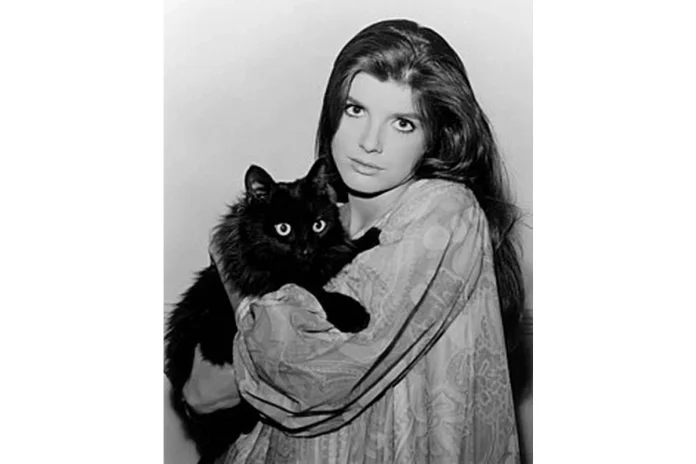
Katharine Ross Bio
Katharine Juliet Ross (born January 29, 1940) is a retired American actress whose work spans drama, comedy, and genre film. A Los Angeles native, she rose to national prominence with her performance as Elaine Robinson in Mike Nichols’ The Graduate (1967), which earned her an Academy Award nomination and a Golden Globe Award. Ross is equally remembered for her role as Etta Place in the classic Western Butch Cassidy and the Sundance Kid (1969) and for her leading turn in the horror satire The Stepford Wives (1975). Her five-decade career included film, television, and stage work before she stepped away from Hollywood.
Early Life and Background
Katharine Juliet Ross was born on January 29, 1940, in Los Angeles, California. Her father, Dudley Tyng Ross, was a lieutenant in the United States Navy and a former Associated Press employee originally from Sonyea, New York. Her mother, Katharine Elizabeth Washburn, was born in Indianapolis and later settled in the San Francisco Bay Area, where she married Ross’s father in 1937. The family lived for a time in Washington, D.C., before relocating to Walnut Creek, California.
Ross was a keen horse rider in her youth and counted rodeo rider Casey Tibbs among her friends. She graduated from Las Lomas High School in 1957 and went on to study for one year at Santa Rosa Junior College, where she discovered acting through a production of The King and I. While attending SRJC, she met her first husband, future actor Joel Fabiani. In 1958, she transferred to Diablo Valley College, and she later joined the Actor’s Workshop in San Francisco, where she trained for three years, including a nude role in Jean Genet’s The Balcony.
Path to Acting
Ross began her professional path in television while still based at the Actor’s Workshop, taking small roles in Los Angeles to earn extra income. She was brought to Hollywood by Metro-Goldwyn-Mayer, dropped, and then picked up by Universal. In 1964, John Houseman cast her as Cordelia in a stage production of King Lear, an experience that helped her transition into film work.
Her first television role came in 1962 with Sam Benedict, and throughout the early 1960s she became a familiar guest star across series such as The Alfred Hitchcock Hour, The Big Valley, Gunsmoke, and Wagon Train. She made her film debut in the Civil War drama Shenandoah (1965), playing the daughter-in-law of James Stewart. Supporting parts in Mister Buddwing and The Singing Nun (both 1966) followed, along with a long-term contract at Universal that positioned her as a rising leading lady.
Katharine Ross Career
Early Career (1962–1966)
Ross’s earliest screen years were a steady run of television guest spots and small film parts, supported by her work at the Actor’s Workshop. Her first film, Shenandoah, paired her with James Stewart and signaled her arrival as a thoughtful screen presence. Universal signed her to a long-term deal and promoted her as the studio’s next great leading lady, even comparing her to Samantha Eggar.
MGM borrowed her for The Singing Nun and Mister Buddwing, both released in 1966, and she continued to accumulate credits in Western and dramatic television. By 1967 she was ready for starring parts, and her early career was capped by a leading role in the television film The Longest Hundred Miles with Doug McClure.
Breakthrough (1967–1970)
Ross’s breakthrough came when she was cast as Elaine Robinson in Mike Nichols’ comedy-drama The Graduate (1967), opposite Dustin Hoffman and Anne Bancroft. Recommended to Nichols by her Games co-star Simone Signoret, Ross delivered a performance that earned her an Academy Award nomination for Best Supporting Actress and a Golden Globe Award for New Star of the Year. The film became one of the defining pictures of the late 1960s.
She followed that success with two notable 1969 Westerns: Tell Them Willie Boy Is Here, opposite Robert Redford, and Butch Cassidy and the Sundance Kid, in which she played Etta Place alongside Paul Newman and Redford. For both performances, Ross received the BAFTA Award for Best Actress. After this breakout stretch, she stepped away from Hollywood for a time following her marriage to cinematographer Conrad Hall, reappearing sporadically in films like Fools (1970), Get to Know Your Rabbit (1972), and They Only Kill Their Masters (1972).
Notable Works and Milestones
Ross’s signature role remains Etta Place in Butch Cassidy and the Sundance Kid, a part she later reprised in the 1976 ABC television film Wanted: The Sundance Woman. Her turn as Joanna Eberhart in the horror satire The Stepford Wives (1975) won her the Saturn Award for Best Actress, and her performance in the drama Voyage of the Damned (1976) earned her a second Golden Globe Award, this time for Best Supporting Actress. Later, her appearance in Richard Kelly’s cult film Donnie Darko (2001) introduced her work to a new generation, and she reunited with her husband Sam Elliott for the comedy-drama The Hero (2017).
Katharine Ross Award Nominations
Katharine Ross has received recognition from major awards bodies throughout her career, most notably for her early dramatic work. She earned an Academy Award nomination for Best Supporting Actress for her role in The Graduate (1967), along with BAFTA recognition for her performances in Butch Cassidy and the Sundance Kid and Tell Them Willie Boy Is Here. She also received Golden Globe nominations and additional industry recognition for her 1970s work, including Voyage of the Damned and The Stepford Wives.
Katharine Ross Awards Won
Ross has won a Golden Globe Award for New Star of the Year, a BAFTA Award for Best Actress, and a Saturn Award for Best Actress. Her two Golden Globe wins came in 1968 for The Graduate and in 1977 for Voyage of the Damned, cementing her reputation as one of the most acclaimed actresses of her generation.
| Award | Wins | Year |
|---|---|---|
| Golden Globe Award for New Star of the Year | 1 | 1968 |
| BAFTA Award for Best Actress | 1 | 1970 |
| Saturn Award for Best Actress | 1 | 1976 |
| Golden Globe Award for Best Supporting Actress | 1 | 1977 |
Katharine Ross Family
Katharine Juliet Ross was born into a family with strong professional and civic roots. Her father, Dudley Tyng Ross, served as a lieutenant in the United States Navy and worked for the Associated Press. Her mother, Katharine Elizabeth Washburn, moved from Indianapolis to the San Francisco Bay Area before her marriage. Ross has one daughter, Cleo Rose Elliott, born on September 17, 1984, four months after her marriage to actor Sam Elliott.
Personal Life
Ross has been married five times. She wed college sweetheart Joel Fabiani in 1960, divorcing in 1962, and married John Marion in 1964, divorcing in 1967. After completing Butch Cassidy and the Sundance Kid, she married the film’s cinematographer, Conrad Hall, in 1969, and they divorced in 1973. She then married Gaetano “Tom” Lisi in 1974, a technician she met on the set of The Stepford Wives, with that marriage ending in 1979. On May 1, 1984, Ross married actor Sam Elliott, her co-star from Butch Cassidy and the Sundance Kid, after the two reconnected on the set of The Legacy in 1978. They have one daughter, Cleo Rose Elliott.