
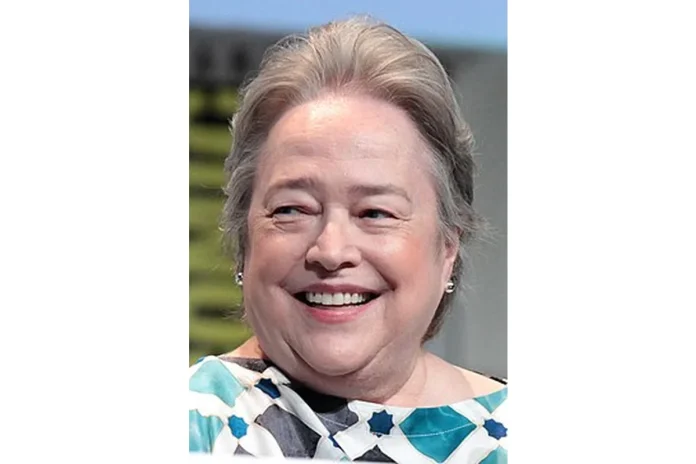
Kathy Bates Bio
Kathleen Doyle Bates, known professionally as Kathy Bates, is an American actress and producer whose career spans more than five decades across film, television, and stage. She first gained widespread recognition for her portrayal of Annie Wilkes in the 1990 psychological thriller Misery, a role that earned her the Academy Award for Best Actress and the Golden Globe Award for Best Actress in a Motion Picture Drama. Known for blending sharp wit with emotional depth, Bates has built a reputation as one of Hollywood’s most versatile character performers, moving easily between drama, comedy, and horror.
Beyond her screen work, Bates is also a respected director and an advocate for lymphatic disease research, serving as a longtime spokesperson for the Lymphatic Education and Research Network. She was honored with a star on the Hollywood Walk of Fame in 2016 and, in 2024, took on her first leading television role as Madeline Matlock in the CBS series Matlock.
Early Life and Background
Kathleen Doyle Bates was born on June 28, 1948, in Memphis, Tennessee, the youngest of three daughters of mechanical engineer Langdon Bates and homemaker Bertye Kathleen Talbert. Her paternal grandfather, Finis L. Bates, was a lawyer and author, and her family has deep Southern roots that shaped her upbringing. Bates grew up in Memphis and graduated early from White Station High School in 1965, where she began writing songs and first explored her creative interests.
As a teenager, Bates struggled with bouts of depression and wrote self-described sad songs, experiences she has spoken about in later years. She moved on to study theater at Southern Methodist University, where she earned her Bachelor of Fine Arts degree in 1969 and became a member of the Alpha Delta Pi sorority. She later trained at the William Esper Studio for the performing arts in Manhattan, a foundation that would prove essential as she prepared for a professional life on stage.
Path to Acting
After completing her studies, Bates moved to New York City in 1970 to pursue acting, taking on odd jobs, including a stint as a cashier at the Museum of Modern Art, while she worked to find her footing in the industry. She soon earned her first on-screen credit, appearing under the name Bobo Bates in Miloš Forman’s 1971 comedy Taking Off. Despite the small role, the experience confirmed her commitment to a screen career.
Throughout the 1970s and into the 1980s, Bates built her reputation on stage, performing Off-Broadway and in regional theater productions. In 1976, she appeared in Vanities, followed by the original 1979 production of Crimes of the Heart at the Actors Theatre of Louisville. She went on to work with playwright Lanford Wilson in Fifth of July beginning in 1980 and starred in Robert Altman’s Come Back to the Five and Dime, Jimmy Dean, Jimmy Dean in 1982. In 1983, her performance in the Pulitzer Prize-winning play ‘night, Mother earned her a Tony Award nomination for Best Lead Actress in a Play, cementing her status as one of America’s finest stage actresses. She later won an Obie Award for Best Actress in 1988 for Terrence McNally’s Frankie and Johnny in the Clair de Lune, a play McNally wrote specifically for her.
Kathy Bates Career
Early Career (1970–1989)
During the 1970s, Bates worked steadily in television guest spots and soap operas, including appearances on The Love Boat, Cagney & Lacey, St. Elsewhere, The Doctors, All My Children, and One Life to Live. These small roles allowed her to hone her craft while she continued to anchor her career in theater. By the early 1980s, critics had begun to take notice of her stage work, and the New York Times wrote that she had established herself as one of America’s finest stage actresses.
Her first major screen opportunities came in the mid-1980s, with roles in The Morning After (1986) and Summer Heat (1987). Even as she gained momentum, casting agents sometimes told her she was not pretty enough for leading roles, a rejection Bates later channeled into a career built on character parts and unconventional women. Her persistence paid off when, in 1988, her performance in Frankie and Johnny in the Clair de Lune earned her the Obie Award, drawing the attention of Hollywood casting directors.
Breakthrough (1990–2009)
Bates’ Hollywood breakthrough arrived with Misery (1990), Stephen King’s adaptation of his novel, in which she played the menacing fan Annie Wilkes. The performance was both a commercial and critical success and earned her the Academy Award for Best Actress, along with the Golden Globe Award for Best Actress in a Motion Picture Drama. The American Film Institute later ranked Annie Wilkes as the 17th-most iconic villain in film history.
She quickly followed Misery with the acclaimed Fried Green Tomatoes (1991), Dolores Claiborne (1995), and Titanic (1997), in which she portrayed American socialite Molly Brown. Titanic brought her a second Academy Award nomination, this time for Best Supporting Actress. Additional nominations followed for her work in Primary Colors (1998), About Schmidt (2002), and Richard Jewell (2019), bringing her total Academy Award nominations to four. Throughout the 1990s and 2000s, she appeared in a string of memorable films, including The Waterboy (1998), The Blind Side (2009), Revolutionary Road (2008), and Midnight in Paris (2011), often playing strong, complex women in supporting roles.
On television, Bates won two Primetime Emmy Awards: one for her guest role as the Ghost of Charlie Harper in Two and a Half Men in 2012, and another for portraying Delphine LaLaurie in American Horror Story: Coven in 2013. She also earned Emmy nominations for her work in Six Feet Under, Harry’s Law, American Horror Story: Freak Show, and American Horror Story: Hotel, building one of the most decorated television résumés in Hollywood.
Notable Works and Milestones
Bates is one of the rare performers nominated for the Triple Crown of Acting, with nominations across the Tony Awards, the Academy Awards, and the Primetime Emmy Awards. She has won an Academy Award, two Primetime Emmy Awards, two Golden Globe Awards, and two Screen Actors Guild Awards. Her star on the Hollywood Walk of Fame was unveiled in 2016 at 6927 Hollywood Boulevard, and she was honored with the WebMD Health Heroes Game Changer Award in 2018 for her advocacy work.
Kathy Bates Award Nominations
Over the course of her career, Kathy Bates has earned recognition from nearly every major awards body in the entertainment industry. She has received four Academy Award nominations, including Best Actress for Misery and Best Supporting Actress for Titanic, Primary Colors, About Schmidt, and Richard Jewell, along with two BAFTA nominations and a Tony Award nomination for Best Lead Actress in a Play. She has also earned multiple Golden Globe nominations and fourteen Primetime Emmy Award nominations, including a 2025 nomination for Outstanding Lead Actress in a Drama Series for Matlock, which made her the oldest person to receive a nomination in that category.
Kathy Bates Awards Won
Kathy Bates has accumulated some of the most prestigious honors in film and television. Her Academy Award win for Misery in 1991 made her one of the most celebrated actresses of her generation. She has also won two Golden Globe Awards, two Primetime Emmy Awards, two Screen Actors Guild Awards, and an Obie Award for her stage work. In 2018, she received the WebMD Health Heroes Game Changer Award for her advocacy on behalf of people living with lymphatic disease.
| Award | Wins | Year |
|---|---|---|
| Academy Award for Best Actress | 1 | 1991 |
| Golden Globe Award for Best Actress – Motion Picture Drama | 1 | 1991 |
| Primetime Emmy Award for Outstanding Guest Actress in a Comedy Series | 1 | 2012 |
Kathy Bates Family
Bates was born to Langdon Bates, a mechanical engineer from Tennessee, and Bertye Kathleen Talbert, a homemaker originally from McCormick County, South Carolina. She was the youngest of three daughters. Her paternal grandfather, Finis L. Bates, was a lawyer and author, and her great-great-grandfather, an Irish immigrant to New Orleans, served as President Andrew Jackson’s personal doctor.
Personal Life
Bates married actor Tony Campisi in 1991 after dating him for fourteen years; the couple divorced in 1997 and had no children. Diagnosed with ovarian cancer in 2003, she announced in 2009 that she had been in remission for more than five years. In 2012, she shared that she had undergone a double mastectomy for breast cancer, an experience that later led her to develop lymphedema in both arms. Since 2014, she has served as spokesperson and honorary board chairperson for the Lymphatic Education and Research Network, advocating before the United States Congress for expanded research funding for lymphatic diseases.