
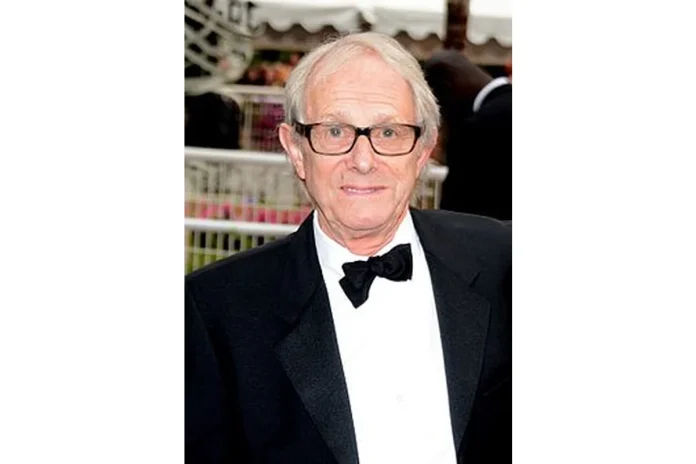
Ken Loach Bio
Kenneth Charles Loach is a retired English filmmaker renowned for his socially critical and documentary-inspired approach to cinema. Born on 17 June 1936 in Nuneaton, Warwickshire, England, Loach established himself as a leading figure in British social realism. His work consistently examines themes of poverty, unemployment and working-class life through a humane and politically conscious lens. Over a career spanning more than six decades, Loach created a distinctive body of work that has influenced global discussions about cinema and social justice.
Loach began his career in television during the 1960s before transitioning to feature filmmaking. His films have received international acclaim, particularly at the Cannes Film Festival where he achieved the rare distinction of winning the Palme d’Or twice. Known for his collaborative relationships with writers and actors, Loach developed a signature style that prioritizes authentic dialogue and naturalistic performances. His commitment to giving voice to marginalized communities has made him one of the most respected directors in world cinema.
Early Life and Background
Kenneth Charles Loach was born in Nuneaton, Warwickshire on 17 June 1936 to Vivien Loach and John Loach. He attended King Edward VI Grammar School during his formative years, receiving his secondary education in Warwickshire. At the age of 19, Loach joined the Royal Air Force, serving his country before pursuing higher education. This early exposure to discipline and structure would later inform his meticulous approach to filmmaking.
Following his service in the Royal Air Force, Loach read law at St Peter’s College, Oxford. He graduated with a third-class degree, though his academic focus shifted toward creative pursuits during his time at university. As a member of the Experimental Theatre Club, Loach discovered his passion for directing and storytelling. In 1959, he directed an open-air production of Bartholomew Fair for the Shakespeare Memorial Theatre, in which he also starred as Dan Jordan Knockem. This early theatrical experience laid the foundation for his future career in visual storytelling.
The cultural and political atmosphere of post-war Britain significantly influenced Loach’s developing worldview. His upbringing in Nuneaton, an industrial town in the Midlands, exposed him to working-class communities that would later become central subjects of his films. This background gave Loach an authentic understanding of the struggles and dignity of ordinary people, a perspective that would define his artistic vision throughout his career.
Path to Directing
Loach began his professional career working as an actor in regional theatre companies. This experience in front of the camera and on stage provided him with valuable insights into performance and character development. He soon transitioned to directing, joining BBC Television in the early 1960s. This period marked his entry into the television industry, where he would hone his craft and develop his distinctive approach to narrative filmmaking.
At the BBC, Loach found a creative home that allowed him to explore socially relevant stories. His early work included contributions to The Wednesday Play anthology series, which became known for its bold and controversial subject matter. During this period, he formed a significant professional partnership with producer Tony Garnett, a collaboration that would last until the end of the 1970s. Together, they created groundbreaking television dramas that challenged conventional storytelling and addressed pressing social issues.
Loach’s television work during the 1960s established him as an innovative director unafraid to tackle difficult topics. His docudrama style blended fiction with documentary techniques, creating a sense of authenticity that resonated with audiences and critics alike. This approach would become a hallmark of his filmmaking throughout his career. The success of his television work provided a natural transition into feature filmmaking, where he would continue to explore similar themes with greater artistic freedom.
Ken Loach Career
Early Career (1962-1969)
Loach’s television career flourished with his contributions to The Wednesday Play series. Between 1965 and 1967, he created several notable works including Up the Junction, Cathy Come Home and In Two Minds. These plays portrayed working-class people in conflict with authorities above them, bringing attention to issues such as illegal abortion, homelessness and mental health. Cathy Come Home, in particular, had a profound impact on public awareness about housing and homelessness in Britain. His 1965 play Three Clear Sundays dealt with capital punishment, broadcast during a time of intense debate about the death penalty in the United Kingdom.
In 1967, Loach directed his first feature film, Poor Cow, which coincided with his continued work for The Wednesday Play. This was followed in 1969 by Kes, widely regarded as his masterpiece. The film tells the story of a troubled boy and his kestrel, based on the novel A Kestrel for a Knave by Barry Hines. Kes received critical acclaim, though its extensive use of Yorkshire dialect initially restricted distribution. The British Film Institute later named it the seventh greatest British film of the 20th century. These early works established Loach’s reputation as a director committed to authentic storytelling and social commentary.
Breakthrough (1970-1999)
The 1970s and 1980s presented challenges for Loach, with many of his films suffering from poor distribution, lack of interest and political censorship. His documentary The Save the Children Fund Film was commissioned by the charity in 1971 but subsequently suppressed, with attempts made to destroy the negative. It was not screened publicly until 2011. During the 1980s, Loach concentrated on television documentaries, many of which became difficult to access as television companies did not release them on video or DVD. His 1975 BBC drama Days of Hope, written by Jim Allen, caused considerable controversy for its critical depiction of the military in World War I.
From the late 1980s, Loach returned to directing theatrical feature films more regularly. Hidden Agenda dealt with political troubles in Northern Ireland, while Land and Freedom examined Republican resistance in the Spanish Civil War. Carla’s Song was set partially in Nicaragua, continuing Loach’s interest in international political struggles. Interspersed with these political films were more intimate works such as Raining Stones, a working-class drama about an unemployed man’s efforts to buy a communion dress for his daughter. This period demonstrated Loach’s versatility in addressing both broad political situations and personal relationships.
The late 1990s brought renewed recognition for Loach’s work. My Name Is Joe, featuring an alcoholic’s struggle to stay sober, earned critical praise and marked Peter Mullan’s win for Best Actor at Cannes. Bread and Roses focused on the Los Angeles janitors strike, bringing American labor issues to international audiences. Sweet Sixteen, concerning a teenager’s relationship with his mother, continued Loach’s exploration of working-class life in contemporary Britain. These films consolidated Loach’s position as one of cinema’s most consistent voices for social justice.
Notable Works and Milestones
Loach’s career reached new heights in the 21st century with some of his most acclaimed works. The Wind That Shakes the Barley won the Palme d’Or at the 2006 Cannes Film Festival, a political-historical drama about the Irish War of Independence and Civil War. Looking for Eric, featuring Eric Cantona as himself, explored personal redemption through football. I, Daniel Blake won a second Palme d’Or in 2016, examining the UK welfare system through the story of a carpenter seeking benefits. The Old Oak, released in 2023, concluded his filmography with its focus on immigrant communities in England.
Ken Loach Award Nominations
Throughout his distinguished career, Kenneth Charles Loach has received numerous award nominations from prestigious institutions worldwide. His films have been selected for competition at major international film festivals, particularly the Cannes Film Festival, where he holds the record for the most films screened in the main competition with 15 entries. His work has been recognized by organizations including the British Academy of Film and Television Arts, the European Film Academy and the French Académie des Arts et Techniques du Cinéma.
Ken Loach Awards Won
Kenneth Charles Loach has won some of the most prestigious awards in international cinema. He is one of only ten filmmakers to have won the Palme d’Or twice, receiving this honor for The Wind That Shakes the Barley in 2006 and I, Daniel Blake in 2016. The Angels’ Share won the Jury Prize at Cannes in 2012, adding to his collection of festival accolades. In 2006, Loach received the BAFTA Fellowship, recognizing his outstanding contribution to cinema.
| Award | Wins | Year |
|---|---|---|
| Palme d’Or | 2 | 2006, 2016 |
| Jury Prize | 1 | 2012 |
| BAFTA Fellowship | 1 | 2006 |
| César Award for Best Foreign Film | 2 | 1995, 2016 |
| European Film Award for Best Film | 2 | 1992, 1995 |
Ken Loach Family
Kenneth Charles Loach married Lesley Ashton in 1962. The couple has five children together, including sons Jim and two daughters. Their son Jim Loach, born in 1969, followed in his father’s footsteps and became a filmmaker. Their daughter Emma is married to actor Elliot Levey. The family experienced tragedy when one of their sons died at the age of five in a car accident on the M1 motorway on 2 May 1971. The Loach family resides in Bath, Somerset, United Kingdom.
Personal Life
Beyond his filmmaking career, Kenneth Charles Loach has been actively involved in political and social causes throughout his life. He turned down an OBE in 1977, citing his opposition to what he described as patronage, deference to the monarchy and the British Empire’s history of exploitation and conquest. Loach is a patron of the British Humanist Association and a secularist, speaking out against faith schools and advocating for education that brings communities together rather than dividing them.
Loach’s political activities have included membership in various left-wing organizations and parties over the decades. He was a member of the Labour Party during different periods and has been associated with socialist political movements. In 2024, Loach confirmed that The Old Oak was his final film, marking the end of a remarkable career in cinema that spanned more than 60 years. He received honorary doctorates from multiple universities, including the University of Oxford, which awarded him an honorary Doctor of Civil Law degree in 2005.