
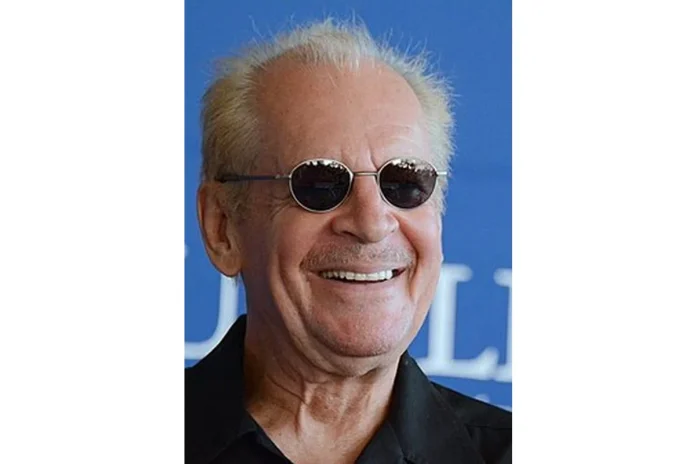
Larry Clark Bio
Lawrence Donald Clark, known professionally as Larry Clark, is an American film director, photographer, writer, and film producer whose career has spanned more than six decades. Born on January 19, 1943, in Tulsa, Oklahoma, he first gained recognition with his 1971 photography book Tulsa, a stark documentary of drug use among his young friends in suburban America. He later became internationally known for directing the controversial 1995 film Kids, which became a cultural touchstone and sparked ongoing debates about censorship and the depiction of youth in cinema.
Clark’s body of work is defined by an unflinching focus on young people who experiment with drugs, engage in sexual activity, and participate in countercultural communities such as surfing, punk rock, and skateboarding. Across photography books and independent features, he has built a visual language that is at once observational and provocative. His photographs are held in major public collections, including the Whitney Museum of American Art, the Museum of Photographic Arts, and the Museum of Fine Arts, Boston, underscoring his standing as both an artist and a filmmaker.
Early Life and Background
Larry Clark was born in Tulsa, Oklahoma, and raised in a household shaped by mobility and self-employment. He learned photography at a young age, picking up the craft from his mother, who worked as an itinerant baby photographer. By the age of 14, Clark had been enlisted into the family business, an early immersion that would shape his lifelong attachment to the camera. His father worked as a traveling sales manager for the Reader Service Bureau, selling books and magazines door-to-door, and was rarely at home, which left Clark considerable time to develop his own visual eye.
As a teenager in late-1950s Oklahoma, Clark began injecting amphetamines with friends, an experience that would later inform the subject matter of his most personal work. He went on to attend the Layton School of Art in Milwaukee, Wisconsin, where he studied under the instructors Walter Sheffer and Gerhard Bakker. The formal training gave him a technical foundation, but the streets of Tulsa and the lives of his friends provided the raw material that would define his artistic voice.
Path to Directing
Clark began his professional career in the early 1960s as a freelance photographer based in New York City. In 1964, shortly after relocating, he was drafted into the United States Army and served in a unit that supplied ammunition to forces fighting in the north during the Vietnam War. His service from 1964 to 1965 left a lasting impression on him, and the disillusionment that followed contributed to the vision behind his first major photographic project.
That project became the 1971 book Tulsa, a black-and-white photo documentary that chronicled the drug use of his young friends and laid bare a side of American suburban life rarely seen in mainstream media. Critics described the work as exposing the reality of American suburban life at the fringe and shattering long-held mythical conventions that drugs and violence were an experience solely indicative of the urban landscape. The success of Tulsa established Clark as a serious visual artist and gave him the credibility to pursue larger photographic essays, including Teenage Lust in 1983 and the photographic essay The Perfect Childhood, which examined the effect of media on youth culture.
Larry Clark Career
Early Career (1962–1992)
Clark’s career as a working photographer began in 1962, the same year he finished his studies in Milwaukee. After his discharge from the Army, he returned to New York and continued to document the lives of young people caught in cycles of drug use and countercultural identity. Between 1963 and 1971, he produced a striking body of work that would become the foundation of Tulsa, the book that introduced his name to a wider audience.
Throughout the 1970s and 1980s, Clark expanded his practice with additional photographic collections and exhibition work. Teenage Lust, published in 1983, was described as an autobiography of his teen past told through the images of others, featuring family photos, teenage drug use, graphic pictures of teenage sexual activity, and portraits of young male hustlers in Times Square. These projects cemented his reputation as a confrontational and uncompromising artist willing to show what others would not.
Breakthrough (1993–2002)
In 1993, Clark directed the music video for Chris Isaak’s Solitary Man, an experience that developed into an interest in film direction. He soon met the writer Harmony Korine in New York City and asked Korine to write the screenplay for his first feature film, Kids, which was released in 1995 to controversy and mixed critical reception. The film received an NC-17 rating and was later released without a rating when Disney bought Miramax.
In 2001, Clark completed an extraordinary run of three features in just nine months, shooting Bully, Ken Park, and Teenage Caveman. As of 2017, those remained his last films to feature professional actors, marking the end of an intense and prolific chapter. Ken Park, a more sexually and violently graphic film than Kids, included a scene of auto-erotic asphyxiation and ejaculation by an emotionally rattled high-school boy portrayed by James Ransone, then in his early twenties. The film was banned in Australia for its graphic sexual content, and a protest screening in response was immediately shut down by the police, with Australian film critic Margaret Pomeranz nearly arrested for screening it at a hall.
In 2002, Clark was detained by police after punching and attempting to strangle Hamish McAlpine, the head of Metro Tartan, the UK distributor of Ken Park, leaving McAlpine with a broken nose. The incident arose from an argument about Israel and the Middle East, according to McAlpine, who said he did not provoke the director.
Notable Works and Milestones
Clark’s signature works include the 1971 photography book Tulsa, the 1983 photography book Teenage Lust, and the films Kids (1995), Another Day in Paradise, Bully (2001), Ken Park (2002), and Marfa Girl. He has won the top prizes at the Cognac Festival du Film Policier for Another Day in Paradise, the Stockholm Film Festival for Bully, and the Rome Film Festival for Marfa Girl, and he has competed for the Golden Palm with Kids and the Golden Lion with Bully. In 2015, he collaborated with the skateboard and clothing brand Supreme to celebrate the 20th anniversary of Kids with a collection of decks, T-shirts, and sweatshirts featuring stills from the film, released in Supreme’s New York, Los Angeles, London, and Japan locations.
Larry Clark Award Nominations
Across his career as a film director, Larry Clark has received recognition from several of the world’s most respected international film festivals. He was nominated for the Golden Palm for his debut feature Kids in 1995, and was later nominated for the Golden Lion for Bully. These nominations placed him in competition with major international filmmakers and reflected the global impact of his uncompromising cinematic style.
Larry Clark Awards Won
Larry Clark has won top prizes at three major European film festivals. He received the Top Prize at the Cognac Festival du Film Policier for Another Day in Paradise, the Top Prize at the Stockholm Film Festival for Bully, and the Top Prize at the Rome Film Festival for Marfa Girl. These wins established him as a distinctive voice in independent cinema and underscored the international appeal of his gritty, observational storytelling.
Larry Clark Family
Public information about Larry Clark’s immediate family centers on his parents. His mother was an itinerant baby photographer who introduced him to the craft at a young age and enlisted him in the family business when he was 14. His father worked as a traveling sales manager for the Reader Service Bureau, selling books and magazines door-to-door, and was rarely at home. Wiki data indicates that Clark has three children.
Personal Life
Larry Clark has spoken openly about his lifelong struggle with drug abuse. In a 2016 interview, he discussed his history while noting that he maintained total sobriety while filmmaking. He confessed that the only exception to his practice of abstinence while filming was Marfa Girl, during which he used opiates for pain related to double knee replacement surgery. He has lived and worked between Tulsa, New York, and other locations tied to his photography and film projects, and his personal experiences with addiction and recovery have long informed the subjects of his art.