
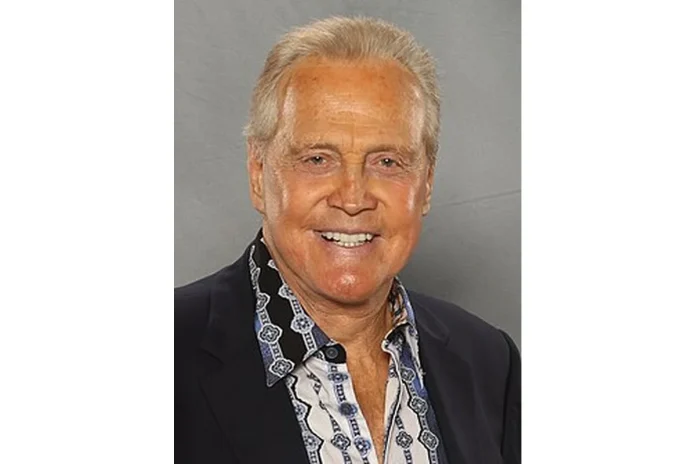
Lee Majors Bio
Harvey Lee Yeary, known professionally as Lee Majors, is an American actor with a career spanning more than six decades. Born on April 23, 1939, in Wyandotte, Michigan, he became a defining television presence through his work on The Big Valley, The Six Million Dollar Man, and The Fall Guy. A former college football player, Majors transitioned to acting after a serious back injury redirected his ambitions. His rugged good looks, easy charm, and willingness to perform his own stunts helped turn him into a pop culture icon of 1970s and 1980s television.
Across his long career, Majors has balanced leading dramatic roles, action hero parts, and self-aware cameos that often wink at his earlier fame. He has also stepped behind the camera as a director and producer, and has lent his voice to animated series, commercials, and video games. His enduring visibility in American entertainment reflects a rare blend of athletic background, television instincts, and adaptability across genres.
Early Life and Background
Lee Majors was born Harvey Lee Yeary on April 23, 1939, in Wyandotte, Michigan, a suburb of Detroit. His parents were Carl and Alice Yeary. His father died in a work accident five months before he was born, and his mother was killed in a car crash when he was nearly seventeen months old. When he was two years old, he was adopted by his uncle and aunt, Harvey and Mildred Yeary, and the family relocated to Middlesboro, Kentucky, where he was raised.
Majors attended Middlesboro High School, where he competed in track and football, graduating in 1957. He went on to play college football at Indiana University during the 1957 and 1958 seasons, then transferred to Eastern Kentucky University in Richmond, Kentucky, in 1959. A severe back injury suffered early in his college playing days left him temporarily paralyzed and ended his prospects as a competitive athlete. He graduated from Eastern Kentucky University in 1962 with a degree in history and physical education, and initially intended to pursue a career in coaching.
Path to Celebrity
After college, Majors received a tryout offer from the St. Louis Cardinals football team but chose to move to Los Angeles instead. There he worked as a recreation director for the Los Angeles Department of Recreation and Parks at North Hollywood Park. In Los Angeles, he met industry professionals, including Dick Clayton, the former agent of James Dean, who encouraged him to study acting. After a year of training, Clayton felt he was ready, and Majors adopted the stage name Lee Majors as a tribute to his childhood football hero, University of Tennessee player and coach Johnny Majors. He continued his training at Estelle Harman’s acting school on the MGM lot.
Majors’s first screen appearance was an uncredited role in the 1964 film Strait-Jacket. He followed this with appearances on episodic television, including a 1965 episode of Gunsmoke and a turn on The Alfred Hitchcock Hour. These early guest spots gave him valuable on-camera experience and led directly to the opportunity that would change his career.
Lee Majors Career
Early Career (1965–1972)
Majors landed his breakthrough role in 1965 when he was cast as Heath Barkley in the ABC Western series The Big Valley, starring alongside Barbara Stanwyck, Linda Evans, Richard Long, and Peter Breck. He was chosen for the part from a field of more than 400 young actors that included a young Burt Reynolds. During the show’s run, he co-starred in the 1968 Charlton Heston film Will Penny, which carried an Introducing credit in his name, and starred in the 1969 television film The Ballad of Andy Crocker, one of the first American films to address the homecoming struggles of Vietnam veterans. He was offered the lead in Midnight Cowboy but turned it down to remain on The Big Valley.
After The Big Valley ended in 1969, he signed a long-term contract with Universal Studios. He appeared in William Wyler’s final film, The Liberation of L.B. Jones, in 1970, and joined the final season of The Virginian, which had been restructured as The Men from Shiloh. During this period, the actor was frequently described in the press as a blond Elvis Presley because of his striking resemblance to the singer.
Breakthrough (1971–1986)
In 1971, Majors took on the co-starring role of Jess Brandon alongside Arthur Hill on the ABC drama Owen Marshall, Counselor at Law, earning critical praise during the show’s three seasons. That visibility led to his signature role: United States Air Force Colonel Steve Austin, a former astronaut rebuilt with bionic implants, in The Six Million Dollar Man. Originally a 1973 ABC television film, the project was expanded into a weekly series in 1974 and was broadcast in more than seventy countries, turning Majors into an international television star. He made his directorial debut in 1975 with the episode One of Our Running Backs Is Missing, which featured professional football players Larry Csonka and Dick Butkus.
When the original series ended in 1978, Majors returned to television in 1981 with The Fall Guy, produced by Glen A. Larson. He played Colt Seavers, a Hollywood stuntman who moonlights as a bounty hunter, and he performed the show’s theme song, The Unknown Stuntman. The series ran for five seasons, ending in 1986, and frequently featured cameos from his former co-stars, including Linda Evans, Lindsay Wagner, Richard Anderson, and Doug McClure.
His film work during the 1970s and 1980s included Francis Gary Powers: The True Story of the U-2 Spy Incident, The Norseman, Killer Fish, Steel, Agency, High Noon Part II, The Last Chase, Starflight: The Plane That Couldn’t Land, and a cameo in the 1988 comedy Scrooged. He also reunited with Lindsay Wagner and Richard Anderson for three Six Million Dollar Man and Bionic Woman television films between 1987 and 1994.
Notable Works and Milestones
Lee Majors is best known for three long-running television roles: Heath Barkley in The Big Valley, Colonel Steve Austin in The Six Million Dollar Man, and Colt Seavers in The Fall Guy. He earned a star on the Hollywood Walk of Fame in recognition of his contributions to the television industry. His work on Owen Marshall, Counselor at Law further established his dramatic range and helped bridge his transition from Westerns to action-oriented television.
Lee Majors Award Nominations
Lee Majors has been recognized throughout his career for his television work, though specific nominations tied to his early series work are limited in available records. His most prominent formal recognition is his star on the Hollywood Walk of Fame, an honor that reflects the industry-wide impact of his leading roles in The Big Valley, The Six Million Dollar Man, and The Fall Guy.
Lee Majors Awards Won
Lee Majors was honored with a star on the Hollywood Walk of Fame, recognizing his decades of contribution to American television. The honor reflects his long run as a leading man in three signature series and his broader presence across the medium.
| Award | Wins | Year |
|---|---|---|
| Hollywood Walk of Fame | 1 | — |
Lee Majors Family
Lee Majors was born to Carl and Alice Yeary. After the death of both biological parents during his infancy, he was adopted by his uncle and aunt, Harvey and Mildred Yeary, and raised in Middlesboro, Kentucky. Majors has four children. He has been married four times: to Kathy Robinson from 1961 to 1964, to actress Farrah Fawcett from 1973 to 1982, to Karen Velez from 1988 to 1994, and to Faith Noelle Cross beginning in 2002.
Personal Life
Beyond acting, Majors became part owner of the United States Football League’s Los Angeles Express in April 1983. His high-profile relationship with Farrah Fawcett, his second wife, became part of pop culture history, including the well-documented inspiration for the song Midnight Train to Georgia. In 2003, Majors underwent heart bypass surgery. In 2024, he reunited with Heather Thomas, his co-star from The Fall Guy, for cameo appearances in the feature film adaptation of The Fall Guy, which starred Ryan Gosling in the role of Colt Seavers.