
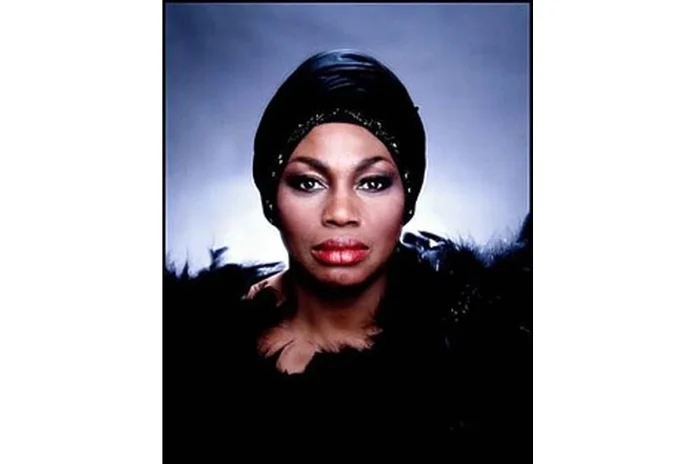
Leontyne Price Bio
Leontyne Price, born Mary Violet Leontine Price on February 10, 1927, in Laurel, Mississippi, is an American soprano widely regarded as the first African-American opera singer to attain international acclaim. She rose to prominence during the 1950s and 1960s through landmark performances in Giuseppe Verdi’s Aida and other Italian repertoire, and she maintained a long association with the Metropolitan Opera beginning in 1961. Her voice, described by critics as warm, rich, and powerful, combined with distinguished stage presence made her one of the defining operatic artists of the twentieth century. Among her many honors are the Presidential Medal of Freedom, the Kennedy Center Honors, the National Medal of Arts, the Spingarn Medal, and thirteen Grammy Awards.
Early Life and Background
Leontyne Price was born in Laurel, Mississippi, during the era of racial segregation in the American South. Her father, James Anthony Price, worked in the timber industry and as a part-time carpenter, while her mother, Katherine Viola Price, was a licensed practical nurse and midwife who delivered hundreds of babies in the region. Both parents were deeply religious, and her grandparents on both sides of the family were Methodist ministers. Price grew up in the south side of Laurel, attending all-black schools including Sandy Gavin Elementary School, and worshipping at Saint Paul’s Methodist Church, where her mother sang in the choir and her father played tuba in the church band.
Price showed an early affinity for music. She began piano lessons at the age of three and a half with the local African-American pianist Hattie McInnis, and by the time she was five, her parents traded in the family phonograph as the down payment on an upright piano. She studied with McInnis for more than twelve years, taking both piano and voice lessons. At the age of nine, she attended a recital by Marian Anderson in Jackson, Mississippi, an experience she later described as galvanizing her interest in a musical career.
Price graduated from Oak Park Vocational High School in 1944 as salutatorian of her class, serving as a cheerleader, drum majorette, and soloist in school choral groups. She also earned extra money singing for funerals and civic functions in Laurel’s black community. During this period, the Chisholm family, wealthy white acquaintances for whom her aunt worked, became close friends with the Price children and supported her early musical development, granting her access to their phonograph and record collection. This was her first exposure to opera.
Path to Music
Price enrolled at the College of Education and Industrial Arts in Wilberforce, Ohio in the fall of 1944 on a full four-year scholarship. She changed the spelling of her name to Leontyne while studying there and shifted her focus to vocal performance after filling in for a sick singer during a glee club concert in her sophomore year. She graduated in June 1948 with a degree in music education, having performed as soloist in works such as Handel’s Messiah and Théodore Dubois’s Les Sept paroles du Christ, and having toured with the Wilberforce Singers.
In the fall of 1948, Price began studies at the Juilliard School under the voice teacher Florence Page Kimball, who is credited with transforming her voice from a mezzo into a soprano. She developed an affinity for the music of Verdi, Puccini, and Mozart under Kimball’s guidance, and the two women maintained a close relationship that lasted until Kimball’s death in 1977. During her Juilliard years, Price performed small roles in the Juilliard Opera Workshop, attended the Berkshire Music Center at Tanglewood, and built a network of classmates and collaborators that would shape her career. She completed her Juilliard studies in 1952 and was awarded a Fulbright Scholarship, which she ultimately did not use due to performance opportunities that arose.
Price’s professional stage debut came in 1952 in the Broadway revival of Virgil Thomson’s Four Saints in Three Acts, after which she joined the third revival of George Gershwin’s Porgy and Bess in the role of Bess. The Porgy and Bess production toured internationally with the backing of the U.S. State Department from 1952 through 1954, and her success in that role brought her widespread attention. She married her Porgy and Bess co-star, bass-baritone William Warfield, in 1952. The couple later separated and divorced in 1973.
Leontyne Price Career
Early Career (1947–1954)
Leontyne Price began her career as a concert and recital singer in the late 1940s. Her first significant professional engagement was in Virgil Thomson’s Four Saints in Three Acts in 1952, which she performed on Broadway and at a music festival in Paris. That same year, she joined the Davis and Breen revival of Porgy and Bess, touring throughout the United States, Broadway, and Europe in a production backed by the U.S. State Department. Her performances with major orchestras and the exposure from the Porgy and Bess tour established her as a rising international artist.
In 1953, Price began a long association with composer Samuel Barber when she performed the world premiere of his Hermit Songs at the Library of Congress, with the composer at the piano. This collaboration led to multiple subsequent premieres and recordings of Barber’s works. In 1955, she became the first African American to star in a televised opera, portraying the title role in Puccini’s Tosca with the NBC Opera Theatre, a broadcast considered a significant moment in breaking the color barrier for black opera singers.
Breakthrough (1955–1966)
Price made her debut at the San Francisco Opera in 1957 as Madame Lidoine in the United States premiere of Poulenc’s Dialogues des Carmélites. Through her manager André Mertens, she developed a relationship with conductor Herbert von Karajan that launched her international career. Her portrayal of Aida in Vienna, Verona, and London in 1958 and at La Scala in 1960 brought her worldwide acclaim as a leading Verdi soprano.
On January 27, 1961, Leontyne Price made her debut at the Metropolitan Opera as Leonora in Verdi’s Il trovatore, alongside tenor Franco Corelli. The performance received an ovation that lasted over thirty-five minutes, and Time magazine put her on its cover, declaring her voice to be like a banner flying. She became the first black singer at the Met to sustain a long career with the company and quickly became a box-office favorite, earning the Met’s top fee by 1964.
On September 16, 1966, Price starred as Cleopatra in the world premiere of Samuel Barber’s Antony and Cleopatra, the opening work of the new Metropolitan Opera House at Lincoln Center. The role had been written specifically with her voice in mind by Barber, and the event was attended by political, cultural, and society luminaries from around the world. The Dictionary of World Biography later described her participation in the Lincoln Center opening as the highest honor of her career.
Notable Works and Milestones
Leontyne Price is best known for her signature role as Aida in Giuseppe Verdi’s opera of the same name, a part she performed at every major international opera house and which defined much of her career. Her 1961 Metropolitan Opera debut as Leonora in Il trovatore and her 1966 appearance in the world premiere of Antony and Cleopatra at Lincoln Center stand as two of the defining moments in American opera history. She is also remembered for her 1985 farewell performance at the Met in Aida, which was broadcast on PBS and earned twenty-five minutes of applause, with the New York Times placing her photograph on the front page of its local edition.
Leontyne Price Award Nominations
Throughout her recording career, Leontyne Price was nominated for twenty-five Grammy Awards across categories including Best Classical Solo Vocal Album and Best New Artist. She was nominated for the Grammy Award for Best New Artist in 1961, losing to comedian Bob Newhart, and received additional nominations for albums such as her 1975 collaboration with tenor Plácido Domingo, Verdi and Puccini Duets. She also received nominations and honors from a wide range of American cultural institutions in recognition of her contributions to the arts.
Leontyne Price Awards Won
Leontyne Price received numerous honors during her career, including thirteen Grammy Awards between 1961 and 1985, the Presidential Medal of Freedom in 1964, the Spingarn Medal in 1965, the Kennedy Center Honors in 1980, the National Medal of Arts in 1985, and the Golden Plate Award of the American Academy of Achievement in 1986. From 1964 through 1968, she achieved five consecutive wins of the Grammy Award for Best Classical Solo Vocal Album, a record matched at that time only by Henry Mancini. In 1978, her televised recital from the East Room of the White House won an Emmy. In October 2008, she was among the first recipients of the Opera Honors from the National Endowment for the Arts, and in 2019 she received an honorary doctorate from Boston Conservatory at Berklee.
| Award | Wins | Year |
|---|---|---|
| Presidential Medal of Freedom | 1 | 1964 |
| Spingarn Medal | 1 | 1965 |
| Kennedy Center Honors | 1 | 1980 |
| National Medal of Arts | 1 | 1985 |
| Grammy Award for Best Classical Solo Vocal Album | 5 (consecutive) | 1964-1968 |
Leontyne Price Family
Leontyne Price was the daughter of James Anthony Price, who worked in the timber industry and as a part-time carpenter, and Katherine Viola Price, a licensed practical nurse and midwife. She had one brother, George Price, who was born in 1929 and went on to become a brigadier general in the United States Army, living until 2024. Both of her grandfathers were Methodist ministers, and her family was deeply religious, with strong roots in the African-American community of Laurel, Mississippi. Through her aunt Evelina Greer, who worked for the Chisholm family, Price developed a lifelong friendship with Margaret Ann Chisholm, who she often called her best friend.
Personal Life
Leontyne Price married bass-baritone William Warfield on August 31, 1952, at the Abyssinian Baptist Church in Harlem, shortly before beginning the European tour of Porgy and Bess. The couple legally separated in 1967 and divorced in 1973, and they had no children. After her retirement from the opera stage in 1985, Price continued to give recitals, orchestral concerts, and master classes at institutions such as Juilliard, and she came out of retirement in 2001 to sing at a memorial concert at Carnegie Hall for the victims of the September 11 attacks. She avoided the term African American, preferring to identify simply as an American.