
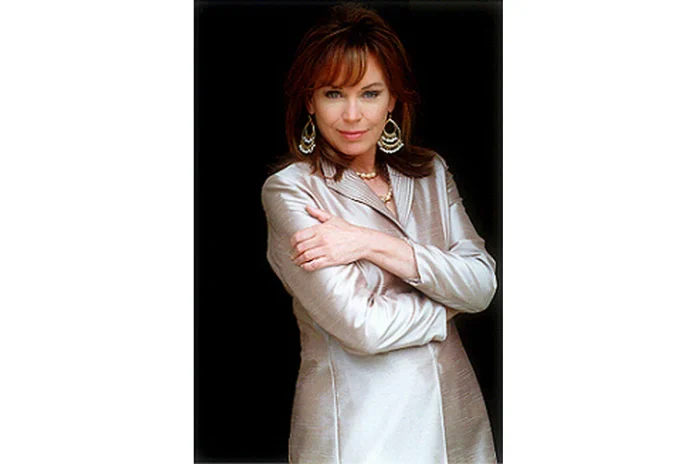
Lesley-Anne Down Bio
Lesley-Anne Down is a British actress, singer and model whose career has spanned more than five decades. She made her screen debut in the 1969 film The Smashing Bird I Used to Know and established herself in both British and American film and television through leading and supporting roles across drama, horror, comedy and period pieces.
Down became widely known for her television work in the 1970s and 1980s, most notably as Georgina Worsley in the ITV period drama Upstairs, Downstairs and as Madeline Fabray LaMotte in the ABC miniseries North and South. She later sustained a long presence on American daytime television with starring roles on Sunset Beach and The Bold and the Beautiful.
Early Life and Background
Lesley-Anne Down was born on 17 March 1954 in Wandsworth, London, England. She left school at 15, began modelling and acting as a teenager, and won several beauty pageants, being voted Britain’s most beautiful teenager at age 15.
She traveled to the United States at 17 and made her feature film debut in 1969. Those early years combined modelling, small-screen appearances and supporting film parts that introduced her to casting directors on both sides of the Atlantic.
Down’s formative exposure to performance came through early screen work and modelling assignments that opened doors to television guest spots and feature roles. Her combination of stage presence and screen experience provided a foundation for later television and film leads.
Path to Celebrity
Down moved from supporting film roles to higher-profile television work in the early 1970s, winning public notice with guest appearances and a steady presence in British productions. Her casting as Georgina Worsley in Upstairs, Downstairs in 1973 marked a turning point, earning her attention in a celebrated ensemble period drama.
After Upstairs, Downstairs ended in 1975, she relocated to Hollywood and began pursuing film roles more regularly. Her film credits through the late 1970s included The Pink Panther Strikes Again, A Little Night Music and The First Great Train Robbery, each helping to raise her international profile.
Transitioning between British television, American film and stage work, Down established a reputation for versatility. She balanced genre work—horror and thrillers—with period pieces and mainstream comedies, which kept her visible and positioned her for high-profile television miniseries in the 1980s.
Lesley-Anne Down Career
Early Career (1968–1979)
Down began her professional career around 1968 and made her film debut in 1969 in The Smashing Bird I Used to Know. During the early 1970s she appeared in a string of British television series and feature films, including Assault, Countess Dracula and Pope Joan, building steady screen credits across several genres.
Her early career also included theatre work and modelling that heightened her public profile. By the mid-to-late 1970s she had moved into higher-profile film roles, appearing opposite established stars in The Pink Panther Strikes Again (1976) and A Little Night Music (1977) and earning notice for her leading turn in The One and Only Phyllis Dixey (1978).
Breakthrough (1973–1986)
Lesley-Anne Down’s breakthrough on television came with Upstairs, Downstairs, where she played Georgina Worsley beginning in 1973. The role introduced her to a broad audience and led to her move to Hollywood and an expansion of film opportunities.
Her film work in the late 1970s included a lead opposite Sean Connery in The First Great Train Robbery and a starring role opposite Harrison Ford in Hanover Street in 1979. Those projects, while varied in critical and box-office reception, kept her in view as a leading actress in both British and American cinema.
Down achieved major recognition in the mid-1980s for her portrayal of Madeline Fabray LaMotte in the ABC miniseries North and South (1985–86). The miniseries was a high-rating television event, and her performance earned strong notices and a Golden Globe nomination for Best Supporting Actress – Television in 1986.
Notable Works and Milestones
Signature screen credits for Down include The Smashing Bird I Used to Know (1969), Countess Dracula (1971), The Pink Panther Strikes Again (1976), The First Great Train Robbery (1978), Hanover Street (1979), Rough Cut (1980) and North and South (1985–86). She later became a daytime television lead as Olivia Richards on Sunset Beach (1997–1999) and sustained a long-running role as Jackie Marone on The Bold and the Beautiful from 2003 to 2012.
Lesley-Anne Down Award Nominations
Across her career Lesley-Anne Down has received industry recognition for several performances. Most notably, she was nominated for a Golden Globe Award for Best Supporting Actress – Television in 1986 for her role in North and South. Her work on long-running television projects has drawn periodic awards attention in both prime-time and daytime formats.
Lesley-Anne Down Awards Won
Down won the Soap Opera Update Award for Best Actress in 1997 for her portrayal of Olivia Richards on the NBC daytime series Sunset Beach. That award reflects her transition to and success within daytime television after a lengthy career in film and prime-time drama.
Lesley-Anne Down Family
Lesley-Anne Down is the mother of two sons. She had one son with film director William Friedkin during their marriage in the early 1980s and a son with cinematographer Don E. FauntLeRoy, whom she married in 1985.
Personal Life
Down’s personal life has been public in connection with her marriages and legal proceedings. She was in a long-term relationship with Bruce Robinson from 1969 to 1979, married Enrique Gabriel in 1980 for a brief period, and was married to William Friedkin from 1982 to 1985. Her subsequent marriage to Don E. FauntLeRoy began in 1985 and they have a son together.
Her divorce from William Friedkin and subsequent legal and custody proceedings received wide press coverage in the mid-1980s. Down has also spoken publicly about early-career pressures and the prevalence of predatory behavior in the industry, reflecting on the difficult dynamics she encountered as a young performer in the late 1960s and 1970s.