
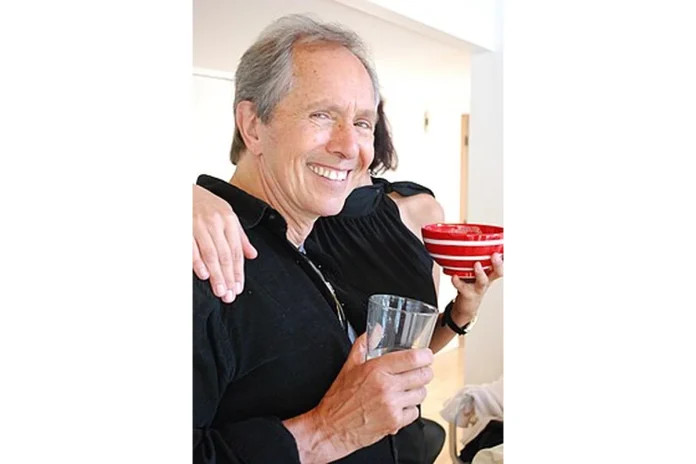
Lewis Teague Bio
Lewis Teague (born March 8, 1938) is an American film and television director and editor whose career has spanned more than six decades. Known for his practical, fast-paced style, he has worked across horror, action, and adventure genres in both theatrical features and television. His filmography includes creature features, Stephen King adaptations, and large-scale action productions for major studios.
Teague first gained recognition for the 1980 creature feature Alligator, and went on to direct Cujo (1983), Cat’s Eye (1985), and The Jewel of the Nile (1985). He later helmed the action film Navy Seals (1990) and worked steadily in episodic television and cable movies. His body of work reflects a director who values story, character, and efficient filmmaking.
Early Life and Background
Lewis Teague was born on March 8, 1938, in Brooklyn, New York. He grew up in New York City during the post-war years and developed an early fascination with visual storytelling. According to Teague, he fell in love with films at age 14 after seeing The Steel Helmet (1951), an experience that helped point him toward a career in cinema.
As a young man, Teague described himself as a would-be artist who imagined becoming a comic book illustrator or a fine artist living in Greenwich Village. His path changed when he dropped out of high school at age 17 and enlisted in the United States Army, serving for three years in Germany. The military experience broadened his worldview, and he returned to the United States with a clearer sense of direction.
After his service, Teague enrolled at New York University, where he discovered filmmaking and committed himself to the craft. He later said the school taught him that cinema was what he wanted to pursue as a career. At NYU, his influences included French filmmakers such as Jean-Luc Godard, François Truffaut, and Jacques Rivette, and his classmates included Jim McBride and Martin Scorsese. In 1963, he was awarded a scholarship as the most promising student at the school.
Path to Director
Teague left NYU in 1963 without completing his degree when he was offered a job at Universal, working on The Alfred Hitchcock Hour. He later returned to NYU and completed his degree in 2016 at the age of 78. At Universal, he apprenticed with director Sydney Pollack and received his first directing credit on the episode “The Second Verdict” of The Alfred Hitchcock Hour (1964), which starred Martin Landau.
After Universal, Teague worked with director George Roy Hill on the production of Hawaii. When he returned from that project, Universal ended his contract, a turn of events Teague later said he did not mind, since the studio’s films were not the kind of moviemaking he wanted to pursue. He then ran Cinemateque 16, an underground movie theater in Los Angeles owned by Robert Lippert, where he programmed experimental and personal favorites for Los Angeles audiences.
Teague eventually returned to filmmaking. He provided a film segment for a Los Angeles theatre production of The Disenchanted (1968), worked as associate producer on Loving (1970), served as a production manager on the documentary Woodstock (1970), and worked as cinematographer on Bongo Wolf’s Revenge (1970). He co-directed his feature debut, Dirty O’Neil (1974), before joining Roger Corman’s New World Pictures in 1974.
Lewis Teague Career
Early Career (1964–1979)
Teague’s early career at Universal gave him hands-on experience in television direction, including his episode of The Alfred Hitchcock Hour. Following his time with Sydney Pollack and George Roy Hill, he turned to independent work, including managing an underground theatre and contributing to low-budget productions in Los Angeles. These roles allowed him to develop the practical, resourceful approach that would later define his genre films.
His time with Roger Corman at New World Pictures sharpened his skills. He served as second unit director and assistant editor on Death Race 2000 (1975), edited Crazy Mama (1975) for Jonathan Demme, served as assistant director on Thunder and Lightning (1977), and designed the avalanche sequence for Avalanche (1978). Outside of New World, he edited the Oscar-winning short documentary Number Our Days (1976), an early sign of his broad craft behind the camera.
Breakthrough (1980–1985)
Teague’s second feature as sole director was Alligator (1980), a horror film he pushed to have rewritten by John Sayles. The picture established his reputation for tense, character-driven genre work and caught the attention of Stephen King. He next directed the vigilante film Fighting Back (1982) for producer Dino De Laurentiis.
In 1983, Teague was brought on at the last minute to direct Cujo, a Stephen King adaptation, after original director Peter Medak departed the project. King had recommended Teague based on his work on Alligator. Teague later called Cujo his best film, citing his study of earlier horror classics to design effective scares. He returned to Stephen King territory with Cat’s Eye (1985), also produced by De Laurentiis. King once called Teague “the most unsung film director in America,” praising his direct, shameless approach to unsettling audiences.
Teague received his largest budget to date with The Jewel of the Nile (1985), a sequel to Romancing the Stone (1984) starring Michael Douglas, Kathleen Turner, and Danny DeVito. The film marked a transition to major studio action and adventure filmmaking.
Notable Works and Milestones
Across the 1980s, Teague built a signature filmography of horror and adventure, anchored by Alligator, Cujo, Cat’s Eye, and The Jewel of the Nile. His collaborations with writers John Sayles and Stephen King became a recurring thread in his career, and his partnership with producer Dino De Laurentiis led to several of his most notable projects.
Later Career (1989–2007)
After editing The Jewel of the Nile, Teague turned down the script for RoboCop, later saying he wanted to move away from genre material. He developed an unproduced project for Orion before taking over Collision Course (1989) and returning to television with Shannon’s Deal (1989), based on a script by John Sayles.
He then directed Navy Seals (1990) for Orion, replacing original director Richard Marquand, who had died shortly before filming. The film starred Charlie Sheen and became one of Teague’s largest action productions. He went on to direct the cable films Wedlock (1991) and T Bone N Weasel (1992), and worked extensively in episodic television, including episodes of Time Trax, Fortune Hunter, Profiler, and Nash Bridges.
His later television work included the TV movie The Dukes of Hazzard: Reunion! (1997), which reunited him with adventure storytelling on a smaller scale. After a five-year absence from directing, Teague wrote, produced, and directed the dramatic short Cante Jondo (2007), shot on digital. He later created the web series Charlotta TS (2010) and served as Director of Photography and co-editor on the short Clifford Goes Boom (2014).
Lewis Teague Family
Lewis Teague was born and raised in Brooklyn, New York, where his early years shaped his interest in art and film. Public information about his immediate family, including parents, partners, and children, is limited, and further personal details have not been widely documented.
Personal Life
Teague has spent much of his professional life in the United States, working between New York and Los Angeles. He completed his long-deferred degree at New York University in 2016 at the age of 78, reflecting his lifelong connection to the school where his filmmaking career began.