
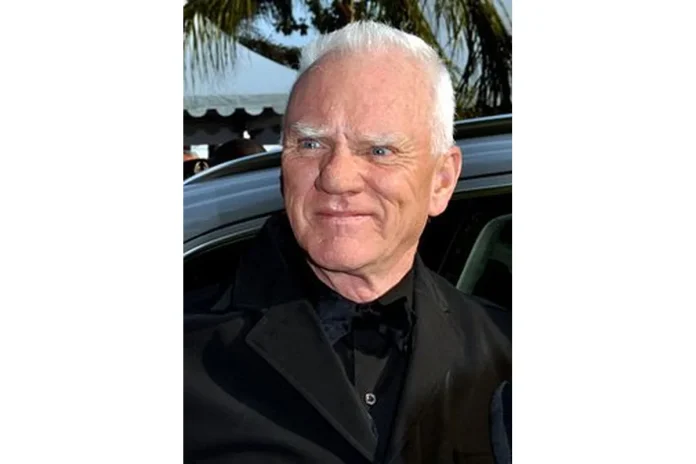
Malcolm McDowell Bio
Malcolm McDowell (born Malcolm John Taylor; 13 June 1943) is an English actor and producer whose career spans film, television and stage across more than five decades. He rose to international prominence for his chilling portrayal of Alex DeLarge in A Clockwork Orange (1971) and has sustained a diverse body of work that includes leading roles, memorable supporting turns and extensive voice work.
Early Life and Background
Malcolm McDowell was born Malcolm John Taylor on 13 June 1943 in Horsforth, West Riding of Yorkshire, England, the son of Edna McDowell and Charles Taylor. His family later lived in Bridlington and Liverpool during his youth. He worked in local jobs while young and began taking acting classes before moving to London to train at the London Academy of Music and Dramatic Art.
He adopted the stage name Malcolm McDowell, using his mother’s maiden name, because another actor was already working under the name Malcolm Taylor. Early training and stage work laid the groundwork for a transition into British film and television in the 1960s, positioning him for collaborations with influential directors of the period.
Path to Celebrity
McDowell began his professional acting career in the mid-1960s with stage and extra work, including engagements connected to classical theatre. His first notable film appearance came when director Lindsay Anderson cast him as Mick Travis in If…. (1968), a role that brought critical attention and established a creative relationship with Anderson that would include O Lucky Man! (1973) and Britannia Hospital (1982).
The performance in If…. caught the attention of Stanley Kubrick and led to McDowell being cast as Alex DeLarge in A Clockwork Orange (1971). That casting and the international profile of Kubrick’s film marked a decisive step from promising young British actor to an internationally recognized screen presence.
Malcolm McDowell Career
Early Career (1964–1970)
McDowell’s early screen work built on his theatrical background and included roles in British films and television through the late 1960s. His portrayal of Mick Travis in If…. (1968) served as his breakout performance and showcased a blend of youthful intensity and screen charisma that drew the attention of major filmmakers.
Between 1968 and 1970 he expanded his repertory with parts in Figures in a Landscape (1970) and The Raging Moon (1971), demonstrating range across drama and ensemble pieces and establishing professional relationships that would support his transition to higher-profile projects.
A Clockwork Orange Breakthrough (1971–1973)
The role of Alex DeLarge in Stanley Kubrick’s A Clockwork Orange (1971) became Malcolm McDowell’s signature early-career performance. His depiction of the sociopathic antihero combined unsettling charm with physical intensity and became the performance for which he is most widely identified. The role generated significant critical attention and established McDowell as a prominent figure in British and international cinema.
Following A Clockwork Orange, McDowell reunited with Lindsay Anderson for the satirical O Lucky Man! (1973), a film that further demonstrated his ability to carry a complex, tonal project and to move between dramatic and allegorical material. These years cemented his reputation as an actor willing to take on provocative and challenging roles.
Film and Television Work (1974–2000)
Through the late 1970s and 1980s, Malcolm McDowell diversified his career with roles in films such as Time After Time (1979), Caligula (1979) and Blue Thunder (1983), and with frequent television appearances. He developed a presence in Hollywood while continuing to appear in British productions, often portraying antagonists or morally ambiguous characters, a trajectory he later remarked had become a recognizable aspect of his career.
In addition to live-action roles, McDowell began an extensive body of voice work that included video games and animated series; he voiced characters in the Wing Commander series and roles in several animated television programs. By the 1990s he was a familiar face in both film and television, appearing in mainstream projects such as Star Trek Generations (1994) and in eclectic independent films.
Recent and Ongoing Work (2010–Present)
In the 2010s and beyond Malcolm McDowell continued to work across media, appearing in films such as The Artist (2011) and in television series including Franklin & Bash and Son of a Critch. He sustained steady voice acting credits in animation and games and remained active in independent film projects, festival titles and guest roles on established series.
McDowell’s later career includes appearances in horror and genre projects, documentary work related to his one-man show about director Lindsay Anderson, and continued voice performance in major video game franchises and animated productions. He received a star on the Hollywood Walk of Fame in 2012, reflecting his enduring presence in screen work.
Acting Style and Strengths
Malcolm McDowell’s screen presence is defined by a capacity for unsettling charm and controlled intensity, attributes that have made him a memorable antagonist and a compelling lead. He combines classical training with a willingness to pursue provocative material, and his voice work benefits from a theatrical sense of timing and character detail that translates well to animation and games.
Notable Events and Milestones
Key milestones in McDowell’s career include the global recognition that followed A Clockwork Orange, his ongoing collaborations with Lindsay Anderson, and his expansion into voice acting and television. Recognition with a Hollywood Walk of Fame star in 2012 and festival awards for performances in independent films punctuate a long and varied career.
Malcolm McDowell Career Wins
Across film festivals and awards bodies, Malcolm McDowell has received recognition for performances in both mainstream and independent projects. He has earned festival prizes and critical acknowledgements, and his body of work includes award-winning turns on the festival circuit as well as nominations and honors in broader industry contexts.
Film Highlights
McDowell’s most influential film roles include Mick Travis in If…. (1968), Alex DeLarge in A Clockwork Orange (1971), and prominent supporting roles in Time After Time (1979) and Star Trek Generations (1994). He won Best Actor at the Los Angeles Movie Awards for his performance in The Employer (2013), among other festival recognitions for independent work.
Other Wins & Perfromances
Beyond feature films, Malcolm McDowell has been recognized for voice performances and festival work, and he has been the recipient of industry honors that reflect both his early impact on British cinema and his continuing contributions in later decades. His Hollywood Walk of Fame star is a public marker of those cumulative achievements.
Malcolm McDowell Family
Family Background and Racing Lineage
Malcolm McDowell was born to Edna McDowell and Charles Taylor. He has siblings and extended family in the entertainment industry, with relatives who have worked in acting and film-related roles.
Personal Life
McDowell’s marriages have been part of his public biography. He married Margot Bennett in 1975; the marriage ended in 1980. He married Mary Steenburgen in 1980 and the couple had children together, including filmmaker Charlie McDowell; they divorced in 1990. He married Kelley Kuhr in 1991 and the family includes children from that marriage.
2025 Season Performance
Entering 2025 Malcolm McDowell remains active in film, television and voice work with ongoing participation in independent features and series roles that capitalize on his distinctive presence. His continuing engagement with genre projects, voice acting and festival titles suggests a sustained schedule of varied work rather than a single marquee production for the year.
Outlook for 2025 emphasizes continued contributions to ensemble and character-driven productions, festival screenings and voice assignments across animation and games. McDowell’s experience and recognizable performance profile are likely to maintain steady opportunities in both onscreen and voice roles through the year.