
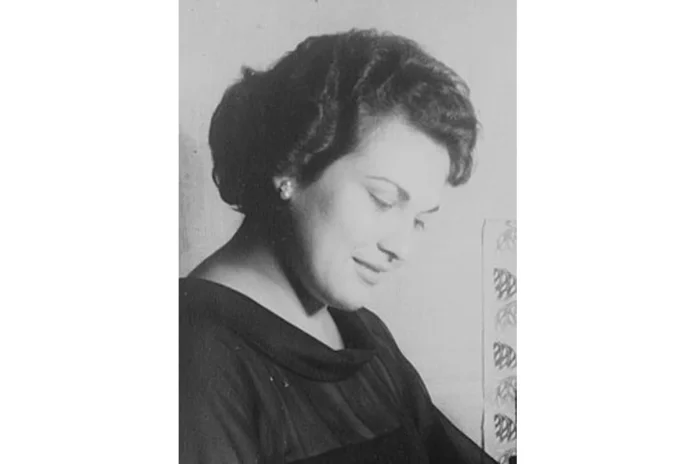
Marilyn Horne Bio
Marilyn Berneice Horne (born January 16, 1934) is an American mezzo-soprano opera singer celebrated for her commanding presence in the bel canto and opera seria repertoires. Over a career that spanned more than four decades, she became known for the beauty of her tone, her strong breath support, and her ability to negotiate demanding coloratura passages. A recipient of the National Medal of Arts and the Kennedy Center Honors, she also won four Grammy Awards. After stepping away from the concert stage in 1999, Horne devoted herself to teaching, vocal advocacy, and the preservation of the recital tradition.
Early Life and Background
Marilyn Berneice Horne was born in Bradford, Pennsylvania, one of the four children of Bentz and Berneice Horne. Her parents were both involved in local politics, with her mother serving as city assessor of the Fifth Ward and her father later appointed McKean County assessor. Bentz Horne was also a semi-professional singer, and he soon recognized his daughter’s vocal gifts. Seeking better training and broader opportunities for Marilyn, the family relocated to Long Beach, California, when she was eleven years old.
Music quickly became central to her teenage years. At age thirteen, Horne joined the newly formed Roger Wagner Chorale, an experience that sharpened her ensemble skills. She attended Long Beach Polytechnic High School, where she sang in the St. Luke’s Episcopal Church Choir of Long Beach under William Ripley Dorr. The choir frequently worked for film studios and recorded with Capitol Records, and Marilyn and her older sister Gloria were part of its quartet, giving her early exposure to professional studio work.
Path to Music
Horne earned a scholarship to the University of Southern California, where she studied voice with William Vennard and Gwendolyn Koldofsky at the USC School of Music. She also participated in Lotte Lehmann’s vocal master classes at the Music Academy of the West, an experience that deepened her command of the classical repertoire. As a member of Pi Beta Phi sorority, she balanced her musical ambitions with a vibrant campus life. These formative years gave her the technical foundation and stage discipline that would define her later career.
Marilyn Horne Career
Early Career (1954)
Horne’s first major professional engagement came in 1954, when she dubbed the singing voice of Dorothy Dandridge in the film Carmen Jones. Before that breakthrough, she had worked as a background singer for several television sitcoms and recorded covers of popular early-1950s songs sold in dime stores. The same year, she made her Los Angeles debut with the Los Angeles Guild Opera, singing the role of Hata in The Bartered Bride. She also appeared on television programs including The Odd Couple, The Tonight Show Starring Johnny Carson, and The Carol Burnett Show, gradually building a wider public profile.
Breakthrough (1956-1970)
The turning point of Horne’s career arrived in 1956, when composer Igor Stravinsky noticed her singing ability and invited her to perform at the Venice festival. This led to three seasons with the Gelsenkirchen Opera in Germany, where she was widely praised for her performance as Marie in Alban Berg’s Wozzeck. She returned to the United States in 1960 to sing the same role at the San Francisco Opera and debuted the following year at the Lyric Opera of Chicago, creating the role of Lora in Vittorio Giannini’s The Harvest.
Throughout the 1960s, Horne built a celebrated partnership with Australian soprano Dame Joan Sutherland, beginning with a 1961 concert performance of Vincenzo Bellini’s Beatrice di Tenda at The Town Hall in Manhattan. The performance was repeated twice at Carnegie Hall, and the pair went on to appear together in major productions of Rossini’s Semiramide and joint concerts broadcast on Live from Lincoln Center. Horne made her Royal Opera House debut in 1964 as Marie in Wozzeck and her La Scala debut in 1969 as Jocasta in Stravinsky’s Œdipus rex. A particularly memorable moment came during a La Scala production of Rossini’s Le siège de Corinthe, when she received a remarkable seven-minute mid-act ovation.
Horne made her Metropolitan Opera debut in 1970 as Adalgisa in Bellini’s Norma, with Sutherland in the title role. She became a regular presence at the Met, opening the 1972-1973 season as Carmen and later earning acclaim for her portrayal of the title role in Meyerbeer’s Le prophète. In 1984, she sang the title role in Handel’s Rinaldo, the first Handel opera ever performed at the Met.
Notable Works and Milestones
Beyond her opera career, Horne performed widely in American music, including works by composer William Bolcom, and she can be heard on the soundtrack of the 1961 film Flower Drum Song singing Love, Look Away. She also recorded the role of Lady Thiang on the Philips studio album of The King and I, and in 1983 she published her autobiography My Life, co-written with Jane Scovell. A 1983 New York Times article listing the greatest singers in Metropolitan Opera history included Horne, the only artist on the list still actively performing at the time.
Marilyn Horne Award Nominations
Horne has received numerous award nominations across her career in recognition of her vocal artistry and contributions to opera. Her consistent presence on honors lists reflects her standing among the leading mezzo-sopranos of the twentieth century. Specific nomination tallies are not fully verified.
Marilyn Horne Awards Won
Horne has been recognized with some of the highest honors in American music and culture. She received the National Medal of Arts, the Kennedy Center Honors, Yale University’s Sanford Medal, and four Grammy Awards. These distinctions underscore both her artistic achievements and her lasting influence on vocal performance.
Marilyn Horne Family
Horne was born into a family that valued public service and the arts. Her father, Bentz Horne, was a semi-professional singer who recognized her talent early and moved the family from Pennsylvania to California to support her musical development. Her mother, Berneice Horne, served as city assessor of the Fifth Ward in Bradford, and her father was later appointed McKean County assessor. She grew up with an older brother, Richard, an older sister, Gloria, and a younger brother, Jay, who was born after the family’s move to Long Beach in 1949.
Personal Life
Horne married conductor Henry Lewis in 1960, having met him while both were students at the University of Southern California. The couple separated in 1974 and divorced in 1979, and they shared a home in the Echo Park neighborhood of Los Angeles for many years. They welcomed a daughter, Angela, in 1965. After her marriage to Lewis ended, Horne began a long-term relationship with Greek bass Nicola Zaccaria. In December 2005, she was diagnosed with localized pancreatic cancer, and she has spoken publicly about her recovery in the years since.