
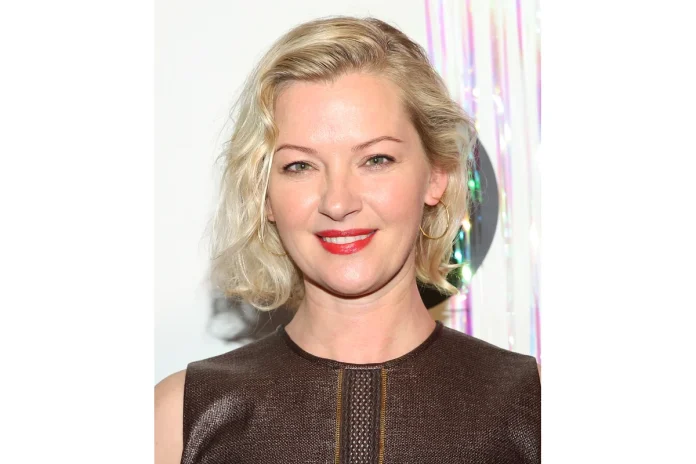
Mark Dindal is an American filmmaker, animator, and voice actor whose diverse career encompasses Disney Renaissance classics, modern computer-generated animation, and independent projects. He made his feature directorial debut with Cats Don’t Dance (1997), earning an Annie Award nomination for directing. Dindal went on to direct The Emperor’s New Groove (2000) and Chicken Little (2005) for Walt Disney Animation Studios, establishing himself as a distinctive voice in animated comedy. His career also includes significant animation work on The Little Mermaid (1989) and Aladdin (1992), as well as recent success directing The Garfield Movie (2024) for Sony Pictures and Alcon Entertainment. Dindal’s influence on contemporary animation spans four decades, reflecting his versatility across traditional and CGI formats.
Mark Dindal Bio
Mark Dindal is an American filmmaker, effects animator, character designer, storyboard artist, voice actor, and director whose career has spanned multiple decades and animation studios. His work at Walt Disney Feature Animation during the 1980s and 1990s contributed to several beloved Renaissance-era classics, while his subsequent directing career showcased his talent for comedic storytelling and visual comedy. Beginning his professional journey at Disney in 1980, Dindal steadily advanced through the animation ranks, ultimately helming several of the studio’s most memorable animated comedies. Beyond Disney, he has continued directing animated features, most recently completing The Garfield Movie (2024) to commercial success.
Early Life and Background
Mark Dindal was born in Columbus, Ohio, United States, though he grew up primarily in Syracuse, New York. His passion for animation was fostered early by his father, who took art as a hobby and taught Dindal to draw during his childhood. Family outings to the cinema also played a formative role, with Disney’s The Sword in the Stone making a particularly strong impression on young Dindal when his grandmother took him to see it at age three.
During his teenage years, Dindal attended Jamesville-DeWitt High School in New York, where he enrolled in as many art classes as the school offered. He also pursued his creative interests independently by making comic strips and short films. This early dedication to visual storytelling laid the foundation for his future career. Dindal furthered his animation education at CalArts, the prestigious California Institute of the Arts, before beginning his professional career at Disney in 1980.
Path to Director
Dindal joined Walt Disney Feature Animation in 1980, embarking on a career that would span several decades and multiple major studios. His early filmography at Disney included contributions to The Fox and the Hound (1981), Mickey’s Christmas Carol (1983), The Black Cauldron (1985), The Great Mouse Detective (1986), and Oliver & Company (1988). These projects established his distinctive approach to animation, characterized by detailed backgrounds and complex character effects.
After a brief period away from Disney, during which he worked on projects such as BraveStarr and The Brave Little Toaster, Dindal returned to the studio in 1987. He quickly advanced to significant roles, serving as visual effects supervisor for The Little Mermaid (1989), head animator for The Rescuers Down Under (1990), and effects animator for Aladdin (1992). His first directorial experience came in 1991 with a short wartime propaganda-style segment for The Rocketeer film, created alongside three other animators and inspired by classic Disney wartime cartoons.
Mark Dindal Career
Early Career (1991–1997)
Mark Dindal’s transition from animation to directing accelerated with his feature directorial debut, Cats Don’t Dance (1997), produced by Turner Broadcasting (later absorbed into Warner Bros.). In this film, Dindal also provided the voice for the character Max. Cats Don’t Dance received critical acclaim and won the Annie Award for Best Animated Film, while Dindal earned an individual nomination for Outstanding Directing in an Animated Feature.
This early success established Dindal as a capable director with a fresh comedic sensibility. The film showcased his ability to blend musical elements with traditional animation, setting the stage for his future projects at Disney.
Breakthrough (1997–2006)
Dindal’s breakthrough came with The Emperor’s New Groove (2000), which he directed for Walt Disney Feature Animation. The film underwent significant transformation during its six-year production. Initially developed as Kingdom of the Sun, a musical epic in the style of other Disney Renaissance films, the concept did not work as planned. Dindal collaborated with Chris Williams and screenwriter David Reynolds to fundamentally reshape the project into a comedic adventure, marking a deliberate creative pivot for the director.
The Emperor’s New Groove showcased Dindal’s talent for witty, character-driven comedy. The film featured David Spade as the voice of Emperor Kuzco, whose arrogant demeanor was contrasted against the humble peasant Pacha, voiced by John Goodman. The dynamic between these characters became a hallmark of Dindal’s directing style. Following the film’s success, Dindal created the animated television series The Emperor’s New School (2006–2008), which continued the story of Kuzco in a serialized format.
Dindal then directed Chicken Little (2005), Disney’s first fully computer-animated feature following their acquisition of Pixar. The film required a substantial animation team and represented Dindal’s adaptation to the CGI format. He contributed voice work as Morkubine Porcupine and Coach in the film. Chicken Little received several Annie Award nominations and demonstrated Dindal’s ability to work across different animation methodologies.
Notable Works and Milestones
Throughout his career, Mark Dindal has directed projects that have resonated with audiences and critics alike. The Emperor’s New Groove stands as perhaps his most acclaimed work, with retrospective praise establishing it as a cult favorite within the Disney animated canon. Cats Don’t Dance similarly earned a devoted following and remains cited as an underrated entry in 1990s animation. Dindal’s voice contributions across his films, including Max in Cats Don’t Dance and Coach in Chicken Little, demonstrate his willingness to participate creatively across multiple aspects of production.
Post-Disney Career (2006–Present)
In March 2006, following the DVD release of Chicken Little, Dindal departed Walt Disney Feature Animation alongside producer Randy Fullmer. The subsequent years saw him pursue various development projects, including attachments to direct live-action films such as Sherlock’s Secretary and Housebroken for Walden Media, and Kringle for Paramount Pictures. None of these projects reached production.
In December 2010, Dindal began directing Me and My Shadow at DreamWorks Animation, a project based on his own original pitch that would have combined computer and traditional animation techniques. However, he departed the project in January 2012 and was replaced as director by Alessandro Carloni. The film remains in development limbo.
Dindal continued exploring opportunities across the industry. In July 2014, he provided illustrations for the documentary Restrung, centered on his former collaborator Randy Fullmer’s career. In March 2019, he served as a story artist and character designer on Wonder Park, a Paramount Pictures and Nickelodeon production. That same year, he partnered with Pixar veteran Teddy Newton to develop a film based on Funko toys for Warner Bros. Pictures Animation, with Dindal attached as director.
His most recent major project, The Garfield Movie, was announced in November 2018 when Alcon Entertainment revealed Dindal as director, with pre-production beginning in Los Angeles the following month. Sony Pictures Releasing acquired worldwide distribution rights in November 2021. The film reunited Dindal with David Reynolds, his screenwriter from The Emperor’s New Groove, and featured Chris Pratt voicing the iconic orange tabby. Released in May 2024, The Garfield Movie received mixed reviews from critics but achieved commercial success, grossing significant revenue worldwide. A sequel was announced in July 2025, with Dindal potentially returning to direct.
Mark Dindal Awards Won
Mark Dindal’s career has been recognized through several prestigious nominations and accolades. His most significant award recognition came for Cats Don’t Dance (1997), which won the Annie Award for Best Animated Feature Production. Dindal received an individual nomination for Outstanding Directing in an Animated Feature Production at the Annie Awards for the same film. His other directed films have earned various nominations at major award ceremonies, though specific wins beyond Cats Don’t Dance remain limited in verified records.
| Award | Wins | Year |
|---|---|---|
| Annie Award for Best Animated Feature Production (Cats Don’t Dance) | 1 | 1997 |
Mark Dindal Family
Mark Dindal is the father of two daughters. According to verified accounts, his daughters served as the inspiration behind his original pitch for Chicken Little, reflecting how his family life has occasionally influenced his creative work. Details regarding his spouse or partner remain private and are not widely reported in verified sources.
Personal Life
Mark Dindal maintains a relatively private personal life outside of his professional career. He has resided in Los Angeles during periods of active production. His early influences included both Disney animated films and Warner Bros. cartoons, reflecting a broad appreciation for animation across studios that may have informed his versatile career path. His two daughters’ inspiration for Chicken Little represents one of the few documented connections between his personal life and creative output.