
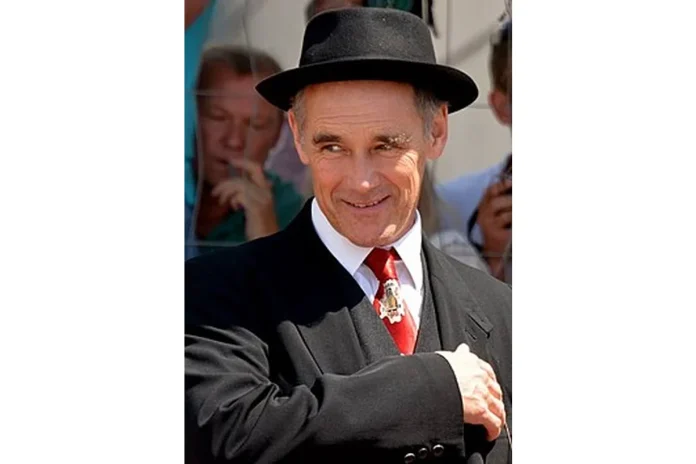
Mark Rylance Bio
David Mark Rylance Waters was born on 18 January 1960 in Ashford, Kent, England. He is an English actor, playwright and theatre director whose work spans intimate stage productions and high-profile film roles; he served as the first artistic director of Shakespeare’s Globe from 1995 to 2005 and is a recipient of multiple major honours including an Academy Award and three Tony Awards.
Early Life and Background
Mark Rylance was born to David Waters and Anne Skinner, both schoolteachers, and spent part of his childhood in the United States after his family moved to Milwaukee in 1969 when his parents taught at the University School of Milwaukee. He attended that school until returning to England in 1978 to train at the Royal Academy of Dramatic Art, where he completed formal dramatic training by 1980.
Rylance grew up in a family with performing and artistic ties; his sister Susannah Waters pursued a career as an opera singer and author, and he has been publicly linked through family to stepchildren from his marriage. Early mentors in Milwaukee and his training at RADA shaped a disciplined approach to text and performance that informed both classical and contemporary work.
Path to Celebrity
Rylance began his professional career in 1980, making his stage debut at the Glasgow Citizens’ Theatre and then performing in productions with the Royal Shakespeare Company in the early 1980s. His early repertory work included major Shakespeare productions and West End appearances that built his reputation as a finely attuned stage actor.
Across the 1980s and early 1990s he established a steady trajectory from repertory and classical roles to leading West End parts, winning early critical acclaim that paved the way for leadership roles in theatre and for transfers to Broadway. He adopted the stage name Mark Rylance as his professional identity while building a career focused on text, clarity and ensemble technique.
Mark Rylance Career
Early Career (1980–1994)
Rylance’s early professional years were anchored in regional and classical theatre work. He joined the Royal Shakespeare Company and performed in productions such as The Taming of the Shrew, The Tempest and A Midsummer Night’s Dream, receiving attention for his precision and intelligence in classical roles.
During this period he also achieved West End recognition, notably for performances such as Benedick in Much Ado About Nothing, a role that earned him an Olivier Award for Best Actor and helped raise his profile on the London stage. These formative years established his reputation as a leading interpreter of Shakespeare and modern drama.
Shakespeare’s Globe Breakthrough (1995–2005)
In 1995 Rylance became the first artistic director of Shakespeare’s Globe Theatre in London, a role he held through 2005. At the Globe he directed and acted in seasonal programmes that combined classical texts with newly commissioned plays, emphasising original performance practices and ensemble-driven productions.
Under his directorship the Globe staged innovative productions including all-male and historically informed performances; Rylance himself appeared in central roles such as Olivia in an all-male Twelfth Night and in title performances, reinforcing the Globe’s mission to reconnect contemporary audiences with Shakespearean work. His leadership at the Globe was widely noted for shaping the theatre’s artistic identity and for broadening public engagement with classical drama.
Stage and Screen Expansion (2006–Present)
From the late 2000s onward Rylance balanced major stage work with a growing screen career. He won Tony Awards for performances in Boeing-Boeing and Jerusalem and earned further Tony recognition for his stage work in Twelfth Night and other productions, securing a prominent transatlantic stage presence on Broadway and in the West End.
On screen, Rylance received international acclaim for his portrayal of Rudolf Abel in Steven Spielberg’s Bridge of Spies, a performance that won the Academy Award for Best Supporting Actor and a BAFTA in the same category. Subsequent film collaborations included roles in The BFG, Dunkirk, Ready Player One, The Trial of the Chicago 7, Bones and All and The Outfit, demonstrating a capacity to move between intimate theatrical roles and wide-reaching cinematic projects.
Acting Style and Strengths
Rylance’s acting is marked by economy, vocal clarity and deep script work; critics and colleagues note his ability to inhabit language with subtle physicality and a disciplined restraint that yields nuanced, often quietly powerful performances. He employs a rigorous rehearsal methodology and frequently prioritises ensemble dynamics and textual fidelity, which has made him a sought-after collaborator in both classical and contemporary work.
Notable Events and Milestones
Major milestones include his tenure as the first artistic director of Shakespeare’s Globe, multiple Olivier and Tony Award wins, inclusion in Time magazine’s list of the world’s most influential people in 2016, and his knighthood in 2017 for services to theatre. The Academy Award for Bridge of Spies stands as a career-defining film recognition that expanded his international profile.
Mark Rylance Career Wins
Rylance’s career has been recognised across stage and screen with major awards. He is an Academy Award winner for film performance, a multiple Tony Award winner for stage performances, and a recipient of Olivier and BAFTA honours for theatre and television work.
Stage Highlights
On stage, Rylance won Tony Awards for performances that transferred between London and Broadway, notably for Boeing-Boeing and Jerusalem, and for his role in Twelfth Night. His Olivier Award wins for Much Ado About Nothing and for Jerusalem mark significant West End recognition and reflect long-standing critical esteem in British theatre.
Screen Highlights
On screen he won the Academy Award and BAFTA for Best Supporting Actor for Bridge of Spies, and he received widespread praise for collaborations with directors such as Steven Spielberg and Christopher Nolan. Television work has also been celebrated, including BAFTA recognition for his portrayal of David Kelly in The Government Inspector and acclaim for his role as Thomas Cromwell in Wolf Hall.
Other Wins & Perfromances
Rylance’s awards across stage, screen and television underscore a career that moves fluidly between mediums. He has been honoured with industry prizes for acting and recognised for contributions to theatre leadership and innovation during his time at Shakespeare’s Globe.
Mark Rylance Family
Family Background and Theatre Lineage
Rylance was raised in a family of educators and spent formative years in both England and the United States. His parents, David Waters and Anne Skinner, worked in education, and the family background supported his early exposure to performance and literature.
Personal Life
In 1989 Rylance married composer and theatre-maker Claire van Kampen; through that marriage he became a stepfather to van Kampen’s children, including actress Juliet Rylance and Nataasha van Kampen, who died in 2012. Rylance has spoken about how family events have affected his professional choices, including a withdrawal from a public appearance following personal bereavement.
2025 Season Performance
Entering 2025 Rylance remains an active figure in theatre and film, following stage work in the West End and continuing screen appearances in high-profile projects. His recent trajectory suggests continued involvement in both stage revivals and selective film roles, with a continued focus on projects that allow textual intensity and collaborative ensemble work.