
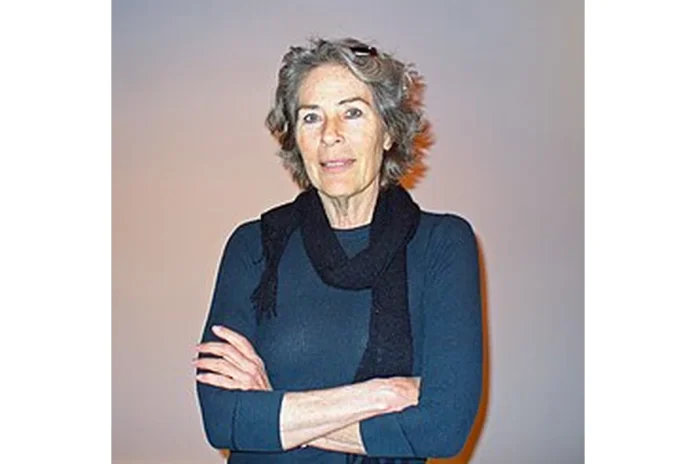
Mary Woronov Bio
Mary Woronov (born December 8, 1943) is an American actress, writer, and figurative painter whose career spans more than five decades across film, television, theater, and the visual arts. She first gained public attention as a Warhol superstar in the 1960s after joining Andy Warhol’s Factory, and she later became a defining presence in American cult cinema through her collaborations with director Paul Bartel and producer Roger Corman. Over the course of her career, Woronov has appeared in more than 80 films, performed on stage at Lincoln Center and in off-Broadway productions, and written both fiction and memoir about her experiences in the avant-garde art world.
Early Life and Background
Mary Woronov was born on December 8, 1943, at the Breakers Hotel in Palm Beach, Florida, a location that was temporarily serving as the Ream General Hospital during World War II. She was born premature, and medical staff initially doubted that she would survive infancy. At a young age, she relocated with her mother to the Brooklyn Heights neighborhood of New York City, where her mother married Victor D. Woronov, a Jewish cancer surgeon, in 1949. Her stepfather legally adopted her, giving her the Woronov surname, and she has stated publicly that she does not know the identity of her biological father. She has one younger half-brother, Victor, who was born on her eighth birthday.
Woronov studied art and sculpting at Cornell University, where she met and befriended fellow artist Gerard Malanga in 1963. Her education in the visual arts laid the groundwork for both her later acting work and her parallel career as a painter. The connection she formed with Malanga at Cornell would prove pivotal, eventually drawing her into one of the most influential art scenes of the twentieth century.
Path to Acting
Woronov’s entry into the entertainment world came through her friendship with Gerard Malanga, who was working as Andy Warhol’s studio assistant. Malanga invited her to appear in a film he was making, and shortly afterward, during a Cornell-sponsored field trip to Manhattan artists, Woronov visited Warhol’s studio, known as The Factory. She decided to stay, appeared in screen tests, and quickly became embedded in Warhol’s circle of collaborators. Warhol bestowed on her the nickname “Mary Might,” though she later admitted she did not particularly care for the moniker.
During this period, Woronov danced with the Exploding Plastic Inevitable, Warhol’s multimedia presentation featuring The Velvet Underground, and played the character Hanoi Hannah in Chelsea Girls (1966), the experimental underground film that became Warhol’s first major commercial success. Reflecting on her role at The Factory, she has described herself as “the strong girl” and “the butch one,” emphasizing the toughness she brought to a scene dominated by larger-than-life personalities. Her work with Warhol established her reputation as a Warhol superstar and set the stage for a long career in independent and cult filmmaking.
Mary Woronov Career
Early Career (1966-1973)
After her years at The Factory, Woronov began transitioning into more traditional filmmaking. Between 1970 and 1972, she starred in several films directed by her then-husband Theodore Gershuny, including Kemek (1970), the slasher film Silent Night, Bloody Night (1972), and Sugar Cookies (1973). These collaborations allowed her to explore darker material and develop a screen presence distinct from her Factory days.
In 1973, Woronov was cast as the understudy to Julie Newmar in the role of Susan in the Broadway production of David Rabe’s play Boom Boom Room. When Newmar was fired during rehearsals, Woronov took over the role and went on to earn a Theatre World Award for her performance. The production ran from November 8 to December 9, 1973, at Lincoln Center’s Vivian Beaumont Theater, marking one of her most significant early stage achievements.
Breakthrough (1975-1990)
Woronov landed a leading role in the Roger Corman-produced cult film Death Race 2000 (1975), followed by the Corman-produced Hollywood Boulevard (1976), directed by Allan Arkush and Joe Dante. These films cemented her status as a queen of cult cinema and introduced her work to a wider audience of genre-film enthusiasts.
She relocated from New York to Los Angeles in 1979, appearing that same year in Rock ‘n’ Roll High School. Her true breakthrough came with Paul Bartel’s black comedy Eating Raoul (1982), in which she and Bartel portrayed a married couple who rob and murder swingers to finance their dream restaurant. The film became a cult classic, and she and Bartel reprised their roles in a cameo for Chopping Mall (1986). During this productive period, Woronov also appeared in Blood Theatre (1984), Night of the Comet (1984), Nomads (1986), and Scenes from the Class Struggle in Beverly Hills (1989), and made guest appearances on popular television series including Charlie’s Angels, Knight Rider, Buck Rogers in the 25th Century, Murder, She Wrote, and Babylon 5.
Notable Works and Milestones
Woronov’s signature body of work includes Death Race 2000 (1975), Rock ‘n’ Roll High School (1979), Eating Raoul (1982), Scenes from the Class Struggle in Beverly Hills (1989), and Ti West’s supernatural horror film The House of the Devil (2009). She also earned recognition for her supporting role in Rob Zombie’s The Devil’s Rejects (2005) and appeared in the animated film Looney Tunes: Back in Action (2003). Her partnership with Paul Bartel, with whom she appeared in 17 films often playing a married couple, remains one of the most enduring actor-director collaborations in American cult cinema.
Mary Woronov Award Nominations
Verified public records of formal award nominations for Mary Woronov are limited, and no comprehensive nomination history can be confirmed from the available sources. Any further nominations beyond the Theatre World Award earned in 1973 are not documented in the materials reviewed.
Mary Woronov Awards Won
Mary Woronov received a Theatre World Award in 1973 for her performance in the Broadway production of David Rabe’s Boom Boom Room at Lincoln Center’s Vivian Beaumont Theater. The Theatre World Award is given annually to outstanding new Broadway performers, and her recognition affirmed her transition from avant-garde film and the Warhol Factory to the legitimate New York stage.
Mary Woronov Family
Mary Woronov was raised primarily by her mother and her stepfather, Victor D. Woronov, a Jewish cancer surgeon who legally adopted her after marrying her mother in 1949. She has stated publicly that she does not know the identity of her biological father. She has one younger half-brother, Victor, who shares her December 8 birthday and was born on her eighth birthday in 1951.
Personal Life
Woronov married producer and director Theodore Gershuny in 1970, completing three films with him, including Kemek (1970), Silent Night, Bloody Night (1972), and Sugar Cookies (1973), before their divorce in 1973. She then married producer Fred Whitehead in 1976, later divorcing; of that marriage she remarked, “we weren’t very close and he married me because I looked good with the furniture.” She has been married two additional times, including once to a race car driver, and stated in 2022 that she would not marry again. Woronov has resided in Los Angeles, California, since 1979, and she continues to balance her acting career with work as a figurative painter, citing Francis Bacon as an influence on her art.