
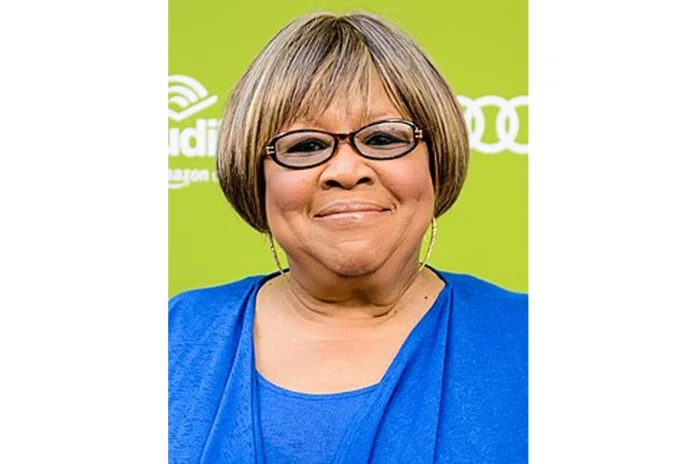
Mavis Staples Bio
Mavis Staples (born July 10, 1939) is an American rhythm and blues and gospel singer and civil rights activist. She first rose to prominence as a member of her family group, the Staple Singers, and she remains the last surviving member of that legendary ensemble. During her time with the group, she helped record iconic hit singles including “I’ll Take You There” and “Let’s Do It Again.” Over a career that began in 1950 and continues today, Mavis Staples has built a reputation as one of the most influential voices in American music.
Beyond her work with the Staple Singers, Mavis Staples has built a respected solo career, releasing more than a dozen studio albums and collaborating with artists such as Bob Dylan, Prince, Aretha Franklin, Arcade Fire, David Byrne, and Hozier. She has been honored with multiple Grammy Awards, a Kennedy Center Honor, and induction into both the Rock and Roll Hall of Fame and the Gospel Music Hall of Fame.
Early Life and Background
Mavis Staples was born on July 10, 1939, in Chicago, Illinois. She grew up in a close-knit family that would become central to her musical life. Her father, Roebuck “Pops” Staples, led the family band and played guitar, while her siblings Cleotha, Yvonne, and Pervis joined her in the group that would become the Staple Singers.
From a young age, Mavis Staples was surrounded by gospel music, beginning her career in 1950 as part of the family group. The Staple Singers initially sang locally at churches and appeared on a weekly radio show, eventually scoring a hit in 1956 with “Uncloudy Day” on the Vee-Jay label. By the time she graduated from Parker High School, later renamed Paul Robeson High School, in 1957, the family was taking their music on the road, building a loyal following across the country.
Inspired by Pops Staples’ close friendship with civil rights leader Martin Luther King Jr., the family group became closely tied to the civil rights movement. Their music, blending gospel roots with messages of hope and justice, shaped Mavis Staples’ lifelong commitment to activism and shaped the cultural direction of the group.
Path to Singing
Mavis Staples’ path to becoming a celebrated singer was rooted in her early years performing gospel music alongside her family. As the Staple Singers evolved from local church performances to national recognition, Mavis’s powerful voice and emotional delivery became central to the group’s identity. The group moved from gospel recordings on the United and Riverside labels to wider success on Vee-Jay and eventually to Stax Records in 1968.
At Stax, the Staple Singers reached the peak of their commercial success, blending their gospel harmonies with the label’s signature soul sound and working alongside members of Booker T. and the MGs. Between 1971 and 1975, the group charted eight Top 40 hits, including two No. 1 singles, “I’ll Take You There” and “Let’s Do It Again,” and the No. 2 holiday single “Who Took the Merry Out of Christmas?” These achievements established Mavis Staples as a major voice in American popular music.
Even while performing with the Staple Singers, Mavis Staples pursued solo work, releasing her self-titled debut album in 1969 for the Stax label. She followed it with Only for the Lonely in 1970 and a soundtrack album, A Piece of the Action, on Curtis Mayfield’s Curtom label. Her willingness to explore projects outside the family group laid the foundation for a solo career that would flourish in the decades to come.
Mavis Staples Career
Early Career (1950–1988)
During the early decades of her career, Mavis Staples built her reputation primarily as a member of the Staple Singers, contributing to the group’s transition from gospel performers to mainstream chart success. The family scored their first major hit with “Uncloudy Day” in 1956, and over the following decades, they became known as “God’s Greatest Hitmakers.” Mavis’s voice became one of the defining sounds of the group, helping carry songs like “Long Walk to D.C.” and “When Will We Be Paid?” to wide audiences.
Her first solo foray came in the late 1960s with the single “Crying in the Chapel,” released to little fanfare but later reissued on the 1994 collection Lost Soul. Her first solo album, the self-titled Mavis Staples, arrived in 1969 on the Stax label. She continued to balance solo releases with group work, later recording two albums under the direction of Prince: Time Waits for No One in 1989 and The Voice in 1993, the latter of which People magazine named one of the Top Ten Albums of 1993.
Breakthrough (2004–2019)
Mavis Staples launched a major national comeback in 2004 with the album Have a Little Faith on Alligator Records, produced by Jim Tullio. The album featured spiritual music, some of it semi-acoustic, and signaled a creative resurgence. That same year, she contributed to John Scofield’s Verve tribute to Ray Charles, entitled That’s What I Say, and joined him on a subsequent live tour. In 2007, she released We’ll Never Turn Back on Anti-Records, a Ry Cooder-produced concept album focused on gospel songs of the civil rights movement.
Her eighth studio album, You Are Not Alone, released in 2010, marked a turning point. The album earned critical acclaim, became her first solo release to top a Billboard chart by reaching No. 1 on the Top Gospel Albums chart, and earned her first Grammy Award. Subsequent releases included One True Vine in 2013, Livin’ on a High Note in 2016, If All I Was Was Black in 2017, and We Get By in 2019. Throughout this period, she also collaborated widely, recording with artists such as Arcade Fire, Hozier, and Run the Jewels, and performing at major events including the 2010 Rally to Restore Sanity and/or Fear and the 2019 Glastonbury Festival.
Notable Works and Milestones
Among her most celebrated solo achievements, You Are Not Alone stands as a signature work, earning Mavis Staples her first Grammy Award. Her collaborations with Bob Dylan, Prince, and the Staple Singers have produced enduring recordings, and her 2017 collaboration with Jeff Tweedy on If All I Was Was Black reaffirmed her place as a vital contemporary artist. In 2019, she celebrated her 80th birthday with a concert at the Apollo Theater, 63 years after first performing there as a teenager with her family band.
Mavis Staples Award Nominations
Mavis Staples has earned Grammy Award nominations across her career, both as a soloist and as a collaborator. She received a 2004 Grammy nomination in the Best Pop Collaboration With Vocals category for her duet with Bob Dylan on “Gonna Change My Thinking,” from the album Gotta Serve Somebody: The Gospel Songs of Bob Dylan. Across her decades in music, she has also been recognized at major industry events, including the Independent Music Awards, where she served as a judge for the 3rd and 7th annual ceremonies to support independent artists.
Mavis Staples Awards Won
Mavis Staples has received numerous honors recognizing her contributions to music and culture. As a member of the Staple Singers, she received the Grammy Lifetime Achievement Award in 2005, and the group was inducted into the Rock and Roll Hall of Fame in 1999. She won her first solo Grammy Award in 2011 for Best Americana Album for You Are Not Alone, and has since won multiple solo Grammy Awards, including one for Album of the Year as a featured artist on We Are by Jon Batiste.
Additional honors include the 2006 National Heritage Fellowship from the National Endowment for the Arts, the United States’ highest honor in folk and traditional arts, a 2016 Kennedy Center Honor, induction into the Blues Hall of Fame in 2017, and a Lifetime Achievement Award at the 2018 National Arts Awards. In 2019, the Rock and Roll Hall of Fame honored her with their inaugural Rock Hall Honors Award for her solo work. She was also inducted as a Laureate at the 57th Laureate Convocation of the Lincoln Academy of Illinois in 2021 and received the Order of Lincoln, the state’s highest honor. In 2024, she received the Golden Plate Award of the American Academy of Achievement.
| Award | Wins | Year |
|---|---|---|
| Grammy Award for Best Americana Album (You Are Not Alone) | 1 | 2011 |
| Grammy Lifetime Achievement Award (with the Staple Singers) | 1 | 2005 |
| National Heritage Fellowship | 1 | 2006 |
| Kennedy Center Honor | 1 | 2016 |
| Blues Hall of Fame Induction | 1 | 2017 |
| Rock Hall Honors Award | 1 | 2019 |
Mavis Staples Family
Mavis Staples comes from a musical family that formed the heart of the Staple Singers. Her father, Roebuck “Pops” Staples, led the group on guitar and served as its primary songwriter, while her siblings Cleotha, Yvonne, and Pervis rounded out the original lineup. The family’s close bond and shared commitment to gospel music and social justice shaped Mavis Staples’ career and identity as a performer.
Personal Life
Mavis Staples was married to Chicago mortician Spencer Leak in 1964, and the couple divorced eight years later when she refused to end her music career to stay home. She has no children. In the 2015 documentary Mavis!, she revealed that Bob Dylan once proposed to her and she turned him down. She also admitted during a 2008 appearance on National Public Radio’s Wait Wait… Don’t Tell Me! that she and Dylan had been good friends and that he had asked her father for her hand in marriage.