
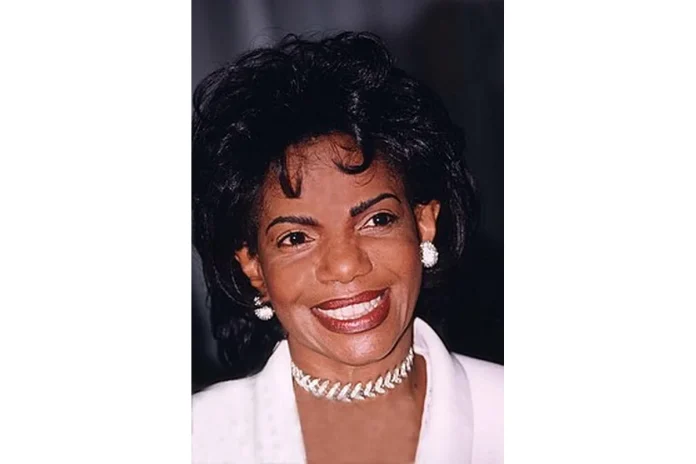
Melba Moore Bio
Beatrice Melba Smith, known professionally as Melba Moore, is an American singer and actress whose career has spanned stage, film, and recording since the mid-1960s. She first gained national recognition after winning the 1970 Tony Award for Best Performance by a Featured Actress in a Musical for her portrayal of Lutiebelle in the Broadway production of Purlie. Moore later built a successful recording career in R&B, soul, disco, and gospel, highlighted by international hits such as This Is It and Love’s Comin’ at Ya.
Beyond performing, Moore has remained a visible figure in American entertainment, returning to Broadway, starring in film and television projects, and staging long-running one-woman shows. Her contributions to music and theatre have been recognized with honors including induction into the National Rhythm & Blues Hall of Fame and a star on the Hollywood Walk of Fame.
Early Life and Background
Beatrice Melba Smith was born on October 29, 1945, in New York City. She is the daughter of big band leader Teddy Hill and singer Gertrude Melba Smith, who performed professionally under the name Bonnie Davis. Growing up in a household steeped in jazz and popular music gave Moore an early appreciation for performance, and she often accompanied her mother to concerts and rehearsals during her childhood.
When Moore was nine years old, her mother remarried jazz pianist Clement Leroy Moorman, and the family relocated to Newark, New Jersey. She attended Newark Arts High School, where she studied vocal music and performing arts, and graduated in 1958. She later continued her education at Montclair State College, earning a Bachelor of Arts degree in music in 1970, the same year she received her first Tony Award.
Moore’s family background and training helped shape her versatility as a performer, allowing her to move comfortably between gospel, jazz, R&B, and Broadway material. These formative years laid the groundwork for the wide range of musical and theatrical projects she would later pursue.
Path to Music
Moore began her professional recording career in 1967, cutting the track Magic Touch, which was not released until 1986. That same year, she joined the original cast of the groundbreaking musical Hair, performing alongside Ronnie Dyson, Paul Jabara, and Diane Keaton, and later taking over the role of Sheila. The exposure from Hair helped establish Moore within the New York theatre community and led directly to her casting in Purlie.
Her Tony Award-winning performance in Purlie opened doors in both film and television, and she soon signed recording deals that launched her solo music career. Following early releases on Mercury, she moved to Buddah Records in 1975, where she released the critically successful R&B album Peach Melba, setting the stage for her breakthrough as an international recording artist.
Melba Moore Career
Early Career (1966–1974)
Moore’s earliest years in the industry were dominated by stage work. After her debut in Hair, she earned widespread acclaim for Purlie, winning the Tony Award for Best Featured Actress in a Musical. She followed that success with two early albums, 1970’s I Got Love and Look What You’re Doing to the Man, and secured two film roles before transitioning to television.
In 1972, Moore co-starred with actor Clifton Davis in a variety television series, which was canceled after a brief run when their personal relationship ended. Following personal and professional setbacks in 1973, Moore returned to Newark and performed at benefit concerts, eventually reconnecting with the music industry through her work at the Apollo Theater.
Breakthrough (1975–1986)
Moore’s biggest commercial breakthrough came in 1976 with the Van McCoy-penned single This Is It, which reached the Billboard Hot 100, the top twenty on the R&B chart, and the top ten on the UK Singles Chart. The track became the number one disco song in the United Kingdom that year and remains her signature international hit. Her follow-up single Lean on Me earned a Grammy nomination for Best Rhythm & Blues Vocal Performance – Female in 1976.
Throughout the late 1970s and 1980s, Moore scored a series of R&B and dance hits across multiple labels. After signing with Capitol Records in 1982, she reached the top five on the R&B charts with Love’s Comin’ at Ya, followed by additional successes including Mind Up Tonight, Keepin’ My Lover Satisfied, and Read My Lips, the last of which earned her a Grammy nomination for Best Female Rock Vocal Performance in 1986. That same year, her duet A Little Bit More with Freddie Jackson and the single Falling both reached number one on the R&B charts.
Notable Works and Milestones
Moore’s most recognized recordings include the albums Peach Melba (1975), I Got Love (1970), and This Is It (1976), along with the singles Love’s Comin’ at Ya, A Little Bit More, and Read My Lips. Her career-defining moment came with her 1970 Tony Award win for Purlie, while her biggest chart success arrived a few years later with This Is It. She was one of the few artists of her era to earn Grammy nominations in pop, R&B, and rock categories, and she became the third Black artist to be nominated in the rock field following Donna Summer and Michael Jackson.
Melba Moore Award Nominations
Melba Moore has received three Grammy Award nominations across her recording career. Her first came in 1971 for Best New Artist, followed by a 1976 nomination for Best Rhythm & Blues Vocal Performance – Female for Lean on Me. Her third nomination arrived in 1986 for Best Female Rock Vocal Performance for Read My Lips, a recognition that placed her among a small group of artists acknowledged across multiple genres.
Melba Moore Awards Won
Moore’s first major award came in 1970, when she won the Tony Award for Best Performance by a Featured Actress in a Musical for her role in Purlie. She was honored with the Atlanta Black Theatre Festival Theatre Legend Award in 2012 and was inducted into the National Rhythm & Blues Hall of Fame on October 4, 2015, in Detroit. On August 10, 2023, she received a star on the Hollywood Walk of Fame in the Live Theatre/Live Performance category.
| Award | Wins | Year |
|---|---|---|
| Tony Award for Best Featured Actress in a Musical (Purlie) | 1 | 1970 |
| Atlanta Black Theatre Festival Theatre Legend Award | 1 | 2012 |
| National Rhythm & Blues Hall of Fame Induction | 1 | 2015 |
| Hollywood Walk of Fame Star (Live Theatre/Live Performance) | 1 | 2023 |
Melba Moore Family
Moore is the daughter of big band leader Teddy Hill and singer Bonnie Davis, whose stage name was Gertrude Melba Smith. After her mother’s remarriage to jazz pianist Clement Leroy Moorman, the family moved to Newark, New Jersey, where Moore spent most of her formative years. She has one daughter.
Personal Life
Moore was in a four-year relationship with television star Clifton Davis during the early 1970s. In September 1974, she married record manager and business promoter Charles Huggins, and the couple divorced in 1991 after seventeen years of marriage. Moore has described herself as a born-again Catholic and has continued to perform, record, and tour in the decades that followed.