
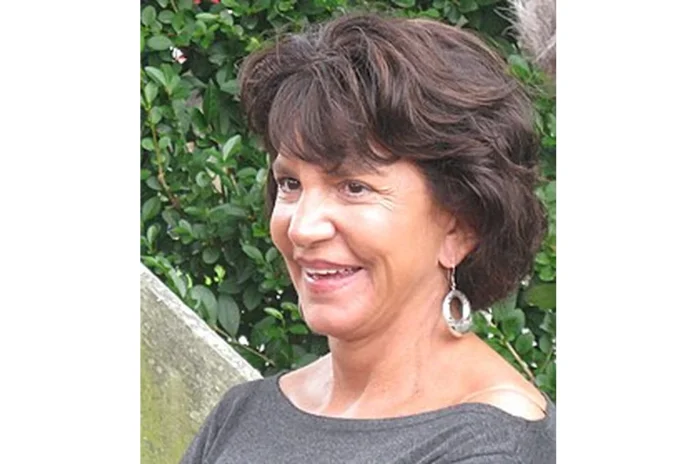
Mercedes Ruehl Bio
Mercedes J. Ruehl, born on February 28, 1948, is an American actress whose career has spanned film, television, and stage for nearly five decades. She rose to prominence in the late 1980s and early 1990s through a series of commanding performances that earned her some of the most prestigious honors in entertainment. Her most celebrated film role came in Terry Gilliam’s fantasy comedy drama The Fisher King, for which she won the Academy Award for Best Supporting Actress. Beyond Hollywood, Ruehl has been a major presence on Broadway, winning a Tony Award for Neil Simon’s Lost in Yonkers. She has also built a respected teaching practice, sharing her craft with new generations of performers at HB Studio in New York City.
Early Life and Background
Mercedes J. Ruehl was born on February 28, 1948, in Jackson Heights, Queens, New York City. Her mother, also named Mercedes J. Ruehl, worked as a schoolteacher, while her father, Vincent Ruehl, served as an FBI agent. Because of Vincent’s assignments with the FBI, the family moved frequently during her childhood, at one point living in Silver Spring, Maryland. Her father was of German and Irish descent, and her mother was of Cuban and Irish descent. She and her brother, Peter, were raised Catholic in a household shaped by discipline, faith, and frequent change.
Ruehl attended the College of New Rochelle, a private Catholic institution in Westchester County, New York, where she earned a Bachelor of Arts degree in English in 1969. She later studied acting at the Pacific Conservatory of the Performing Arts, a respected training program based in Santa Maria, California. These formative academic and conservatory years helped her develop the intellectual discipline and technical foundation that would later define her career on stage and screen.
Path to Celebrity
After completing her education, Ruehl began her acting career in New York City, appearing in off-off Broadway productions while supporting herself with temping and waitressing jobs. She built her craft in regional theater, eventually establishing herself with the Denver Center Theatre Company in Colorado. In 1980, she came close to joining the cast of Saturday Night Live in its sixth season but lost the slot to Denny Dillon, a setback that did not derail her momentum.
Her breakthrough on Broadway arrived in 1984 with a starring role in Herb Gardner’s I’m Not Rappaport, a production that helped introduce her talents to a wider audience. She went on to win an Obie Award for her work in The Marriage of Bette and Boo, signaling her emergence as a major force in the New York theater world. These early stage successes created the foundation that would soon launch her into film and television.
Mercedes Ruehl Career
Early Career (1976-1989)
Mercedes J. Ruehl began her screen career with an appearance in Walter Hill’s cult action film The Warriors in 1979, followed by roles in Heartburn (1986) and 84 Charing Cross Road (1987). Her supporting turn opposite Tom Hanks in the comedy Big (1988) helped establish her as a memorable presence in mainstream Hollywood. She also earned strong notices for Married to the Mob (1988), winning the National Society of Film Critics Award for Best Supporting Actress for her performance in that film.
Alongside her film work, Ruehl continued to build her reputation in regional and off-Broadway theater during the 1980s, collecting Obie and Drama Desk recognition for her stage performances. Her Broadway debut in I’m Not Rappaport (1985) confirmed her arrival on the commercial stage. By the end of the decade, she had become one of the most respected character actresses in American entertainment.
Breakthrough (1990-2000)
The early 1990s marked the height of Mercedes J. Ruehl’s commercial and critical success. In 1991, she took on the role of Bella Kurnitz in Neil Simon’s Lost in Yonkers on Broadway, winning both the Tony Award for Best Actress in a Play and the Drama Desk Award for Outstanding Actress in a Play. That same year, she delivered what would become her signature screen performance as Anne Napolitano, the strong-willed video store owner in Terry Gilliam’s The Fisher King. The role earned her the Academy Award for Best Supporting Actress, a Golden Globe Award, and several critics’ prizes.
Throughout the decade, Ruehl maintained a busy schedule across film and television. She appeared in Last Action Hero (1993), reprised her Tony-winning role in the film adaptation of Lost in Yonkers (1993), and earned another Tony nomination for The Shadow Box (1995). On television, she joined the NBC sitcom Frasier from 1995 to 1996 as Kate Costas, the station manager at KACL, appearing in five episodes. She also starred in the made-for-TV film Indictment: The McMartin Trial (1995), earning an Emmy nomination for her portrayal of a defendant in the high-profile case.
Ruehl continued to take on challenging projects into the late 1990s, starring opposite Angelina Jolie in the HBO biopic Gia (1998). She later appeared in The Minus Man (1999) alongside Owen Wilson, a film that also featured her future husband, David Geiser. By the turn of the millennium, she had cemented her status as one of the most awarded actresses of her generation.
Notable Works and Milestones
Among Mercedes J. Ruehl’s most celebrated works are her Oscar-winning performance in The Fisher King, her Tony-winning turn in Lost in Yonkers, and her scene-stealing role in Married to the Mob. Her recurring appearance on Frasier remains one of her most recognizable television contributions, while her performance in Gia (1998) added another memorable credit to her filmography. Across stage and screen, she has earned a reputation for intelligent, fearless, and emotionally precise acting.
Mercedes Ruehl Award Nominations
Throughout her career, Mercedes J. Ruehl has earned multiple award nominations across film, television, and theater. She received Tony Award nominations for her performances in Michael Cristofer’s The Shadow Box (1995) and Edward Albee’s The Goat, or Who Is Sylvia? (2002). On television, she earned a Primetime Emmy nomination for her role in the HBO film Indictment: The McMartin Trial (1995). She has also been recognized by critics’ organizations for her work across multiple decades.
Mercedes Ruehl Awards Won
Mercedes J. Ruehl has won many of the most prestigious honors in American entertainment, spanning film, stage, and television. She won the Academy Award for Best Supporting Actress, the Golden Globe Award, and multiple critics’ prizes for The Fisher King (1991). On Broadway, she earned the Tony Award for Best Actress in a Play for Lost in Yonkers. She has also received Obie Awards, Drama Desk Awards, and the Rita Moreno HOLA Award for Excellence from the Hispanic Organization of Latin Actors in 2005.
| Award | Wins | Year |
|---|---|---|
| Academy Award for Best Supporting Actress | 1 | 1992 |
| Golden Globe Award | 1 | 1992 |
| Tony Award for Best Actress in a Play | 1 | 1991 |
| Obie Award | 2 | 1981, 2005 |
| Drama Desk Award for Outstanding Actress in a Play | 1 | 1991 |
| National Society of Film Critics Award for Best Supporting Actress | 1 | 1989 |
Mercedes Ruehl Family
Mercedes J. Ruehl was raised in a close-knit Catholic family alongside her brother, Peter Ruehl, who later moved to Australia in 1987 and worked as a newspaper columnist until his death in 2011. Her mother was a schoolteacher and her father was an FBI agent, and the family moved frequently during her childhood because of her father’s work. The discipline and adaptability of her upbringing helped shape her independent and resilient character.
Personal Life
Ruehl had a son, Christopher, whom she placed for adoption in 1976 when she was 28 years old; the two were reunited in the late 1990s after he turned 21. In 1999, she married painter David Geiser, with whom she adopted a son named Jake, born in 1995. The couple later separated but remained close, and Christopher became Jake’s godfather. Geiser died unexpectedly of heart disease in his sleep at home on October 14, 2020, at the age of 73. Today, Ruehl lives in New York and teaches acting at HB Studio, continuing to influence new generations of performers.