
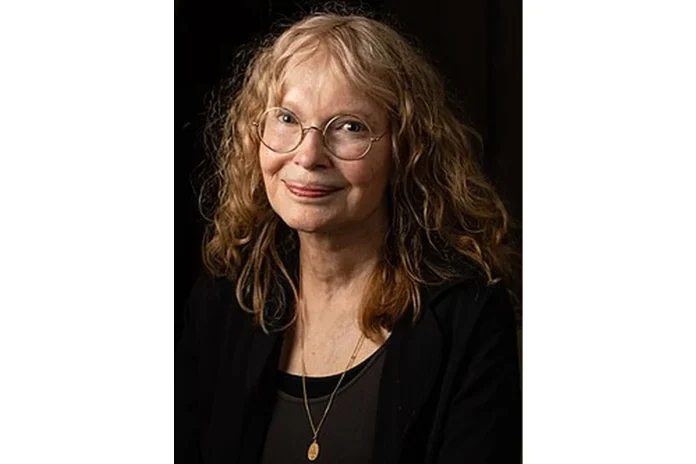
Mia Farrow Bio
Maria de Lourdes Villiers Farrow, known professionally as Mia Farrow, is an American actress and humanitarian born on February 9, 1945, in Los Angeles, California. She first gained national recognition for her role as Allison MacKenzie on the prime-time television drama Peyton Place in the mid-1960s and went on to become an international film star with her leading role in Roman Polanski’s psychological horror classic Rosemary’s Baby (1968). Across a career spanning more than six decades, Farrow has appeared in films, television, and stage productions, earning a Golden Globe Award as well as BAFTA and Tony nominations.
Beyond her work on screen, Farrow has built a parallel career as a humanitarian. Since being named a UNICEF Goodwill Ambassador in 2000, she has traveled to conflict regions, advocated for children’s rights, and campaigned on issues ranging from the crisis in Darfur to polio eradication. She has also drawn widespread media attention for her personal life, including her marriages to Frank Sinatra and André Previn and her long relationship with director Woody Allen, with whom she collaborated on thirteen films.
Early Life and Background
Mia Farrow was born on February 9, 1945, in Los Angeles, California, the third child and eldest daughter of Australian film director John Farrow and his second wife, the Irish actress Maureen O’Sullivan. She grew up in a strict Catholic household in Beverly Hills alongside six siblings, including her younger sister Prudence Farrow, who would later gain fame as the inspiration for the Beatles’ song “Dear Prudence.” Her godparents were director George Cukor and Hollywood columnist Louella Parsons, and she was raised in a family deeply embedded in the film industry.
From an early age, Farrow showed a vivid imagination, occasionally staging mock performances with toy daggers and fake blood for passing celebrity tour buses. She made her film debut at age two in the short documentary Unusual Occupations: Film Tot Holiday (1947) and later made an uncredited appearance in her father’s film John Paul Jones (1959) while the family was living in Spain. At the age of nine, she contracted polio during an outbreak in Los Angeles County, an experience that she has described as marking the end of her childhood.
Farrow’s education took her across several countries. She attended Catholic parochial schools in Los Angeles and later studied at Marymount International School London, a convent boarding school in Surrey, England. After her father died of a heart attack when she was 17, the family was left with limited financial resources. Farrow returned to Los Angeles, completed her studies at Marymount High School, and went on to attend Bard College in New York. With her mother working on Broadway to support the family, Farrow began working herself, first as a fashion model and then as a stage actress.
Path to Celebrity
Farrow’s first credited film role came in the British military drama Guns at Batasi (1964), a performance that earned her the Golden Globe Award for New Star of the Year – Actress. That same year, she was cast as the sensitive Allison MacKenzie on the prime-time soap opera Peyton Place, where her waif-like appeal quickly made her a favorite of American audiences. Her rising fame led to her marriage to singer Frank Sinatra in 1966, though the union was short-lived, ending in 1968.
Seeking to establish herself as a serious film actress, Farrow screen-tested for the role of Liesl in The Sound of Music before landing her career-defining part as the titular Rosemary Woodhouse in Roman Polanski’s Rosemary’s Baby (1968). The film was both a critical and commercial triumph and earned her nominations for both a Golden Globe and a BAFTA Award. Critics praised her performance as a near-perfect match between actress and character, and the role remains one of the most iconic in modern horror cinema.
Mia Farrow Career
Early Career (1963–1969)
After early work on Peyton Place and supporting parts in several 1960s productions, Farrow moved rapidly toward leading roles. Her performance in Guns at Batasi (1964) brought her first industry recognition, and her role in Rosemary’s Baby (1968) established her as a major film star. She also earned a Golden Globe nomination for Best Actress in a Comedy or Musical for her role opposite Dustin Hoffman in John and Mary (1969), demonstrating her range across genres.
During this period, Farrow also appeared in the British spy film A Dandy in Aspic (1968) and the cult drama Secret Ceremony (1968) alongside Elizabeth Taylor and Robert Mitchum. Her willingness to take on challenging, often unsettling material in this era earned her a reputation as a daring and unconventional leading lady, setting the stage for her later work in independent and art-house cinema.
Breakthrough (1968–1992)
Rosemary’s Baby marked Farrow’s true breakthrough, transforming her from a television star into a global film icon. Over the following two decades, she built one of the most eclectic résumés in Hollywood, appearing in horror, period drama, comedy, and literary adaptation. Her turn as Daisy Buchanan in Jack Clayton’s 1974 adaptation of The Great Gatsby was a major commercial success, grossing more than $25 million at the U.S. box office, and she followed it with strong performances in Death on the Nile (1978), See No Evil (1971), and Robert Altman’s A Wedding (1978).
From 1980 to 1992, Farrow collaborated extensively with filmmaker Woody Allen, appearing in thirteen of his films. She starred in A Midsummer Night’s Sex Comedy (1982), Zelig (1983), Broadway Danny Rose (1984), The Purple Rose of Cairo (1985), Hannah and Her Sisters (1986), Radio Days (1987), September (1987), Another Woman (1988), Crimes and Misdemeanors (1989), Alice (1990), Shadows and Fog (1991), and Husbands and Wives (1992). She earned Golden Globe nominations for Broadway Danny Rose, The Purple Rose of Cairo, and Alice, and three BAFTA nominations for Best Actress across this period.
Notable Works and Milestones
Farrow’s signature role remains Rosemary Woodhouse in Rosemary’s Baby, a performance that earned her the Golden Globe Award for New Star of the Year and a place among the most celebrated leading ladies of her generation. Her collaboration with Woody Allen produced some of his most acclaimed films, including Hannah and Her Sisters, which grossed $35 million in the U.S. and earned her a third BAFTA nomination. She has also left a notable mark on stage, becoming the first American actress to join the Royal Shakespeare Company in 1971.
Mia Farrow Award Nominations
Over the course of her career, Mia Farrow has earned a range of prestigious nominations across film, television, and stage. She received Golden Globe nominations for Best Actress in a Comedy or Musical for John and Mary (1969), Broadway Danny Rose (1984), The Purple Rose of Cairo (1985), and Alice (1990), as well as a Golden Globe nomination for Best Actress for Rosemary’s Baby (1968) and a nomination in the Miniseries or Television Film category for Forget Me Never (1999). Farrow also earned three BAFTA nominations for Best Actress, for Rosemary’s Baby, The Purple Rose of Cairo, and Hannah and Her Sisters. In 2025, she received her first Tony Award nomination for Best Actress in a Play for her Broadway performance in The Roommate.
Mia Farrow Awards Won
Farrow’s most prominent early win was the Golden Globe Award for New Star of the Year – Actress, which she received for Guns at Batasi in 1964. She also won the National Board of Review Award for Best Actress for her role in Woody Allen’s Alice (1990). In recognition of her humanitarian work, Farrow has received the Leon Sullivan International Service Award, the Lyndon Baines Johnson Moral Courage Award, and the Marian Anderson Award, and in 2008, Time magazine named her one of the most influential people in the world.
Mia Farrow Family
Mia Farrow was born into a prominent entertainment family. Her father, John Farrow, was an Australian-born film director, and her mother, Maureen O’Sullivan, was an Irish actress best known for playing Jane in the Tarzan film series of the 1930s and 1940s. She grew up with several siblings, including her brother Patrick Villiers Farrow and her sisters Prudence and Tisa Farrow. Her brother Michael Farrow, a United States Marine Corps Reserve member, died in a plane crash in 1958 when Mia was a teenager. Farrow is also related to the broader Previn musical family through her second marriage.
Personal Life
Mia Farrow has been married three times. She wed singer Frank Sinatra in 1966, divorcing him in 1968. In 1970, she married conductor and composer André Previn, with whom she had three biological sons, twins Matthew and Sascha and their younger brother Fletcher. She and Previn also adopted several children, including Soon-Yi Previn, before divorcing in 1979. From 1980 to 1992, Farrow was in a relationship with filmmaker Woody Allen, and together they had one biological son, Ronan Farrow. Farrow has fourteen children in total, including notable figures such as Ronan Farrow, Moses Farrow, and Soon-Yi Previn.