
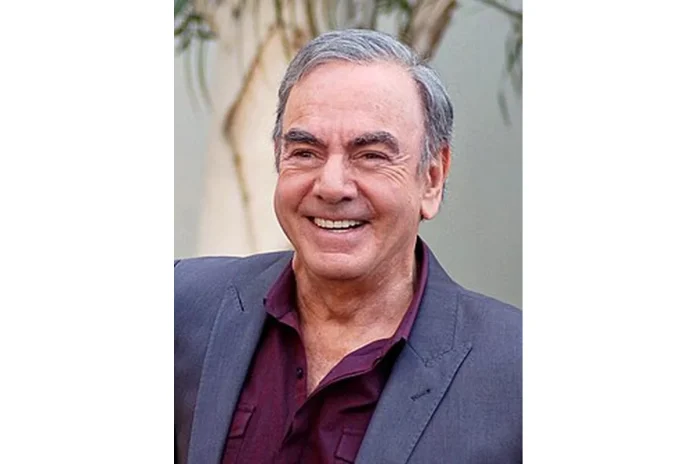
Neil Diamond Bio
Neil Leslie Diamond (born January 24, 1941) is an American singer-songwriter and musician whose career spans more than six decades. He has sold more than 56 million records in the United States alone, making him one of the best-selling artists of his era. Diamond is known for hit songs including “Sweet Caroline”, “Cracklin’ Rosie” and “Song Sung Blue”, and for writing hits that became famous through other performers, most notably “I’m a Believer” and “Red Red Wine”. He has been inducted into the Songwriters Hall of Fame and the Rock and Roll Hall of Fame, and has received multiple lifetime achievement honors for his contributions to popular music.
Beyond recording, Neil Diamond has also acted in films, most famously in the 1980 remake of The Jazz Singer, and his songs have become enduring anthems at sporting events, public celebrations, and Broadway musicals. His catalog continues to reach new audiences through productions such as the stage musical A Beautiful Noise, based on his life and music.
Early Life and Background
Neil Leslie Diamond was born in Brooklyn, New York, and raised in a Jewish family. All four of his grandparents were immigrants, with his father’s side from Poland and his mother’s side from Russia. His parents were Rose (née Rapoport) Diamond and Akeeba “Kieve” Diamond, a dry-goods merchant. Diamond grew up in several Brooklyn neighborhoods and spent four years in Cheyenne, Wyoming, while his father was stationed there in the army, before the family returned to New York.
He attended Erasmus Hall High School in Brooklyn, where he was a member of the Freshman Chorus and Choral Club alongside classmate Barbra Streisand. Their class also included chess grandmaster Bobby Fischer. After his family moved to Brighton Beach in 1956, Diamond transferred to Abraham Lincoln High School, where he joined the fencing team alongside his close friend, future Olympic fencer Herb Cohen.
For his sixteenth birthday, Diamond received his first guitar. While attending camp as a teenager, he watched folk singer Pete Seeger perform, an experience that convinced Diamond he could write his own songs. He began taking lessons and composing almost immediately, and writing soon became his first real creative interest. After high school, Diamond attended New York University as a pre-med student on a fencing scholarship, but he grew bored in class and began skipping lectures to bring his lyrics to Tin Pan Alley publishers. In his senior year, he was ten units short of graduating when Sunbeam Music Publishing offered him a sixteen-week songwriting job, and he left college to accept it.
Path to Music
Neil Diamond’s professional music career began in 1962, when he was not rehired by Sunbeam and turned to writing and performing his own material. His first recording contract paired him with high school friend Jack Packer as the duo “Neil and Jack”, but their singles went nowhere. Later in 1962, Diamond signed with Columbia Records as a solo performer, releasing the single “Clown Town” in 1963. When that record also failed to chart, Columbia dropped him, and he spent the next several years writing songs for other artists from a small upright piano above the Birdland jazz club in New York City.
During this period, Diamond wrote some of his most enduring early compositions, including “Cherry, Cherry” and “Solitary Man”. His first success as a songwriter for others came in November 1965 with “Sunday and Me”, a Top 20 hit for Jay and the Americans. Greater recognition followed when the Monkees recorded his songs “I’m a Believer”, “A Little Bit Me, a Little Bit You”, “Look Out (Here Comes Tomorrow)” and “Love to Love”. “I’m a Believer” became a gold record within two days of release and was named the Popular Music Song of the Year in 1966.
In 1966, Diamond signed with Bang Records, where he launched his solo recording career in earnest with “Solitary Man”, followed by “Cherry, Cherry” and “Kentucky Woman”. Disputes over royalties and artistic direction led to years of lawsuits, but in February 1977, Diamond finally won the rights to his Bang-era master tapes. In March 1968, he signed with Uni Records, and within a few years he had moved from New York to Los Angeles, setting the stage for his breakthrough as a major solo star.
Neil Diamond Career
Early Career (1960s)
Neil Diamond’s earliest recordings came in 1962, when he and Jack Packer released two unsuccessful singles on a small label. Signed by Columbia Records later that year, Diamond released “Clown Town” in 1963, but the song did not chart and he was dropped by the label. He then spent years as a Brill Building songwriter, pitching material to publishers and other artists. His first chart entry under his own name was “Solitary Man” in 1966, released on Bang Records, which became his first true hit as a solo artist.
His first notable honors arrived as a songwriter rather than as a performer. The Monkees’ recording of his “I’m a Believer” topped the charts for seven weeks in 1966, and he developed a reputation for crafting pop songs that other artists turned into massive hits. By the end of the 1960s, Diamond was balancing work as a writer-for-hire with a growing catalog of his own recordings, laying the foundation for his solo breakthrough.
Breakthrough (1970s)
Neil Diamond’s commercial breakthrough came in the early 1970s, beginning with “Sweet Caroline” in 1969, which became his first major hit after a mid-1960s slump. He followed it with “Holly Holy” in 1969 and the chart-topping singles “Cracklin’ Rosie” in 1970 and “Song Sung Blue” in 1972. In 1971, he played seven sold-out nights at the Greek Theater in Los Angeles, a run later expanded to ten nights in August 1972. The performance recorded on August 24, 1972, was released as the live double album Hot August Night, which became one of his most celebrated works and was remastered in 2000 with additional selections.
In the fall of 1972, Diamond performed twenty consecutive sold-out nights at the Winter Garden Theater in New York City, becoming the first rock-era star to headline on Broadway. After that engagement, he stepped back from touring for several years to focus on his son Jesse and on new studio work, including the score for the 1973 film Jonathan Livingston Seagull. Despite hostile reviews of the film, the soundtrack peaked at number two on the Billboard albums chart and earned Diamond a Golden Globe Award for Best Original Score and a Grammy Award for Best Score Soundtrack Album for a Motion Picture.
He returned to live performance in 1976 with an Australian tour and a new run at the Greek Theater. That same year, he released Beautiful Noise, produced by Robbie Robertson of The Band, and appeared at The Band’s farewell concert, The Last Waltz, performing “Dry Your Eyes”. A 1977 duet with Barbra Streisand on “You Don’t Bring Me Flowers” became his third number-one single and led to a celebrated surprise performance at the 1980 Grammy Awards ceremony. In 1979, Diamond collapsed on stage in San Francisco and underwent a twelve-hour operation to remove a tumor on his spine, an experience that shaped the songs he wrote during his recovery.
Notable Works and Milestones
Neil Diamond’s signature recordings include “Sweet Caroline” (1969), “Cracklin’ Rosie” (1970), “Song Sung Blue” (1972), “America” (1980) and “Heartlight” (1982). Ten of his singles have reached number one on the Billboard Hot 100 or Adult Contemporary charts, and thirty-eight songs by Diamond have reached the top ten on the Adult Contemporary chart. He made his film debut in 1980’s The Jazz Singer and, in 2007, was inducted into the Long Island Music Hall of Fame. The stage musical A Beautiful Noise, based on his life and music, opened in Boston in 2022 and is a lasting extension of his catalog.
Neil Diamond Award Nominations
Neil Diamond has received numerous nominations across the recording, film, and television industries, reflecting his long career as a performer, songwriter, and occasional actor. He was nominated for a Golden Globe Award for his role in the 1980 film The Jazz Singer, the same year he also became the first-ever winner of the Worst Actor Razzie Award for the same performance. His songwriting has been recognized with nominations in connection with songs recorded by other artists, and his live television appearances, including a 1987 performance of the national anthem at the Super Bowl, have added to his public honors.
Neil Diamond Awards Won
Neil Diamond has collected a wide range of lifetime and career honors. He was inducted into the Songwriters Hall of Fame in 1984, received the Sammy Cahn Lifetime Achievement Award in 2000, and was inducted into the Rock and Roll Hall of Fame in 2011. That same year, he was honored at the Kennedy Center Honors. In 2018, he received the Grammy Lifetime Achievement Award. He has also won a Golden Globe Award for Best Original Score and a Grammy Award for Best Score Soundtrack Album for a Motion Picture for Jonathan Livingston Seagull, and in 2019 his song “Sweet Caroline” was selected by the Library of Congress for preservation in the National Recording Registry for being culturally, historically, or aesthetically significant. In August 2012, Diamond received a star on the Hollywood Walk of Fame.
| Award | Wins | Year |
|---|---|---|
| Songwriters Hall of Fame Induction | 1 | 1984 |
| Sammy Cahn Lifetime Achievement Award | 1 | 2000 |
| Rock and Roll Hall of Fame Induction | 1 | 2011 |
| Kennedy Center Honors | 1 | 2011 |
| Golden Globe Award for Best Original Score | 1 | 1973 (for Jonathan Livingston Seagull) |
| Grammy Award for Best Score Soundtrack Album for a Motion Picture | 1 | 1973 (for Jonathan Livingston Seagull) |
| Grammy Lifetime Achievement Award | 1 | 2018 |
| Hollywood Walk of Fame Star | 1 | 2012 |
Neil Diamond Family
Neil Diamond was born to Rose (née Rapoport) Diamond and Akeeba “Kieve” Diamond, a dry-goods merchant. All four of his grandparents were immigrants, with his father’s family from Poland and his mother’s from Russia. Diamond has credited his family background, especially his grandparents’ story of coming to America, with inspiring some of his most personal songwriting, including “America”.
He has been married three times and is a father of four. With his first wife, Jaye Posner, he had two daughters, and with his second wife, Marcia Murphey, he had two sons, including Jesse, whose early years inspired Diamond to step back from touring in the mid-1970s. Diamond married his current wife, Katie McNeil, in 2012, and she has also served as his manager and produced the documentary Neil Diamond: Hot August Nights NYC.
Personal Life
Neil Diamond married his high-school sweetheart, Jaye Posner, in 1963; the couple separated in 1967 and divorced in 1969. On December 5, 1969, he married production assistant Marcia Murphey, with whom he had two sons; that marriage ended in divorce in the mid-1990s. After that, Diamond began a relationship with Australian Rae Farley, who was the inspiration for songs on his album Home Before Dark.
In 2011, Diamond announced his engagement to Katie McNeil, and the two married in Los Angeles in 2012. McNeil has worked as Diamond’s manager and producer of his concert film. In January 2018, Diamond announced that he would stop touring after being diagnosed with Parkinson’s disease, although he has continued to write, record, and engage in public advocacy, and he remains active in raising awareness of the condition.