
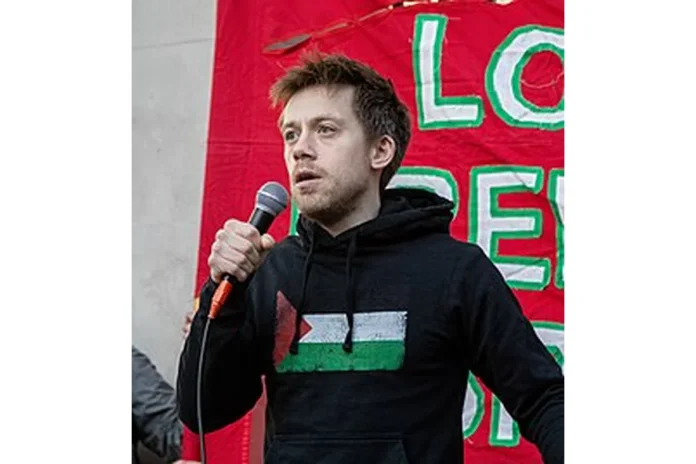
Owen Jones Bio
Owen Jones (born 8 August 1984) is a British newspaper columnist, commentator, journalist, author and political activist. He writes a column for The Guardian and contributes to the New Statesman, Tribune and The National, and he has published several books examining class, power and the British left, including Chavs, The Establishment, The Alternative and This Land.
Jones rose from trade union and parliamentary research roles to national prominence as an author and columnist. He presents web series and podcasts and is an active participant in public debates about social inequality, labour politics and LGBTQ rights.
Early Life and Background
Owen Jones was born in Sheffield, South Yorkshire, England, on 8 August 1984 and was raised in Stockport. He attended Bramhall High School and Ridge Danyers Sixth Form College before reading History at University College, Oxford, where he graduated in 2005.
His mother, Ruth Aylett, is a British computer scientist and his father, Robert Jones, was a union organiser. His parents met through political activity; Robert Jones later developed prostate cancer and died in 2018. Jones’s upbringing and family background informed his early exposure to trade unionism and left-wing politics.
Path to Celebrity
After university, Owen Jones worked as a trade union lobbyist and as a parliamentary researcher for the Labour Party MP John McDonnell. Those roles gave him direct experience of political organising and parliamentary work and formed the basis for his move into journalism and public commentary.
Jones published his first book in 2011, Chavs: The Demonization of the Working Class, which dissected cultural stereotypes of the British working class and attracted broad attention. The reception to Chavs established Jones as a visible voice on class and social inequality and created opportunities to write for national publications and to develop regular columns and media projects.
Owen Jones Career
Early Career (2005–2011)
Following his graduation in 2005, Owen Jones combined research and campaign work with emerging journalistic activity. He worked directly with political figures and trade unions, gaining practical insight into policy debates and advocacy, and he was engaged on projects such as indexing and archiving the papers of historian Eric Hobsbawm.
Jones began publishing commentary in a range of outlets and developed a growing profile that culminated in the publication of Chavs in 2011. The book’s critical reception introduced Jones to a national readership and marked his transition from behind-the-scenes work to a public-facing career in writing and political commentary.
Books Breakthrough (2011–2014)
Chavs: The Demonization of the Working Class (2011) was selected by Dwight Garner of The New York Times as one of his top 10 non-fiction books of 2011 and drew sustained discussion in media and political circles. Jones used the platform created by Chavs to publish further work and to build a reputation as a critic of inequality and establishment power.
His second book, The Establishment: And How They Get Away With It, was published in September 2014. The period between 2011 and 2014 consolidated Jones’s position as an author and public commentator and led to recognition in awards and speaking engagements, including the Royal Television Society’s Huw Wheldon Memorial Lecture in November 2013.
The Guardian Era (2014–Present)
Owen Jones moved from The Independent to become a weekly columnist for The Guardian in March 2014. His Guardian column and contributions to other publications such as the New Statesman and The National have been central to his public profile, allowing him to comment regularly on elections, austerity, Labour Party politics and social policy.
Alongside newspaper columns, Jones developed multimedia projects including two weekly web series, The Owen Jones Show and The Owen Jones Podcast, and a YouTube channel. His output blends long-form books, opinion columns and audiovisual content that reaches an audience outside traditional print media.
Driving Style and Strengths
Jones’s writing style is polemical and direct, grounded in campaigning and advocacy journalism. He foregrounds class analysis, trade union perspectives and left-wing policy prescriptions, combining investigative reporting, historical context and personal narrative to press arguments on inequality, public services and political accountability.
Notable Events and Milestones
Key milestones in Owen Jones’s career include the publication of Chavs in 2011, the move to The Guardian in 2014, major speaking and lecture engagements, and national awards. He has been active in high-profile public debates and has experienced both criticism and support from across the political spectrum, reflecting his prominent role in contemporary British political discourse.
Owen Jones Career Wins
Owen Jones has received multiple recognitions for his journalism and writing. He won the Journalist of the Year award at the Stonewall Awards in 2012 and received the Young Writer of the Year prize at the Political Book Awards in February 2013; he donated part of that prize to political and disability campaigns. In 2015 he was awarded an honorary Doctor of the University degree by Staffordshire University for campaigning on social inequality.
Books Highlights
Jones’s most notable books are Chavs (2011), The Establishment (2014), The Alternative (2019) and This Land (2020). Chavs established his reputation by challenging media stereotypes about the working class; subsequent books expanded his critique to address elite power structures and the internal debates of the British left. This Land examined the state of left politics and received a mixed critical reception while reinforcing Jones’s role as an active participant in those debates.
Other Wins & Perfromances
Beyond book awards, Jones has been invited to deliver major lectures and has used prize platforms to support political causes. He has also grown an audience through digital media, with a substantial YouTube following and regular podcast episodes that extend his reach beyond newspaper readers.
Owen Jones Family
Family Background and Racing Lineage
Owen Jones’s family background is publicly documented. His mother, Ruth Aylett, is a computer scientist and academic; his father, Robert Jones, was a union organiser and a politically active figure. Their political engagement influenced Jones’s early exposure to left-wing activism and union movements.
Personal Life
Owen Jones is openly gay. Public records note that he registered a civil partnership in September 2024 with a Brazilian doctor. The attack he experienced outside a North London pub in August 2019 was treated by the courts as motivated by hostility to his sexuality and political views; the perpetrators were convicted. Jones has spoken publicly about LGBTQ rights and transphobia in his work and advocacy.
2025 Season Performance
In 2025 Owen Jones continued to maintain a public role across columns, books, podcasts and video. He remained an active commentator on British politics and endorsed candidates in contemporary contests, including his public support for Zack Polanski during the 2025 Green Party leadership election. His digital platforms continued to attract significant audiences.
Jones’s published commentary in 2025 and his online output sustained discussions on the left about strategy and policy. His profile in the media and in progressive circles kept him involved in debates over party alignment, public ownership and inequality, with his influence noted by outlets tracking the non-Labour left.