
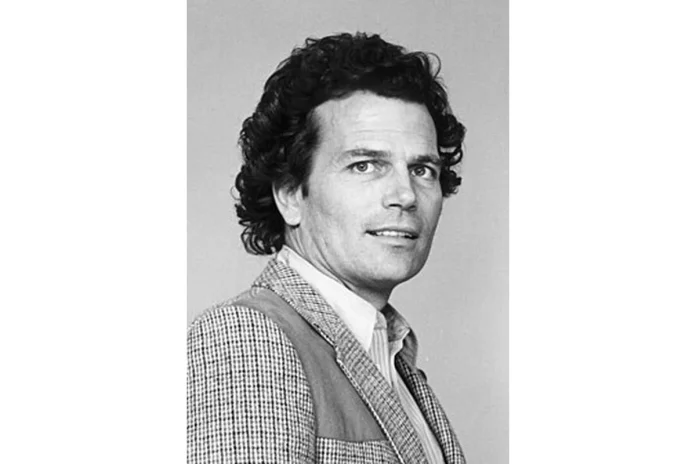
Patrick Wayne Bio
Patrick John Morrison, better known as Patrick Wayne, is an American actor born on July 15, 1939, in Los Angeles, California. He is the second son of the legendary actor John Wayne and his first wife, Josephine Alicia Saenz Wayne, and grew up in the orbit of Hollywood’s golden age. Over a screen career that stretches from 1950 to the present, Patrick Wayne built a steady body of work in Westerns, family adventure films, science-fiction fantasy features, and prime-time television, while also serving as a long-time custodian of his father’s legacy through the John Wayne Cancer Institute.
Early Life and Background
Patrick John Morrison was born on July 15, 1939, in Los Angeles, California, the second child of actor John Wayne and his first wife, Josephine Alicia Saenz, whose father served as Panama’s Consul General to the United States. Through his mother, Patrick Wayne has Spanish ancestry, a heritage he has publicly noted on multiple occasions, including during an award acceptance speech in Spain. He grew up alongside siblings Michael Wayne, Mary Antonia Toni Wayne LaCava, and Melinda Ann Wayne Munoz, and later three half-siblings from his father’s marriage to Peruvian actress Pilar Pallete.
His godfather was the celebrated film director John Ford, a close collaborator of his father, giving young Patrick an unusually direct line into the world of classical Hollywood filmmaking. Wayne attended Loyola Marymount University, where he joined the Alpha Delta Gamma fraternity, and he graduated in 1961. Shortly after completing his studies, he served a tour of duty with the United States Coast Guard from 1961 to 1965, an experience that interrupted his early acting work but gave him discipline and perspective before he returned to the screen full-time.
Path to Acting
Patrick Wayne made his film debut at the age of 11 as an uncredited extra in his father’s romantic Western Rio Grande in 1950. The appearance launched a pattern that would shape his early career: he would frequently work alongside John Wayne while also taking supporting roles in films directed by John Ford. He appeared in The Quiet Man in 1952, served as a props assistant on The High and the Mighty in 1954, and appeared in Ford-directed projects such as The Sun Shines Bright, Mister Roberts, The Long Gray Line, and The Searchers.
After graduating from Loyola Marymount University and completing his U.S. Coast Guard service in 1965, Wayne transitioned into adult leading and supporting roles in Westerns and adventure films. He struck out on his own as a young lead in The Young Land in 1959, played James Stewart’s son in Shenandoah in 1965, and later starred in Walt Disney’s outdoor drama The Bears and I in 1974. These roles established him as a reliable screen presence in frontier and family-oriented material.
Patrick Wayne Career
Early Career (1950–1965)
Throughout the 1950s and into the mid-1960s, Patrick Wayne worked steadily as a juvenile and then a young adult actor, almost always in collaboration with his father or with John Ford. After his debut in Rio Grande in 1950, he appeared in The Quiet Man in 1952, The High and the Mighty in 1954, The Searchers in 1956, The Alamo in 1960, The Comancheros in 1961, Donovan’s Reef in 1963, and McLintock! in 1963. He also appeared in Ford’s Cheyenne Autumn in 1964 and was the focus of Ford’s baseball teleplay Rookie of the Year in 1955.
His television work in this period was equally promising. He played baseball roles in Flashing Spikes in 1962, a baseball anthology installment directed by Ford and starring James Stewart, with John Wayne in a cameo. After his Coast Guard service ended in 1965, Wayne returned to a busy film schedule, including An Eye for an Eye in 1966 and continued appearances alongside his father in The Green Berets in 1968 and Big Jake in 1971.
Breakthrough (1968–1979)
Wayne’s most commercially successful stretch began in the late 1960s and carried through the 1970s. His starring role opposite his father in Big Jake in 1971 marked a turning point, bringing him strong recognition in the Western genre. He followed this with leading parts in The Deserter in 1971 and the Disney adventure The Bears and I in 1974, projects that broadened his audience beyond traditional Western fans.
He reached the peak of his film career in the late 1970s, starring in the popular matinee fantasy Sinbad and the Eye of the Tiger in 1977 and in The People That Time Forgot, also released in 1977. During this period he screen-tested for the title role of Superman, illustrating the level of leading-man consideration he was receiving in Hollywood. He then co-starred as the romantic lead opposite Shirley Jones in the brief television series Shirley in 1979, before stepping into television hosting duties as the host of The Monte Carlo Show in 1980.
Notable Works and Milestones
Patrick Wayne’s signature works include Rio Grande, The Searchers, The Alamo, Big Jake, Sinbad and the Eye of the Tiger, and Young Guns, the 1988 film in which he played Pat Garrett. He later appeared in the Western spoof Rustlers’ Rhapsody in 1985, hosted the 1990 revival of the game show Tic-Tac-Dough, and made guest appearances on popular series including Charlie’s Angels, Fantasy Island, Murder, She Wrote, Sledge Hammer!, and The Love Boat. In 2003, he became chairman of the John Wayne Cancer Institute, formalizing a lifetime of stewardship over his father’s medical and cinematic legacy.
Patrick Wayne Award Nominations
Verified independent records of formal award nominations for Patrick Wayne are not available in the supplied sources, and no nominations are therefore summarized here. This section is included only to confirm that the topic has been reviewed against the available inputs.
Patrick Wayne Awards Won
Verified independent records of competitive award wins for Patrick Wayne are not available in the supplied sources. In December 2015, he traveled to Almeria, in the Spanish region of Andalusia, to receive the Almeria Tierra de Cine prize in recognition of his long career in cinema, an honor he accepted while publicly noting his half-Spanish maternal heritage. Because not every detail of this honor can be confirmed at the required threshold, a summary table of wins has been omitted.
Patrick Wayne Family
Patrick Wayne is the second son of actor John Wayne and his first wife, Josephine Alicia Saenz Wayne, whose father served as Panama’s Consul General to the United States. His siblings include Michael Wayne, Mary Antonia Toni Wayne LaCava, and Melinda Ann Wayne Munoz, along with three half-siblings, Aissa Maria Wayne, John Ethan Wayne, and Marisa Carmela Wayne, from his father’s marriage to Peruvian actress Pilar Pallete. His film-director godfather was John Ford, and through his older brother Michael Wayne he is the uncle of country music singer Jennifer Wayne of the group Runaway June.
Personal Life
Patrick Wayne married his first wife, Margaret Ann Peggy Hunt, on December 11, 1965, and the couple divorced on September 1, 1978, after twelve years of marriage. He was thirty-nine years old when his father, John Wayne, died of stomach cancer on June 11, 1979, an event that reshaped his responsibilities within the Wayne family estate. Wayne later married his second wife, Misha Anderson, on May 8, 1999, and the couple remains married. He is the father of three children and continues to be active in interviews and family projects, including appearances on The John Wayne Gritcast podcast in 2021 alongside his younger half-brother, Ethan Wayne.