
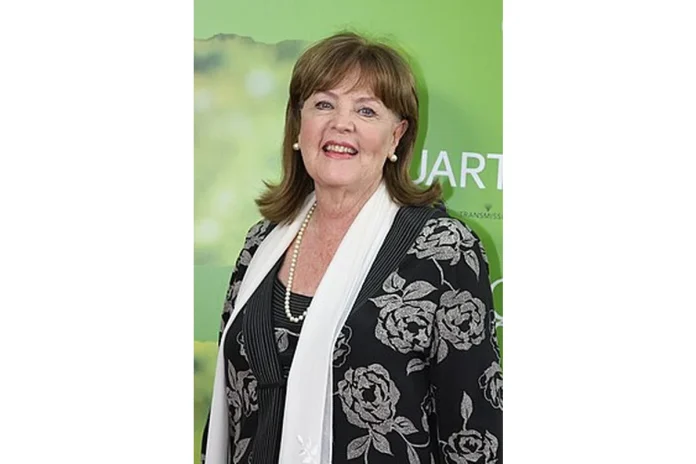
Pauline Collins Bio
Pauline Angela Collins (3 September 1940 – 5 November 2025) was a British actress whose work spanned stage, film and television. She trained at the Central School of Speech and Drama and built a career from the early 1960s through the 2010s, becoming widely known for roles in Upstairs, Downstairs and the one-woman play Shirley Valentine.
Collins combined stage presence and screen nuance across a long career that included West End theatre, Broadway and film. Her performances earned major awards and high-profile nominations, and she remained active in television dramas and film into the 2000s.
Early Life and Background
Pauline Angela Collins was born on 3 September 1940 in Exmouth, Devon, England, the daughter of Mary Honora Callanan and William Henry Collins. She was raised in Wallasey, Cheshire, in a family with Irish ancestry and grew up in a Catholic household.
Collins attended Sacred Heart High School in London and later trained at the Central School of Speech and Drama. Before turning full-time to acting she worked as a teacher and made her stage debut in 1962, beginning a steady progression into professional theatre and screen work.
Path to Celebrity
Collins entered professional acting in the early 1960s with stage roles that led to West End appearances and film work. Her early stage experience and television credits helped establish a profile that led to recurring and higher-profile roles throughout the 1960s and 1970s.
Television work in the 1960s and 1970s, including appearances in serials and episodic drama, gave Collins a platform to reach national audiences and prepared her for the breakthrough roles that followed. Training at the Central School of Speech and Drama provided formal technique that supported both comedic and dramatic parts.
Pauline Collins Career
Early Career (1962–1970)
Collins made her professional debut on stage in 1962 and made her West End debut in Passion Flower Hotel in 1965. During this period she also began appearing on screen, with early television credits and her first film role in Secrets of a Windmill Girl released in 1966.
Her television work in the 1960s included roles in Emergency Ward 10 and a part in the Doctor Who serial The Faceless Ones in 1967. These roles established her as a versatile performer capable of both dramatic and lighter material and created steady opportunities through the end of the decade.
Breakthrough (1971–1989)
Collins first achieved wide recognition for portraying Sarah Moffat in the period drama Upstairs, Downstairs (1971–1973). The role brought her national attention and led to the spin-off Thomas & Sarah in 1979, which she starred in with her husband, actor John Alderton.
Her performance in Upstairs, Downstairs showcased Collins’s ability to bring depth to a recurring television character and helped transition her into leading roles on both television and stage. She and John Alderton also collaborated on other projects including No, Honestly and Wodehouse Playhouse, broadening their public profile as a performing duo.
Shirley Valentine and Later Screen Work (1988–1999)
Collins created and starred in the one-woman play Shirley Valentine in London in 1988 and reprised the role on Broadway in 1989, a performance that became a defining moment in her career. She adapted the role for the 1989 film Shirley Valentine, which brought her international recognition, multiple awards and major industry nominations.
Following Shirley Valentine, Collins continued to work on television and film, starring in the ITV drama Forever Green from 1989 and appearing in films such as City of Joy (1992) and Paradise Road (1997). She also returned to television in the late 1990s with roles including The Ambassador.
Notable Works and Milestones
Collins is best known for Upstairs, Downstairs and Shirley Valentine, works that defined her public stature and demonstrated her range across theatre, film and television. She also published an autobiography, Letter to Louise, which detailed personal events and relationships that shaped her life beyond her public career.
Pauline Collins Award Nominations
Throughout her career Collins received several high-profile award nominations in recognition of her stage and film work. Her performance in the film Shirley Valentine earned nominations for an Academy Award for Best Actress and for a Golden Globe Award for Best Actress in a Motion Picture, Comedy or Musical.
Pauline Collins Awards Won
Collins won major awards for her portrayal of Shirley Valentine on stage and screen, including the Laurence Olivier Award for Best Actress and the Tony Award for Best Actress in a Play for the stage production. For the film adaptation she won the BAFTA Award for Best Actress in a Leading Role and received other industry honors.
In recognition of her services to drama she was appointed an Officer of the Order of the British Empire in the 2001 Birthday Honours.
Pauline Collins Family
Collins married actor John Alderton in 1969 and the couple lived in Hampstead, London, raising three children together. In addition, Collins had a daughter, Louise, with actor Tony Rohr; Louise was placed for adoption in 1964 and the pair were reunited more than two decades later.
Personal Life
Collins balanced a public acting career with a private family life; she and John Alderton often worked together onscreen and on stage. Later in life she was diagnosed with Parkinson’s disease and in her final years lived in care in Highgate, London, where she died on 5 November 2025 at age 85.
Her autobiography and public interviews documented personal challenges and reconciliations, particularly the story of her daughter Louise, and remain part of her legacy as both a performer and a private individual who navigated complex personal history alongside a high-profile career.