
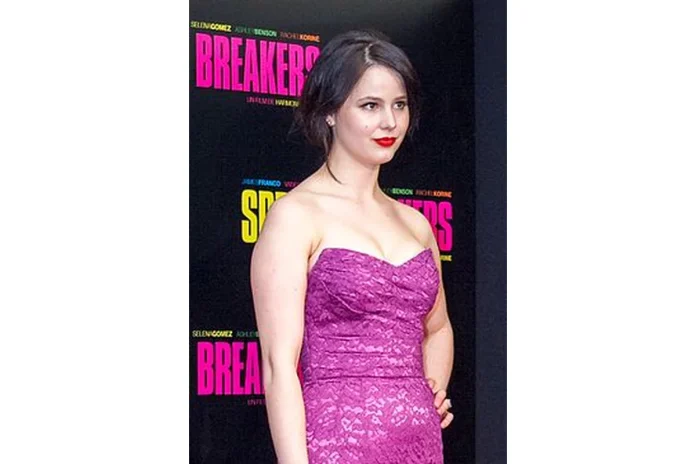
Rachel Korine Bio
Rachel Anna Simon Korine is an American former actress and artist who gained recognition through her work in independent and experimental cinema. Born and raised in Nashville, Tennessee, she developed a distinctive career characterized by collaborations with her then-husband, director Harmony Korine. Her most prominent performance came as Cotty in the 2013 crime film Spring Breakers, a role that introduced her to a wider international audience. Korine also appeared in the television series The Knick from 2014 to 2015, playing the character Junia in the Cinemax drama. Her professional acting career spanned from 2007 to 2015, during which she established herself within the independent film landscape through unconventional and fearless performances.
Early Life and Background
Rachel Korine was born in Nashville, Tennessee, where she spent her formative years. Growing up in the American South, she developed an early interest in the arts that would eventually lead her toward performance and creative expression. Her hometown of Nashville, known for its rich cultural heritage, provided the backdrop for her early artistic sensibilities. Korine was born Rachel Anna Simon and would later adopt the surname Korine following her marriage.
The details of her formal education have not been widely documented in public sources, but her path toward acting emerged through her connections within the independent film community. Her introduction to the world of cinema came through her relationship with Harmony Korine, a Nashville-born filmmaker known for his avant-garde and often controversial approach to filmmaking. This connection would prove instrumental in shaping her early career trajectory and artistic development.
Korine background in Nashville positioned her within a particular regional artistic context that informed her later work. The city’s creative environment, while primarily associated with music, also fostered experimental and alternative artistic expressions that aligned with the type of cinema she would eventually inhabit. Her Southern roots remained an undercurrent in her public identity throughout her acting career.
Path to Actress
Rachel Korine entry into the film industry was closely tied to her personal relationship with Harmony Korine, whom she met in their shared hometown of Nashville. The couple married in 2007, and this union served as her gateway into the world of independent cinema. Her first screen appearances came through projects directed by her husband, beginning with her involvement in the experimental film Trash Humpers, which exemplified the raw, unconventional style that would define much of her early work.
Her approach to acting was shaped by the distinctive aesthetic of Harmony Korine filmmaking, which often favored naturalistic performances over traditional Hollywood technique. This immersion in experimental cinema provided Korine with a unique foundation as a performer, one that emphasized authenticity and emotional directness. Her early roles required a willingness to engage with challenging material and unconventional narrative structures, setting the tone for her subsequent career choices.
The transition from relative unknown to recognizable figure in independent cinema came gradually through her collaborations. Her work in films like Mister Lonely and Septien demonstrated her range within the alternative film landscape. Each project contributed to her growing reputation as an actress capable of delivering performances that aligned with the distinctive vision of her collaborators. Her path was not the traditional trajectory through theater schools and conventional auditions but rather through immersion in a specific cinematic community that valued experimental approaches.
Rachel Korine Career
Early Career (2007–2012)
Rachel Korine professional acting career began in 2007 with her involvement in the experimental film Trash Humpers, a project that exemplified the avant-garde sensibilities of her early work. This film, shot on low-resolution video and designed to resemble found footage, presented Korine with her first significant screen appearance. The project extreme aesthetic and unconventional narrative structure established the tone for her early career, positioning her within the realm of boundary-pushing independent cinema.
Following this debut, Korine continued to build her filmography through further collaborations with Harmony Korine, including a role in Mister Lonely. This 2007 film, which explores the lives of celebrity impersonators, provided another opportunity for Korine to work within the distinctive creative framework established by her then-husband. These early projects, while not reaching mainstream audiences, garnered attention within independent film circles and helped establish Korine presence in the alternative cinema landscape. Her performances during this period demonstrated a commitment to challenging, non-traditional material that would become a hallmark of her career.
Breakthrough (2012–2015)
The year 2013 marked a significant turning point in Rachel Korine career with the release of Spring Breakers. The film, directed by Harmony Korine and starring James Franco, Vanessa Hudgens, Selena Gomez, and Ashley Benson, achieved substantial commercial success and critical attention. Korine portrayal of Cotty, one of four college students who turn to crime to fund their spring break vacation, represented her most high-profile role to date. The film vibrant aesthetic and provocative themes brought Korine work to a much larger audience than her previous projects had reached.
Spring Breakers premiered at the 69th Venice International Film Festival in 2012 before receiving a wide theatrical release in 2013. The film polarized critics but undoubtedly succeeded as a cultural phenomenon, generating extensive media coverage and discussion. Korine performance, while part of an ensemble, contributed significantly to the film chaotic energy and distinctive atmosphere. The role required her to navigate complex emotional terrain within a stylized narrative framework, demonstrating her ability to hold her own alongside more established actors in a high-profile production.
Following the success of Spring Breakers, Korine expanded her work into television with a recurring role on The Knick. The Cinemax medical drama, created by Jack Amiel and Michael Begler and set in a turn-of-the-century New York hospital, featured Korine as Junia from 2014 to 2015. This role represented a departure from the experimental cinema that had defined her career thus far, placing her within a more conventional narrative television format. Her transition to television demonstrated her range as a performer and her ability to adapt to different media and storytelling approaches.
Notable Works and Milestones
Throughout her relatively brief acting career, Rachel Korine built a filmography that, while not extensive, maintained a consistent commitment to unconventional and artistically ambitious projects. Beyond Spring Breakers, her work included the film Men Go to Battle (2015), in which she portrayed the character Betsy. This Civil War-era drama, directed by Zachary Shetter and Nathan Lowman, represented another collaboration with emerging independent filmmakers and further demonstrated Korine dedication to alternative cinema.
The period from 2007 to 2015 encompassed the entirety of Korine documented acting career, during which she established a distinctive presence within the independent film world. Her work was characterized by a willingness to engage with challenging material and an ability to deliver performances that served the often unconventional visions of her collaborators. While her filmography remained limited in quantity, the projects she chose to participate in possessed a coherent aesthetic unity that reflected her particular artistic sensibilities.
Rachel Korine Family
Rachel Korine family life has been closely intertwined with her professional trajectory, particularly through her marriage to Harmony Korine. The couple met in Nashville, their shared hometown, and wed in 2007. Their union produced three children: one daughter and two sons. The family was based in Nashville for much of their time together, maintaining connections to the Southern community where both Rachel and Harmony Korine originated. Their personal partnership was directly connected to their professional collaborations, with Rachel appearing in multiple films directed by Harmony during their marriage.
In 2025, reports emerged indicating that Rachel and Harmony Korine were no longer married. The end of their marriage coincided with Rachel departure from acting, as she had not appeared in new film or television projects since 2015. The transition away from performing appears to have coincided with changes in her personal life circumstances. Despite the conclusion of their marriage, the creative collaboration during their relationship resulted in a body of work that remains significant within the landscape of early 21st-century independent cinema.
Personal Life
Rachel Korine personal life has largely remained private, with most public information focusing on her professional work and family relationships. Following the end of her acting career in 2015, she has maintained a low public profile. The reported dissolution of her marriage to Harmony Korine in 2025 marked another significant personal transition, though details about her current activities and residence have not been widely documented in public sources.
Korine has also pursued artistic endeavors outside of acting, with reports indicating she had an art exhibit titled You & Me in 2025. This suggests a continued engagement with creative expression following her departure from performance. Her identity has evolved beyond her initial recognition as an actress, encompassing broader artistic pursuits that reflect her ongoing creative interests. While much of her current life remains out of the public eye, her documented contributions to independent cinema during her active years continue to be recognized by audiences and critics interested in alternative film.