
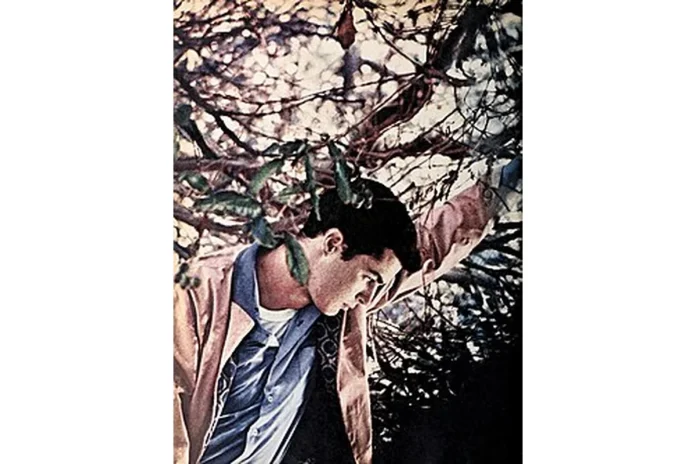
Richard Beymer Bio
George Richard Beymer Jr., known professionally as Richard Beymer, is an American actor, filmmaker, and visual artist born on February 20, 1938, in Avoca, Iowa. Standing 6 feet 2 inches tall, Beymer first gained national attention as a Hollywood leading man in the late 1950s and early 1960s, most memorably as Tony in West Side Story and as Peter Van Daan in The Diary of Anne Frank. He later became widely recognized by television audiences for his portrayal of Ben Horne on Twin Peaks. Beyond acting, he has built a substantial body of work as a director, writer, painter, sculptor, and novelist.
Early Life and Background
Richard Beymer was born George Richard Beymer Jr. on February 20, 1938, in the small town of Avoca, Iowa. He grew up in the American Midwest during the post-Depression era and developed an early fascination with performance and storytelling. As a young boy in the late 1940s, he began pursuing acting opportunities, eventually relocating to Los Angeles to chase his dream of working in front of the camera.
Beymer spent three formative years in Los Angeles acting on a local television show called Sandy Dreams, rehearsing after school during the week and recording the program on Saturdays. The experience ended when he was thirteen, but it gave him a strong foundation in front of a camera. He then transitioned to professional work, building a résumé that included guest roles on popular series of the era such as Cavalcade of America, Johnny Tremain, 26 Men, Zane Grey Theatre, The Gray Ghost, Navy Log, Whirlybirds, Sky King, Jane Wyman Presents The Fireside Theatre, and Schlitz Playhouse.
Path to Acting
Beymer made his feature-film debut in 1953 with Vittorio De Sica’s Stazione Termini, an important early credit that brought him international exposure. He was under contract to producer David O. Selznick for one year and continued to build a steady career in early television, appearing frequently in guest spots on anthology and adventure programs. These roles allowed him to refine his craft and become a recognizable presence on screens across the country.
Director George Stevens then cast Beymer in a major dramatic role as Peter Van Daan in The Diary of Anne Frank (1959), and the performance established him as an exciting young talent. He signed a contract with 20th Century Fox and was soon regarded as one of the most promising leading men of his generation. Beymer continued to study his craft, attending daily classes at the Actors Studio in New York to deepen his approach to the profession.
Richard Beymer Career
Early Career (1949–1960)
Beymer began his professional acting career in 1949 as a teenager performing on the Los Angeles television program Sandy Dreams. After his debut in Stazione Termini (1953), he worked steadily in television during the 1950s, appearing in series across the western, drama, and adventure genres. His contract with David O. Selznick and subsequent guest appearances helped him develop the discipline and versatility that would carry him into major film roles.
His first major studio film role arrived with The Diary of Anne Frank (1959), directed by George Stevens. The performance earned Beymer serious industry attention, and he soon signed with 20th Century Fox. He followed that role with a supporting part in High Time (1960), a comedy starring Bing Crosby and Tuesday Weld, which critics noted for his comedic timing.
Breakthrough (1961–1963)
In June 1960, Beymer was cast as Tony in the 1961 film adaptation of West Side Story, a production that became a huge cultural and commercial hit. His singing voice was dubbed by Jimmy Bryant, and he received a Golden Globe nomination for New Star of the Year – Actor. Although the film was a triumph, Beymer later expressed mixed feelings about his own performance in the role.
Beymer reunited with Tuesday Weld in the Fox comedy Bachelor Flat (1961) and played opposite Rosalind Russell and Jack Hawkins in Five Finger Exercise (1962) at Columbia. He took on the role of Nick Adams in Hemingway’s Adventures of a Young Man (1962), where he met Sharon Tate and encouraged her to pursue acting. He also appeared in The Longest Day (1962), a successful war epic, and was praised for The Stripper (1963), directed by Franklin J. Schaffner, which was critically acclaimed even though it did not perform strongly at the box office.
Notable Works and Milestones
West Side Story (1961) remains Beymer’s signature screen performance and helped define the movie musical era. His Golden Globe nomination for New Star of the Year – Actor cemented his early reputation, while later turns as Ben Horne on Twin Peaks introduced him to a new generation of viewers. His documentary A Regular Bouquet: Mississippi Summer (1964), filmed during Freedom Summer, marked a defining moment in his evolution from actor to independent filmmaker.
Richard Beymer Award Nominations
Throughout his career, Richard Beymer has received recognition for both his acting and his filmmaking work. His most notable nomination came early in his career with a Golden Globe Award nomination for New Star of the Year – Actor for his performance in West Side Story (1961). His documentary A Regular Bouquet: Mississippi Summer (1964) also earned critical recognition for its portrayal of civil rights volunteers registering African Americans to vote in Mississippi.
Richard Beymer Awards Won
Richard Beymer’s most prominent award came for his work behind the camera. His experimental narrative feature The Innerview, which he wrote, produced, directed, and starred in during the 1970s, won the Josef von Sternberg Award at the Mannheim-Heidelberg International Filmfestival in 1974. His documentary A Regular Bouquet: Mississippi Summer (1964) has also been described as award-winning for its compelling documentation of Freedom Summer.
| Award | Wins | Year |
|---|---|---|
| Josef von Sternberg Award (Mannheim-Heidelberg International Filmfestival) | 1 | 1974 |
Richard Beymer Family
Publicly available verified information about Richard Beymer’s immediate family, including parents, siblings, partners, and children, is limited. He has generally kept his personal relationships and family background private throughout his long career in the public eye.
Personal Life
Beymer became deeply involved in the Civil Rights Movement of the 1960s, participating in Freedom Summer in Valley View, Mississippi, in 1964. He assisted Barney Frank in rescuing Freedom Democrat forms from a confiscated rental truck in Canton on Freedom Day, and during this period he filmed the documentary A Regular Bouquet: Mississippi Summer. As of 2010, he resided in Fairfield, Iowa, where he continued to make films, write, sculpt, and paint. He is also a practitioner of Transcendental Meditation, which he has described as a way to cool out and maintain balance in his life.