
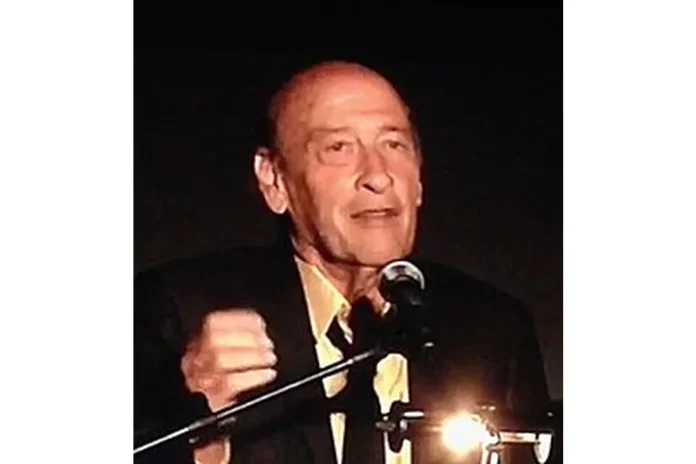
Richard Lester Bio
Richard Lester Liebman, professionally known as Richard Lester, is an American retired film director whose career helped define the visual energy of 1960s British cinema. Born on January 19, 1932, in Philadelphia, Pennsylvania, he spent most of his working life in the United Kingdom, where his quick editing, visual inventiveness, and flair for comedy influenced generations of filmmakers. He is best known for directing the Beatles films A Hard Day’s Night and Help!, the Palme d’Or-winning The Knack… and How to Get It, and major studio productions including The Three Musketeers, Superman II, and Superman III.
Lester began in American television before relocating to London in the mid-1950s, where he collaborated with Peter Sellers and Spike Milligan on the landmark comedy series The Goon Show. Over a career spanning nearly five decades, he moved fluidly between television, independent shorts, and large-scale features, earning a reputation as a craftsman who could balance artistic invention with commercial delivery. He has been honored with a BFI Fellowship and recognized by major film institutions for his lasting contribution to British and international cinema.
Early Life and Background
Richard Lester Liebman was born on January 19, 1932, into a Jewish family in Philadelphia, Pennsylvania. A recognized child prodigy, he attended the William Penn Charter School, a Quaker institution in his hometown, where his early academic ability stood out. At the unusually young age of 15, he enrolled at the University of Pennsylvania, going on to graduate with a Bachelor of Arts degree in clinical psychology in 1951.
His education in psychology informed an early interest in human behavior that would later shape the character-driven humor in his films. Growing up in post-war Philadelphia also placed him close to the rising American television industry, where he would take his first professional steps even before completing his formal training. These formative years blended academic rigor with an emerging curiosity about performance and storytelling.
Path to Directing
Lester began his directing career in American television in 1950, working first as a stagehand and floor manager before quickly rising to assistant director and director roles. By 1953, he was the music director on Action in the Afternoon, a live western series produced at CBS’s WCAU-TV studios in Philadelphia. The demanding pace of live broadcast television taught him efficiency, improvisational thinking, and a sharp sense of timing, all of which became signatures of his later film work.
In May 1955, after a period of travel through continental Europe, Lester moved to London to pursue directing opportunities in British television. He worked on low-budget detective series for the Danziger Brothers and soon attracted the attention of comedian Peter Sellers, who enlisted him to help translate the radio hit The Goon Show into television specials. These collaborations, including A Show Called Fred and Son of Fred, established Lester as a distinctive visual comedian and opened the door to his celebrated work with the Beatles and beyond.
Richard Lester Career
Early Career (1959–1963)
Lester received early critical acclaim with The Running Jumping and Standing Still Film (1959), a short film he created with Spike Milligan and Peter Sellers. The inventive, freewheeling short became a favorite of the Beatles, particularly John Lennon, and demonstrated the kind of playful visual style that would soon reach a global audience. He also directed the short The Sound of Jazz the same year, further establishing his credentials as a music-oriented visual director.
His first feature as director was the low-budget musical It’s Trad, Dad! (1962), followed by The Mouse on the Moon (1963), a comedy starring Margaret Rutherford and produced by Walter Shenson for United Artists. These modest productions allowed Lester to refine his craft on studio sets and gave studios confidence in his ability to deliver on tighter budgets before his career-defining assignments arrived.
Breakthrough (1964–1969)
Lester’s breakthrough came with A Hard Day’s Night (1964), the Beatles’ first feature film, which presented an exaggerated, fast-paced portrait of the band and proved enormously influential on the future of music videos. The film was a major critical and commercial success and led MTV decades later to send Lester an award recognizing him as the “Father of the Music Video.” He quickly followed it with the Palme d’Or-winning The Knack… and How to Get It (1965) and the Beatles’ second feature Help! (1965), a James Bond parody that cemented his reputation for stylish comedy.
He then directed the Hollywood musical A Funny Thing Happened on the Way to the Forum (1966) and the darkly satirical anti-war film How I Won the War (1967), which co-starred Michael Crawford and John Lennon. His Petulia (1968), starring Julie Christie and George C. Scott, and the post-apocalyptic comedy The Bed Sitting Room (1969) further demonstrated his range, even as some of these later 1960s projects struggled at the box office.
Notable Works and Milestones
Lester’s signature works include A Hard Day’s Night, Help!, The Knack… and How to Get It, The Three Musketeers (1973), and Superman II (1980). He was recognized with two BAFTA Award nominations and received a BFI Fellowship in 2012, the British film industry’s highest honor, in tribute to his enduring influence on British and international cinema.
Richard Lester Award Nominations
Richard Lester has been recognized with two BAFTA Award nominations across his lengthy career, reflecting the British film industry’s appreciation for his distinctive contributions to cinema. These nominations underscored his lasting impact on comedy direction, music film, and large-scale studio productions alike.
Richard Lester Awards Won
Among Richard Lester’s most distinguished honors is the BFI Fellowship, awarded in 2012 in recognition of his unique body of work and his influence on British cinema. His film The Knack… and How to Get It won the Palme d’Or at the Cannes Film Festival, one of the most prestigious prizes in world cinema. He was also presented with an award from MTV as “Father of the Music Video,” acknowledging the lasting stylistic legacy of A Hard Day’s Night.
Richard Lester Family
Richard Lester married Deirdre Smith in 1956, after the couple met while she was working in his office. The couple have a son, and their long marriage has remained a constant throughout Lester’s career in both the United States and the United Kingdom.
Personal Life
Lester has lived in Britain for more than six decades, building both his family life and professional legacy there. He has described himself as a committed atheist and was a member of the Beta Rho Chapter of the Sigma Nu fraternity during his time at the University of Pennsylvania. Despite his long residence abroad, he has retained his American nationality and is widely regarded as a pivotal transatlantic figure in twentieth-century film.