
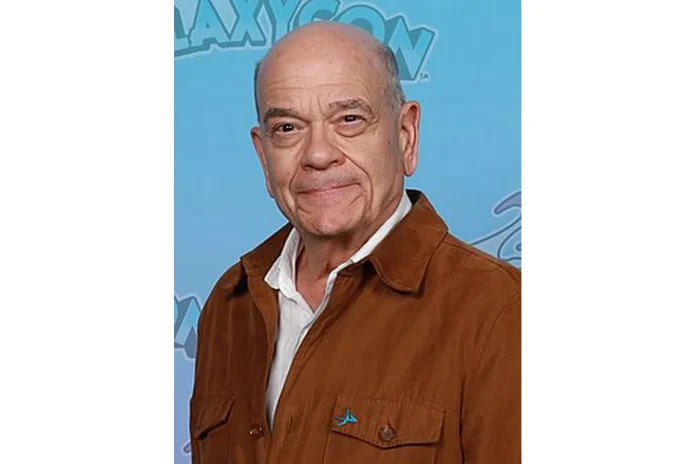
Robert Picardo Bio
Robert Alphonse Picardo (born October 27, 1953) is an American actor and singer best known for portraying the Emergency Medical Hologram, known simply as The Doctor, on the science fiction series Star Trek: Voyager. Born in Philadelphia, Pennsylvania, and trained at Yale University, Picardo has built a versatile career spanning stage, film, and television, with frequent collaborations with director Joe Dante. He is also recognized for his recurring role as Richard Woolsey in the Stargate franchise and for his work with The Planetary Society as a member of its board of directors.
Across more than four decades in the entertainment industry, Picardo has become a familiar face in genre television and film, often performing under layers of prosthetic makeup. He has balanced dramatic and comedic parts while maintaining a parallel career as a singer, including appearances with the Yale a cappella group the Society of Orpheus and Bacchus. His contributions to science fiction, combined with his advocacy for space exploration, have made him a respected figure among fans and peers.
Early Life and Background
Robert Alphonse Picardo was born on October 27, 1953, in Philadelphia, Pennsylvania. He is the son of Joe Picardo, and his family has Italian roots. On his father’s side, the family originates from Montecorvino Rovella in the province of Salerno, while his maternal grandparents came from Bomba in the Abruzzo region.
He graduated from William Penn Charter School in 1971 and went on to attend Yale University. Although he first enrolled as a pre-medical student, Picardo shifted his focus to acting and ultimately earned a bachelor’s degree in drama from Yale. While at the university, he joined the Society of Orpheus and Bacchus, the second-longest running undergraduate a cappella group in the United States. He also performed in the 1973 European premiere production of Leonard Bernstein’s Mass in Vienna, a production conducted by John Mauceri that was televised by ORF and later broadcast on PBS.
Path to Acting
After earning his degree, Picardo enrolled at the Circle in the Square Professional Theater Workshop in New York to sharpen his craft. He supported himself by waiting tables while pursuing stage roles, and his theatrical work began to gain momentum around 1976. His early breaks included appearing in the David Mamet play Sexual Perversity in Chicago and performing alongside Diane Keaton in The Primary English Class.
These stage experiences helped him transition to professional work on Broadway and television. In 1977, Picardo made his Broadway debut in Gemini, followed by a role in Tribute in 1978. He soon began landing small television parts, including appearances on Kojak in 1977 and Taxi in 1979, setting the stage for his move into feature films.
Robert Picardo Career
Early Career (1975-1984)
Picardo’s feature-film debut came in 1981 when he played Eddie Quist, the serial killer werewolf, in director Joe Dante’s horror film The Howling. The collaboration with Dante would prove to be one of the defining relationships of his early career, leading to multiple future projects. During this period, Picardo also took on a recurring role in the sitcom Alice and appeared as a doctor in an episode of The Golden Girls.
He continued to work steadily in the early 1980s, building a reputation as a reliable character actor. He played multiple roles in Dante’s family science fiction film Explorers (1985) and later appeared in Dante’s Innerspace (1987), in which he portrayed the Cowboy. Picardo also played the swamp-dwelling Meg Mucklebones in Ridley Scott’s fantasy film Legend, often performing under layers of prosthetic latex.
Breakthrough (1988-2001)
During the 1988-1991 television seasons, Picardo became one of the few television actors to appear regularly on two ABC series at the same time. He portrayed Dr. Dick Richard on the Vietnam War drama China Beach and the strict Coach Cutlip on the nostalgic sitcom The Wonder Years. This dual visibility significantly raised his profile with television audiences.
In 1995, Picardo was cast as the Emergency Medical Hologram on Star Trek: Voyager, a role that would define his career for years to come. He played the holographic doctor from 1995 to 2001, initially auditioning for the role of Neelix before being offered the EMH part. He also reprised versions of the character in the 1996 film Star Trek: First Contact and in a 1997 episode of Star Trek: Deep Space Nine. In 2002, he authored The Hologram’s Handbook, published by Pocket Books.
Picardo continued to appear in Dante films throughout the 1990s, including Gremlins 2: The New Batch (1990), Matinee (1993), and Small Soldiers (1998). He also portrayed the voice and face of the robotic Johnny Cab in Total Recall (1990) and had a brief role as a butcher on the sitcom Home Improvement in 1993.
Notable Works and Milestones
Picardo’s signature role remains the Emergency Medical Hologram on Star Trek: Voyager, a part he has revisited multiple times across the franchise. His most recognizable film work includes The Howling, Innerspace, Gremlins 2: The New Batch, and Total Recall. In 2007 and 2008, he joined John de Lancie for the Star Trek: The Music multicity tour, narrating the history of Star Trek music alongside orchestral performances.
Robert Picardo Award Nominations
No verified award nominations for Robert Picardo were provided in the available sources.
Robert Picardo Awards Won
No verified award wins for Robert Picardo were provided in the available sources.
Robert Picardo Family
Robert Alphonse Picardo is the son of Joe Picardo. His family has Italian heritage, with his father’s side originating from Montecorvino Rovella in Salerno and his mother’s parents coming from Bomba in Abruzzo.
He was married to Linda Pawlik from 1984 until their divorce in 2014.
Personal Life
Outside of acting, Picardo served on The Planetary Society’s Board of Directors’ Advisory Council from 1999 through 2015 and was elected to serve on the board itself beginning in 2015. He continues to balance his screen career with vocal work in video games and independent films, and he remains an active advocate for space science education.