
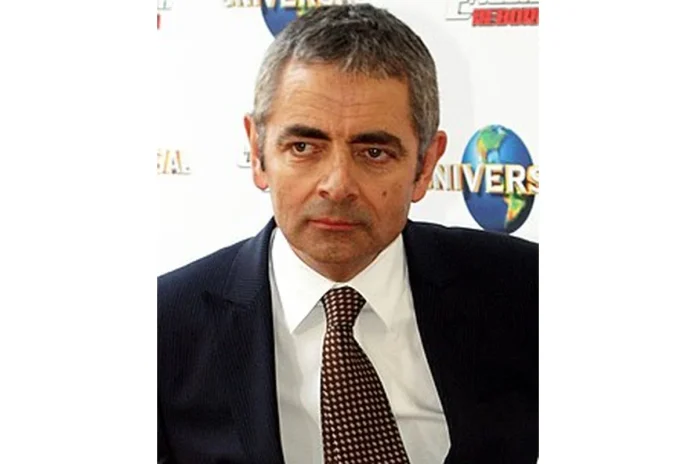
Rowan Sebastian Atkinson Bio
Rowan Sebastian Atkinson is an English actor, comedian, and writer who has established himself as one of Britain’s most recognizable and influential comedic performers. Born in County Durham, England, Atkinson rose to prominence through his work in British television comedy before achieving international fame through iconic character roles. His career spans stage, television, and cinema, with particular success in creating memorable comedic characters that have resonated with global audiences across multiple decades.
Atkinson first gained national attention with the satirical sketch comedy show Not the Nine O’Clock News in the late 1970s, which showcased his sharp wit and comedic timing. He achieved enduring fame through the historical sitcom Blackadder in the 1980s and the beloved character Mr. Bean in the 1990s and beyond. His physical comedy prowess and ability to create distinctive characters have made him a household name, while his collaborative relationships with writers Richard Curtis and Howard Goodall have helped shape modern British humor. Atkinson received the honor of Commander of the Order of the British Empire in 2013 for his services to drama and charity.
Early Life and Background
Rowan Sebastian Atkinson was born on 6 January 1955 in Consett, County Durham, England. He was the youngest of four boys born to Eric Atkinson, a farmer and company director, and Ella May Bainbridge, who married in 1945. His three older brothers included Paul, who died as an infant, Rodney, who became a Eurosceptic economist, and Rupert. The family was Anglican, and Atkinson was brought up in Consett, where he attended the Durham Chorister School, a preparatory school, before continuing his education at St Bees School.
Atkinson excelled academically in science subjects, securing top grades in his A levels before earning a place at Newcastle University. He graduated with a Bachelor of Science degree in Electrical and Electronic Engineering in 1975. His academic path initially seemed destined for engineering rather than entertainment, as he briefly embarked on a PhD study at The Queen’s College, Oxford, following in the footsteps of his father who had studied there in 1935. However, his growing interest in performance and comedy would soon redirect his professional trajectory.
During his time at Oxford, Atkinson became actively involved in the university’s theatrical community. He wrote and performed sketches for shows organized by the Experimental Theatre Club’s revue group called the Etceteras, as well as for the Oxford University Dramatic Society. It was during this period that he met writer Richard Curtis and composer Howard Goodall, both of whom would become crucial collaborators throughout his career. Atkinson first won national attention when he performed with The Oxford Revue at the Edinburgh Festival Fringe in August 1976, marking the beginning of his transition from engineering student to professional entertainer.
Path to Celebrity
Atkinson’s professional comedy career began in 1978 when he started gaining recognition through live performances and radio work. He starred in a series of comedy shows for BBC Radio 3 in 1979 called The Atkinson People, which featured satirical interviews with fictional great men, all played by Atkinson himself. The series was co-written with Richard Curtis and produced by Griff Rhys Jones, showcasing the collaborative relationships that would define much of his early career. This radio work helped establish his distinctive comedic voice and character creation abilities.
In 1979, Atkinson performed in the third The Secret Policeman’s Ball charity event, which was broadcast on the BBC and featured him alongside other prominent British comedians. His television debut included a one-off pilot for London Weekend Television called Canned Laughter. However, his breakthrough came in October 1979 when he first appeared on Not the Nine O’Clock News, a satirical sketch comedy show produced by his friend John Lloyd. Atkinson featured alongside Pamela Stephenson, Griff Rhys Jones, and Mel Smith, also serving as one of the main sketch writers for the program.
The success of Not the Nine O’Clock News established Atkinson as a rising star in British comedy and led to numerous opportunities in television and beyond. His work on the show earned him the British Academy Television Award for Best Entertainment Performance in 1981, marking the first major recognition of his talents by the industry. During this period, he also undertook a four-month tour of the United Kingdom, performing live stage sketches that were recorded and released as Live in Belfast. These early achievements set the foundation for what would become a remarkably diverse and enduring career in entertainment.
Rowan Sebastian Atkinson Career
Early Career (1978-1982)
Atkinson’s early professional career was defined by his work on Not the Nine O’Clock News, which ran from 1979 to 1982 and became a significant hit for the BBC. The satirical sketch show allowed him to demonstrate his versatility as a performer, playing various characters and showcasing his ability to deliver both verbal and physical comedy with precision. His contributions as both performer and writer helped establish the show’s distinctive tone and made him a central figure in the British comedy landscape of the era.
In addition to his television work, Atkinson continued to develop his stage presence during this period. In 1981, he performed in the West End production Rowan Atkinson in Revue, which earned him the Olivier Award for Best Actor in a Musical or Entertainment. This recognition from the theatrical community demonstrated that his talents extended beyond television sketch comedy. His film career also began during these years with supporting roles, including a part in the James Bond film Never Say Never Again in 1983 and a leading role in Dead on Time that same year, both released just outside this early career window but representing his initial steps into cinema.
Breakthrough (1983-1989)
The Blackadder series marked Atkinson’s first major television breakthrough beyond Not the Nine O’Clock News. The first series, titled The Black Adder, aired in 1983 and was set in the medieval period. Atkinson co-wrote the series with Richard Curtis and played the title character Edmund Blackadder, though in this initial incarnation the character was portrayed as unintelligent and naive. The show featured Tony Robinson as his long-suffering sidekick Baldrick, along with Tim McInnerny, Stephen Fry, and Hugh Laurie in supporting roles. While the first series received a modest reception, it laid the groundwork for what would become one of the most successful situation comedies in BBC history.
The second series, Blackadder II, aired in 1986 and represented a significant evolution of the show. Written by Richard Curtis and Ben Elton, this installment reinvented the character as a devious anti-hero living in the Elizabethan era. This new version of Edmund Blackadder, armed with an acerbic wit and numerous quick put-downs, allowed Atkinson to demonstrate his exceptional verbal comedic abilities. The shift in character proved enormously successful, and Blackadder was later ranked third on a 2001 Channel 4 poll of the 100 Greatest TV Characters, behind only Homer Simpson and Basil Fawlty.
Two additional sequels followed in quick succession: Blackadder the Third (1987), set in the Regency era, and Blackadder Goes Forth (1989), set during World War I. The Blackadder series spawned several television specials, including Blackadder’s Christmas Carol (1988), Blackadder: The Cavalier Years (1988), and Blackadder: Back & Forth (1999). The final scene of Blackadder Goes Forth, in which Blackadder and his men go over the top and charge into No-Man’s-Land, has been described as bold and highly poignant. Atkinson won his second British Academy Television Award for Best Entertainment Performance in 1990 for his work on Blackadder, cementing the series’ place in television history.
Notable Works and Milestones
The character of Mr. Bean, created by Atkinson, debuted on New Year’s Day in 1990 in a half-hour special for Thames Television. This hapless, childlike character, inspired by French comedian Jacques Tati’s Monsieur Hulot, relied primarily on physical comedy and minimal dialogue. Mr. Bean became an international phenomenon, leading to a successful television series that ran until 1995, two feature films (Bean in 1997 and Mr. Bean’s Holiday in 2007), and an animated series beginning in 2002. The character’s global appeal has made Atkinson one of the most recognizable British comedians worldwide, with Mr. Bean-related content achieving billions of views on digital platforms.
Atkinson’s film career expanded significantly throughout the 1990s and 2000s. He appeared as a verbally bumbling vicar in Four Weddings and a Funeral (1994), voiced the hornbill Zazu in Disney’s The Lion King (1994), and took supporting roles in Rat Race (2001), Scooby-Doo (2002), Love Actually (2003), and Keeping Mum (2005). The Johnny English film series, beginning in 2003, cast him as a hapless espionage agent in a James Bond parody, with sequels following in 2011 and 2018. On stage, he played Fagin in the 2009 West End revival of Oliver!, receiving critical acclaim for his performance. In 2016, he starred as French police commissioner Jules Maigret in the television series Maigret, demonstrating his ability to excel in more dramatic roles.
Rowan Sebastian Atkinson Award Nominations
Rowan Sebastian Atkinson has received numerous award nominations throughout his distinguished career, recognizing his contributions to television comedy, film, and theatre. His work on Not the Nine O’Clock News earned him early recognition from the British Academy of Film and Television Arts, while his performance in Blackadder garnered additional acclaim from the same institution. His theatrical work, particularly in the West End, has also been recognized by prestigious award bodies in the United Kingdom.
Rowan Sebastian Atkinson Awards Won
Atkinson has won several major awards throughout his career. He received the British Academy Television Award for Best Entertainment Performance in 1981 for his work on Not the Nine O’Clock News, and won the same award again in 1990 for his performance in Blackadder. In 1981, he won the Olivier Award for Best Actor in a Musical or Entertainment for his West End performance in Rowan Atkinson in Revue. In recognition of his contributions to drama and charity, Atkinson was appointed Commander of the Order of the British Empire in the 2013 Birthday Honours.
| Award | Wins | Year |
|---|---|---|
| BAFTA Best Entertainment Performance | 2 | 1981, 1990 |
| Olivier Award Best Actor in a Musical or Entertainment | 1 | 1981 |
| Commander of the Order of the British Empire (CBE) | 1 | 2013 |
Rowan Sebastian Atkinson Family
Rowan Atkinson was born to Eric Atkinson and Ella May Bainbridge, who married in June 1945. His father worked as a farmer and company director. Atkinson was the youngest of four brothers; his siblings included Paul, who died in infancy, Rodney, who became an economist, and Rupert. The family was raised in the Anglican tradition and lived in Consett, County Durham, during Atkinson’s childhood years.
Personal Life
Atkinson married makeup artist Sunetra Sastry in February 1990 after they met in the late 1980s while she was working for the BBC. The couple had two children together and lived in Apethorpe. Their marriage ended in divorce in 2015 after Atkinson separated from Sastry in 2014. In 2013, Atkinson began a relationship with comedian Louise Ford, whom he met while performing in a play together. He has one child with Ford.