
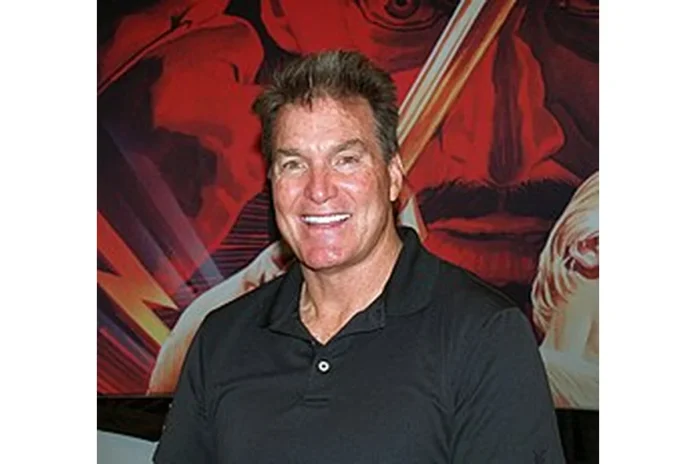
Sam J. Jones Bio
Samuel Gerald Jones, known professionally as Sam J. Jones, is an American actor and former football player born on August 12, 1954, in Chicago, Illinois. He first gained widespread recognition for portraying the title hero in the 1980 science-fiction adventure film Flash Gordon, a role that has remained closely tied to his public identity for decades. Across the 1980s and into the 1990s, he built a varied screen career that included theatrical comedies, straight-to-video action films, and guest appearances on popular American television series. In later years, Jones stepped away from full-time acting to work as a security professional in San Diego while continuing to support projects connected to his most famous role, including the documentary Life After Flash.
Early Life and Background
Samuel Gerald Jones was born in Chicago, Illinois, in 1954 and raised in Sacramento, California. After completing high school in 1972, he enlisted in the United States Marine Corps, where he was assigned the rank of Private First Class and spent three years in service. During his time in the Marine Corps, Jones played American football, an experience that helped shape the discipline and athleticism that would later define both his sporting ambitions and his on-screen presence.
Following his discharge in 1974, Jones set his sights on a professional football career. He moved to Seattle hoping to join the National Football League’s Seattle Seahawks but was turned down by the organization. Undeterred, he joined the Flyers, the Seahawks’ practice squad, in 1976, where he played as a semi-professional. To support himself during this period, Jones also began modeling, appearing as a centerfold in the June 1975 issue of Playgirl magazine under the alias Andrew Cooper III.
Path to Acting
While working as a model and semi-professional athlete, Jones began appearing in television commercials for a Seattle sporting goods store, which introduced him to the basics of performing on camera. In 1977, he relocated to Los Angeles to pursue acting full-time, leaving behind his football aspirations in the Pacific Northwest. His striking looks, athletic build, and on-camera comfort from the modeling work helped him secure early auditions in Hollywood.
Jones’s first major screen appearance came in Blake Edwards’ romantic comedy 10 (1979), a small but visible role that put him in front of major studios. That same year, his performance caught the attention of producer Dino De Laurentiis, who was casting a big-screen adaptation of the Flash Gordon comic strip. Jones auditioned for the title role and ultimately won the part over established actors Kurt Russell and Arnold Schwarzenegger, setting the course for the rest of his career.
Sam J. Jones Career
Early Career (1975–1981)
Sam J. Jones began his professional screen career in 1975 with modeling work that quickly expanded into commercial acting and small film parts. His first credited film role was a brief appearance in the 1979 comedy 10, which starred Dudley Moore and Bo Derek and became one of the year’s biggest hits. That same year, he was cast as the title character in the science-fiction adventure Flash Gordon (1980), a film that would define his public image.
Released by Universal Pictures, Flash Gordon was a colorful adaptation of the classic comic strip, and Jones dyed his hair blonde for the role. The film grossed approximately 27.1 million dollars in North America and 22 million dollars in the United Kingdom, doubling its 20 million dollar budget. Although the picture was a moderate commercial success and later developed a strong cult following, a personal falling-out between Jones and producer Dino De Laurentiis ended plans for a sequel trilogy.
Breakthrough (1980–1989)
The 1980 release of Flash Gordon turned Sam J. Jones into an international science-fiction star, but the broken relationship with De Laurentiis limited his access to major studio projects. In 1981, Playgirl magazine reprinted his 1975 nude photo spread under his real name, an episode he later discussed as a factor that complicated his Hollywood opportunities. That same year, he took a lead role as firefighter Chris Rorchek in the ABC television series Code Red (1981–1982), followed by guest spots on shows such as The A-Team, Hunter, and Riptide.
In 1987, Jones starred in a television movie adaptation of Will Eisner’s The Spirit and played the title character in the NBC science-fiction series The Highwayman, which ran for one season. He also appeared in the 1986 theatrical comedy My Chauffeur alongside Adam Arkin and Howard Hesseman. Throughout the late 1980s, he headlined a string of straight-to-video action films, including Jungle Heat (1985), Jane and the Lost City (1987), Under the Gun (1988), Silent Assassins (1988), Whiteforce (1988), Driving Force (1989), and One Man Force (1989). On television, he portrayed football player Johnny Valentine on the HBO comedy-drama 1st & Ten during the late 1980s and early 1990s.
Notable Works and Milestones
Sam J. Jones’s signature role remains the title hero of Flash Gordon (1980), a performance that has earned a lasting cult following among science-fiction fans around the world. Beyond that defining role, his most recognized works include the romantic comedy 10 (1979), the comedy My Chauffeur (1986), the NBC series The Highwayman (1987–1988), and the documentary Life After Flash, in which he served as both star and executive producer. Decades after his Hollywood breakthrough, Jones made memorable cameo appearances as himself in Seth MacFarlane’s comedies Ted (2012) and Ted 2 (2015), reprising his iconic blond Flash Gordon look.
Sam J. Jones Award Nominations
No verified major award nominations for Sam J. Jones have been documented in available sources.
Sam J. Jones Awards Won
No verified major award wins for Sam J. Jones have been documented in available sources.
Sam J. Jones Family
Sam J. Jones has been married three times and is the father of five children from those relationships. He married his first wife, Lynn Eriks, in 1982; the couple had two children together before divorcing in 1987. Later that year, on August 15, 1987, he married French actress Myrtille Blervaque in Nevada; the marriage ended in divorce three years later.
Jones’s third marriage, to Ramona Lynn Jones, took place on June 26, 1992. Together, they have three children. Throughout his years in Hollywood and later as a security professional in San Diego, Jones has spoken publicly about the importance of family and providing for his children.
Personal Life
Outside of acting, Sam J. Jones has lived a working life shaped by service and reinvention. After his discharge from the United States Marine Corps in 1974, he tried to break into professional football before turning to modeling and, eventually, acting. Once his family grew, he decided in 2002 to retrain as a high-end security professional in San Diego, where he has since protected corporate executives traveling to Mexico.
Jones has balanced his security career with continued appearances on the Comic-Con autograph circuit and selective on-screen cameos. He served as both star and executive producer of the crowdfunded documentary Life After Flash, which chronicles the production and cult legacy of Flash Gordon (1980) and features interviews with castmates such as Melody Anderson and Brian Blessed, as well as admirers including Robert Rodriguez, Stan Lee, and Brian May. He has spoken openly about how his falling-out with producer Dino De Laurentiis shaped the trajectory of his career and personal life.