
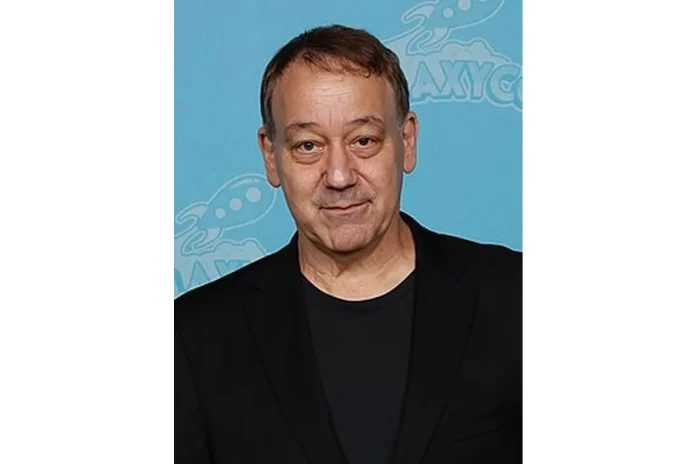
Sam Raimi Bio
Samuel Marshall Raimi (born October 23, 1959), known professionally as Sam Raimi, is an American filmmaker, producer, screenwriter, and actor. He is best known for writing and directing the Evil Dead trilogy and for directing the Spider-Man trilogy, two franchises that helped redefine horror and superhero filmmaking in Hollywood. Over a career spanning more than five decades, Raimi has built a reputation for energetic storytelling, comic-book-influenced visual style, and long-running creative partnerships with Bruce Campbell and Robert Tapert.
Raimi founded the production company Renaissance Pictures in 1979 and later co-founded Ghost House Pictures in 2002. His work extends across feature films, television, and producing, with credits ranging from cult horror to major studio blockbusters. He remains one of the most influential director-producers in modern genre cinema.
Early Life and Background
Samuel Marshall Raimi was born on October 23, 1959, in Royal Oak, Michigan, a suburb of Detroit. He was raised in a Conservative Jewish family, the son of merchants Celia Barbara Abrams and Leonard Ronald Raimi, whose families had emigrated from Russia and Hungary. Raimi’s childhood was shaped by both creative play and family loss; his older brother Sander died at age 15 in an accidental drowning in Israel, an event Raimi has described as formative to his later work.
Raimi’s love of storytelling began early, sparked when his father brought home a movie camera. That gift led him to begin making Super 8 films with his friend Bruce Campbell, whom he met in 1975. His older brother Sander introduced him to Spider-Man comics, an influence that would eventually shape Raimi’s most commercially successful films. He graduated from Groves High School in Beverly Hills, Michigan, before pursuing higher education.
He later attended Michigan State University and then Università Bocconi in Milan, Italy, where he studied English. After three semesters abroad, Raimi left university to focus on filmmaking full-time, a decision that quickly led to his first professional projects.
Path to Director
Raimi’s transition into directing began in college, where he collaborated with his brother’s roommate Robert Tapert and Bruce Campbell to shoot the short horror film Within the Woods in 1979. That 32-minute film raised $375,000 in financing and demonstrated the group’s ability to generate attention on a tight budget. Around the same time, Raimi completed his debut feature, It’s Murder!, and a seven-minute short called Clockwork.
Through a network of family, friends, and independent investors, Raimi financed The Evil Dead in 1981, a low-budget horror film that became a cult hit and effectively launched his directing career. The success of The Evil Dead established Raimi as a distinctive new voice in genre filmmaking, blending horror with kinetic camera work and dark humor.
Throughout the 1980s, Raimi expanded his craft by collaborating with other emerging filmmakers, including Joel and Ethan Coen, and by experimenting across genres. These early projects laid the foundation for a versatile directing career that would eventually move from independent horror to major studio productions.
Sam Raimi Career
Early Career (1979–1991)
Raimi’s earliest directing work was defined by resourceful independent productions and rapid creative growth. Following The Evil Dead, he co-wrote the crime comedy Crimewave (1985) with the then-unknown Coen brothers, an ambitious but troubled studio project that underperformed commercially. He then returned to horror with Evil Dead II (1987), a sequel that infused the franchise with slapstick humor inspired by the Three Stooges and became a defining moment in his career.
He also co-wrote the biker parody Easy Wheels (1989), credited under the pseudonym Celia Abrams. During this period, Raimi developed his first original superhero property, Darkman (1990), which he created after being unable to secure the rights to The Shadow. Darkman became his first major studio release and spawned two sequels.
Breakthrough (1992–2007)
Raimi closed the Evil Dead trilogy with Army of Darkness (1992), shifting the series toward fantasy and comedy. Although the film underperformed in theaters, it became a cult classic on home video. In the 1990s, Raimi demonstrated his range by directing the western The Quick and the Dead (1995) with Sharon Stone and Gene Hackman, the critically acclaimed crime thriller A Simple Plan (1998) starring Bill Paxton and Billy Bob Thornton, and the romantic drama For Love of the Game (1999) with Kevin Costner.
Raimi’s true breakthrough arrived with Spider-Man (2002), adapted from the Marvel comic book and starring Tobey Maguire. The film grossed more than $800 million worldwide and redefined the superhero genre for modern audiences. He followed it with Spider-Man 2 (2004) and Spider-Man 3 (2007), each earning approximately $800 million globally and cementing Raimi’s reputation as a blockbuster director capable of balancing character-driven storytelling with large-scale spectacle.
Beyond the Spider-Man trilogy, Raimi produced the entire English-language The Grudge franchise and explored other adaptations, including a long-developed attempt to revive The Shadow. He later served as a creative consultant on Spider-Man: No Way Home, directed by Jon Watts, contributing to the multiversal storylines that brought together multiple versions of the character.
Notable Works and Milestones
Among Raimi’s most celebrated films are the Evil Dead trilogy, which became a cornerstone of modern horror; the Spider-Man trilogy, which set the template for Marvel’s blockbuster era; the cult superhero film Darkman; the thriller A Simple Plan; and the critically praised horror comeback Drag Me to Hell (2009). His later works include Oz the Great and Powerful (2013), Doctor Strange in the Multiverse of Madness (2022), and Send Help (2026), showcasing his continued range across fantasy, superhero, and thriller genres.
Sam Raimi Award Nominations
Specific nominations attributed solely to Sam Raimi are not detailed within the verified sources available for this page. As a result, a comprehensive list of his individual nominations across directing, writing, and producing categories cannot be reliably presented. Broader honors associated with his films, including those earned by collaborators, are documented elsewhere but fall outside the scope of this summary.
Sam Raimi Awards Won
Verified individual awards won by Sam Raimi are not documented within the confirmed sources provided for this biography. While his films have received critical recognition and genre-specific honors over the decades, a fully sourced summary of personal wins cannot be presented without risking inaccuracy. Readers seeking comprehensive award histories are encouraged to consult dedicated industry databases.
Sam Raimi Family
Sam Raimi was raised alongside several siblings in Royal Oak, Michigan. His younger brother Ted Raimi is an actor who has appeared in many of Sam’s productions, while his older brother Ivan Raimi is a screenwriter and physician. His older sister, Andrea Raimi Rubin, works as a court reporter. Raimi has often credited his family environment, including his late brother Sander, as a profound influence on his personal life and creative perspective.
Raimi married actress Gillian Greene, daughter of Canadian actor Lorne Greene, in 1993. The couple had five children, including their three eldest, daughter Emma Rose and sons Lorne and Henry. Raimi’s brother Ted Raimi and his brother-in-law, through marriage to Lorne Greene’s family, have remained connected to his professional world, with several family members appearing in his films.
Personal Life
Raimi has been a resident of the Los Angeles area for much of his adult life, having relocated from Michigan to pursue his filmmaking career. He and Gillian Greene raised their family while he balanced decades of directing and producing work, with three of their children appearing as extras in Drag Me to Hell and during the final battle of Spider-Man 3.
In May 2024, Gillian Greene filed for divorce from Raimi, citing irreconcilable differences, bringing their marriage to a close after more than three decades. Despite personal changes, Raimi has continued to direct and produce, with his daughter Emma Raimi appearing in his 2026 film, Send Help. Beyond filmmaking, Raimi has made modest political donations to candidates from both major U.S. parties over the years, reflecting a broad range of civic engagement.