
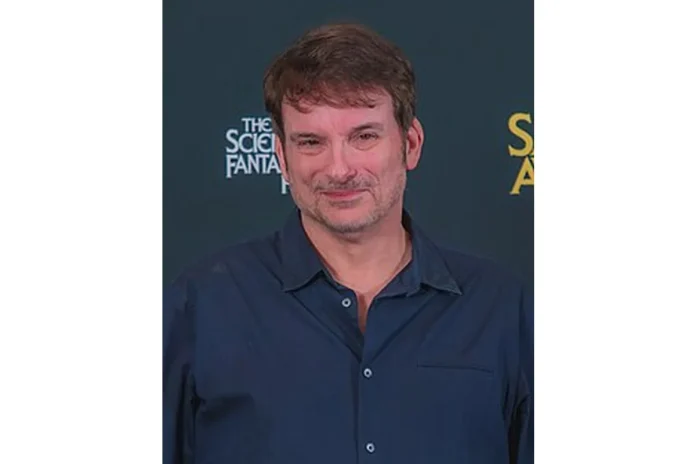
Shane Black Bio
Shane Black (born December 16, 1961) is an American film director, film producer, screenwriter, and actor whose career has shaped the modern action-comedy genre. He is best known as the creator of the Lethal Weapon franchise and for writing sharp, banter-driven scripts that pair reluctant heroes with self-destructive partners. Black later transitioned into directing with the cult favorite Kiss Kiss Bang Bang in 2005 and went on to steer major studio productions including Iron Man 3, The Nice Guys, and The Predator.
Working in Hollywood since the mid-1980s, Black set early industry records with the paychecks he commanded for original screenplays, and he remains one of the most influential genre writers of his generation. His recurring use of Christmas as a backdrop for violent or hardboiled stories has become a signature element often imitated across contemporary cinema. Beyond writing, he has maintained a parallel acting career, most visibly in a memorable supporting turn in Predator.
Early Life and Background
Shane Black was born on December 16, 1961, in Pittsburgh, Pennsylvania, to Paul and Patricia Ann Black. His father worked in the printing business and helped introduce him to hardboiled fiction, including the novels of Mickey Spillane and the Matt Helm paperback series. Growing up surrounded by crime fiction and pulp storytelling gave Black an early model for the witty, hard-edged dialogue that would later define his screenplays.
He spent part of his childhood in the suburbs of Lower Burrell and Mount Lebanon, Pennsylvania, before his family relocated to Fullerton, California, during his sophomore year of high school. In Fullerton, Black attended Sunny Hills High School, where he continued developing his interest in film and storytelling. The move from the industrial Midwest to Southern California placed him closer to the heart of the American film industry and helped shape his ambitions.
Black later enrolled at the University of California, Los Angeles, where he majored in film and theater and graduated in 1983. During his senior year, a classmate named Fred Dekker showed him a science fiction script written for a class assignment, an experience that convinced Black he could pursue screenwriting as a profession. He also grew up with an older brother, Terry Black, who later became a screenwriter himself.
Path to Director
After graduating from UCLA, Black took a series of temporary jobs, including work as a typist for a temp agency, a data entry clerk for the 1984 Summer Olympics, and an usher at a Westwood movie theater. With encouragement from his parents, he used a six-month window to develop a supernatural thriller set in Vietnam called The Shadow Company. The script eventually reached mid-level studio executives at 20th Century Fox, who brought him in for rewrite assignments and helped him secure an agent.
Those early assignments led to his breakout as a screenwriter. Black drafted Lethal Weapon in roughly six weeks and sold it to Warner Bros. for a reported $250,000. While the film was being cast, he asked producer Joel Silver for a small acting part in another Silver production, Predator, and he also made uncredited contributions to that film’s script. In the same productive 1987 stretch, Black co-wrote The Monster Squad with his UCLA friend Fred Dekker.
Even as his writing career accelerated, Black continued to act in small roles, including a turn as Hawkins in Predator. He also wrote and sold a first draft of Lethal Weapon 2, which the studio ultimately rejected for being too dark. A two-year sabbatical followed, and when he returned, his screenplay for The Last Boy Scout earned him $1.75 million. He went on to receive $1 million for a rewrite of Last Action Hero and a then-record $4 million for The Long Kiss Goodnight, solidifying his reputation as one of Hollywood’s most bankable screenwriters.
Shane Black Career
Early Career (1986–1990)
Black’s professional career began in 1986, and his first wave of produced work arrived in 1987, when Lethal Weapon, The Monster Squad, and Predator were all released. The success of Lethal Weapon launched one of the defining buddy-cop franchises of the late twentieth century, while Predator gave Black one of his most recognizable on-screen roles. He also wrote an initial draft of what would become Lethal Weapon 2, but he left the project after extended disagreements with the studio about its tone.
During this period, Black supplemented his writing income with small acting jobs in features and television, including appearances in two episodes of the series Dark Justice. His ability to move comfortably between page and screen, and between original material and rewrites, made him a sought-after collaborator in late-1980s Hollywood.
Breakthrough (1991–2004)
The 1990s cemented Black’s commercial reputation. The Last Boy Scout (1991) was a violent, quip-heavy action film that became a touchstone for the genre, and his $1 million rewrite of Last Action Hero (1993) connected him with major tentpole filmmaking. His screenplay for The Long Kiss Goodnight in 1996 reportedly earned him $4 million, a then-record fee for an original script and a sign of how studios valued his voice.
After a period away from active production, Black returned in 2005 with Kiss Kiss Bang Bang, which he wrote, directed, and produced. The film, a comedic mystery that doubled as a satire of his own Hollywood experience, starred Robert Downey Jr. and Val Kilmer. Its critical success positioned Black for a new phase of his career as a writer-director on major studio projects.
Notable Works and Milestones
Shane Black’s signature works include Lethal Weapon (1987), The Long Kiss Goodnight (1996), Kiss Kiss Bang Bang (2005), Iron Man 3 (2013), The Nice Guys (2016), and The Predator (2018). In 2013, he co-wrote and directed Iron Man 3, which ranks among the highest-grossing films of all time worldwide. He has also won both the San Diego Film Critics Association’s Best Original Screenplay award for Kiss Kiss Bang Bang and the Austin Film Festival’s Distinguished Screenwriter Award.
Shane Black Award Nominations
Shane Black has earned recognition across his career from critics’ groups and film festivals. Beyond the two confirmed wins documented below, his screenplays have been cited by writers’ organizations and genre-focused awards for their influence on action and action-comedy filmmaking.
Shane Black Awards Won
Shane Black has won multiple awards for his screenwriting, including the San Diego Film Critics Association’s Best Original Screenplay award in 2005 for Kiss Kiss Bang Bang and the Distinguished Screenwriter Award from the Austin Film Festival in 2006. The table below summarizes his verified award wins.
| Award | Wins | Year |
|---|---|---|
| San Diego Film Critics Association – Best Original Screenplay (Kiss Kiss Bang Bang) | 1 | 2005 |
| Austin Film Festival – Distinguished Screenwriter Award | 1 | 2006 |
Shane Black Family
Shane Black is the son of Paul and Patricia Ann Black. His father worked in the printing business and nurtured his interest in hardboiled fiction, which became a major influence on his later screenwriting style. He has an older brother, Terry Black, who transitioned from short fiction to screenwriting in the late 1980s, contributing to the family ties that helped shape Shane’s early Hollywood network.
Personal Life
Black divides his professional life between Los Angeles and the broader film industry, with deep personal and professional roots in the city. His recurring use of Christmas as a thematic backdrop in his films reflects personal observations about the holiday in Los Angeles. He maintains close working relationships with longtime collaborators including Joel Silver and Fred Dekker, partnerships that have shaped much of his directing career.