
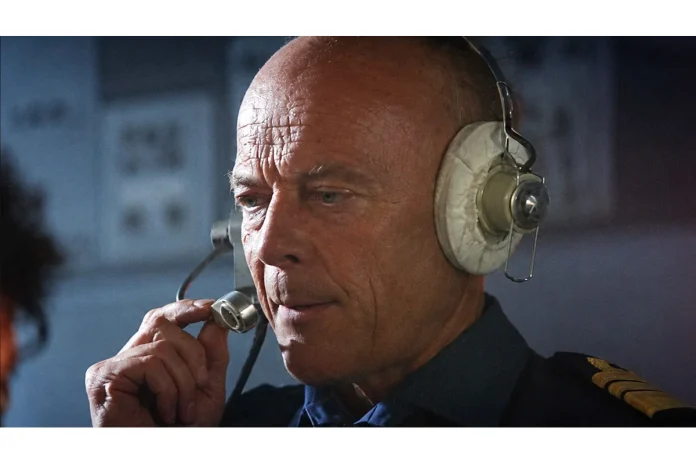
Stephen Sommers Bio
Stephen Sommers, born on March 20, 1962, in Indianapolis, Indiana, is an American film director, screenwriter, and producer recognized for his work on large-scale action and adventure films. Over a career that began in the late 1980s, he has built a reputation for delivering visually energetic blockbusters that blend classic storytelling with modern special effects. He is best known for The Mummy (1999), The Mummy Returns (2001), Van Helsing (2004), and G.I. Joe: The Rise of Cobra (2009).
Beyond the action tentpoles that brought him mainstream attention, Sommers has worked across a wide range of material, including literary adaptations, family-oriented Disney productions, and action horror. His filmography reflects a director comfortable shifting between studio-scale spectacle and character-driven storytelling rooted in his early theater background.
Early Life and Background
Stephen Sommers was born in Indianapolis, Indiana, and grew up in St. Cloud, Minnesota. He attended St. Cloud Apollo High School, where he first became involved in theater. As a high school senior, he appeared in the cast of the musical Brigadoon, an experience that helped shape his early interest in performance and storytelling.
After high school, Sommers attended Saint John’s University in Collegeville, Minnesota, and also studied at the University of Seville in Spain. He then spent four years traveling through Europe, performing as an actor with theater groups and managing rock bands. These years gave him a broad exposure to live performance and the demands of working with diverse creative teams before he returned to the United States.
Once back in the country, Sommers settled in Los Angeles and enrolled at the USC School of Cinematic Arts, where he studied for three years and earned a master’s degree. During his time at USC, he wrote and directed the short film Perfect Alibi, which became an award-winning student project and marked the formal beginning of his professional filmmaking path.
Path to Director
The success of Perfect Alibi gave Sommers the credibility he needed to secure independent funding for his first feature film, the teen racing movie Catch Me If You Can, shot for about $800,000 on location in his hometown of St. Cloud, Minnesota. The film was sold at the Cannes Film Festival for around $7 million and later found an audience on home video, establishing Sommers as a filmmaker capable of delivering commercially viable work on a modest budget.
Following that early win, Sommers moved into studio filmmaking with an adaptation of Mark Twain’s The Adventures of Huck Finn for Walt Disney Pictures. He soon followed it with Disney’s first live-action version of Rudyard Kipling’s The Jungle Book, further demonstrating his range with family-oriented material. He also wrote screenplays for Gunmen and Tom and Huck, executive produced both for Disney, and developed a television adaptation of Oliver Twist in 1997 starring Richard Dreyfuss and Elijah Wood.
While working as a staff writer at Hollywood Pictures, Sommers developed a screenplay called Tentacle, which he eventually directed under the title Deep Rising in 1998. This action horror release positioned him for larger projects and directly led to his hiring by Universal Studios to write and direct a big-budget remake of The Mummy, the film that would define his career.
Stephen Sommers Career
Early Career (1988-1997)
Sommers launched his directing career in the late 1980s after completing his studies at USC. His first feature, Catch Me If You Can, generated strong international interest when it was sold at the Cannes Film Festival, helping him secure Hollywood opportunities. He quickly aligned with Disney, where he directed The Adventures of Huck Finn and Disney’s The Jungle Book, both of which reflected his literary sensibilities and his comfort with family audiences.
During this period he also wrote and executive produced additional Disney projects, including Tom and Huck and a 1997 television version of Oliver Twist. His behind-the-scenes work on these productions sharpened his skills as both a screenwriter and a producer, laying the foundation for the larger-scale action films that would follow.
Breakthrough (1998-2004)
Sommers’s major breakthrough came with Deep Rising in 1998, an action horror film that showcased his ability to merge genre thrills with large-scale visual effects. The following year, he wrote and directed Universal Studios’ remake of The Mummy, a massive commercial hit that revived the classic monster for a new generation. The film earned him two Saturn Award nominations in 2000 from the Academy of Science Fiction, Fantasy & Horror Films, for Best Director and Best Writer.
In 2001, Sommers returned to the franchise with The Mummy Returns, another box-office success. He co-wrote and produced 2002’s The Scorpion King, a prequel and spin-off of The Mummy Returns that further extended the universe he had helped revitalize. He then founded The Sommers Company in 2004 with editor and producing partner Bob Ducsay, marking his evolution into a more entrepreneurial filmmaker.
That same year, Sommers wrote and directed Van Helsing for Universal, a sweeping action fantasy that pitted the legendary vampire hunter against Count Dracula, The Wolf Man, and Frankenstein’s monster. Although the film drew mixed critical responses, it represented one of his most ambitious productions and cemented his standing as a director of large-scale genre entertainment.
Notable Works and Milestones
Sommers’s signature work remains The Mummy, a film that combined horror, adventure, and romance into a blockbuster template still referenced today. His collaborations with Universal on The Mummy and Van Helsing, along with his direction of G.I. Joe: The Rise of Cobra, define his reputation as a director who can deliver globally scaled action with strong visual identity. His Saturn Award nominations for The Mummy remain among his most recognized career honors.
Stephen Sommers Award Nominations
Stephen Sommers has received nominations from the Academy of Science Fiction, Fantasy & Horror Films, commonly known for its Saturn Awards. In 2000, he was nominated for both Best Director and Best Writer for his work on The Mummy (1999), reflecting the strong reception of that film within the genre community. These nominations stand as the most clearly documented formal recognitions of his directing and writing achievements.
Stephen Sommers Awards Won
Specific award wins for Stephen Sommers could not be verified from the available sources. The award-winning short film Perfect Alibi, written and directed during his time at USC, is referenced as a student-level honor, but no complete list of major industry awards has been confirmed. The awards section is therefore limited to the documented nominations above, in line with strict source-verification standards.
Stephen Sommers Family
Stephen Sommers has been married to Jana Sommers since 1993, and the couple has two children. Limited additional information about his extended family is available from verified sources, so this section focuses on the household he established with his wife and their role in supporting his long career in Los Angeles.
Personal Life
Sommers has been based in Los Angeles since completing his graduate studies at USC, where he continues to develop and produce film projects. His marriage to Jana Sommers has remained a steady part of his personal life since 1993, and the couple has two children together. Beyond his filmmaking, he is known for his early passion for theater, an interest that dates back to his high school years at St. Cloud Apollo High School and his time performing with theater groups across Europe.