
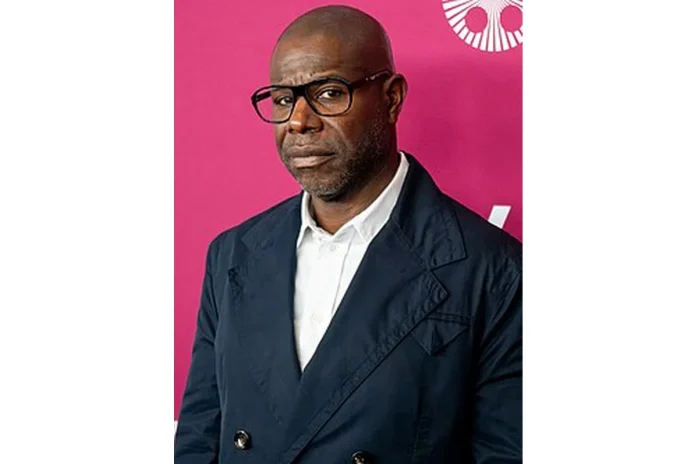
Steve McQueen Bio
Sir Steve Rodney McQueen is a British film director, producer, screenwriter, and video artist whose work bridges contemporary art and mainstream cinema. Born on October 9, 1969, in London, England, McQueen has established himself as a distinctive voice in filmmaking, known for tackling challenging subjects through formal experimentation. His filmography includes powerful works such as Hunger (2008), Shame (2011), and 12 Years a Slave (2013), the latter of which won the Academy Award for Best Picture and made him the first Black filmmaker to receive this honor. McQueen’s career extends beyond traditional cinema into television with the acclaimed anthology series Small Axe (2020) and into provocative installation work that has earned him recognition in both the art world and the entertainment industry.
McQueen’s artistic practice is characterized by its unflinching examination of history, race, sexuality, and power structures. He began his career as a visual artist, winning the prestigious Turner Prize in 1999 before transitioning to feature filmmaking. His background in fine art informs his cinematic approach, resulting in films noted for their visual rigor, emotional intensity, and innovative use of form. In 2020, McQueen was knighted by Queen Elizabeth II for services to art and film, cementing his status as one of the most influential cultural figures of his generation. His work continues to influence filmmakers and artists worldwide, demonstrating how cinema can serve as both entertainment and profound social commentary.
Early Life and Background
Steve Rodney McQueen was born on October 9, 1969, in London, England, to a Grenadian father and a Trinidadian mother, both of whom had migrated to England. He grew up in Ealing, West London, an area that would later inform his artistic perspective and serve as the setting for some of his most personal work. McQueen attended Drayton Manor High School, where he faced significant challenges due to institutional racism and his own learning differences. He was diagnosed with dyslexia and wore an eyepatch as a child to treat a lazy eye, experiences that shaped his understanding of marginalization and resilience. Despite these obstacles, McQueen developed a passion for art from a young age, eventually pursuing A-level art at Ealing, Hammersmith, and West London College.
McQueen’s formal art education began at Chelsea College of Art and Design, where he initially studied painting. This period marked his first serious engagement with visual expression and provided him with foundational technical skills. During his time at Chelsea, McQueen began to explore moving images, discovering a medium that would become his primary form of artistic expression. His transition from static images to film and video reflected a growing interest in time-based media and its potential to convey complex emotional and psychological states. This educational foundation proved crucial to his development as an artist who would eventually blur the boundaries between gallery installations and cinematic storytelling.
Following his studies at Chelsea, McQueen pursued fine art at Goldsmiths, University of London, where he earned a Bachelor of Fine Arts degree. It was at Goldsmiths that McQueen’s interest in film truly flourished, and he began creating the experimental short films that would first bring him recognition in the art world. Seeking to expand his technical knowledge, he briefly attended New York University’s Tisch School of the Arts, but he found the program’s approach too conventional and restrictive. McQueen famously criticized the institution for not allowing experimental techniques, remarking that they “wouldn’t let you throw the camera up in the air.” This experience reinforced his commitment to an unconventional, instinctive approach to filmmaking that would become a hallmark of his work.
Path to Directing
McQueen’s early artistic work consisted primarily of short films and video installations designed for gallery spaces rather than traditional cinema venues. His breakthrough piece, Bear (1993), featured two naked men, including McQueen himself, exchanging ambiguous glances that suggested both flirtation and aggression. This black-and-white silent film established key themes in McQueen’s work, including race, sexuality, and the performance of masculinity. The piece was presented at the Royal College of Art in London and announced McQueen as a distinctive new voice in British art. His early films were typically minimalist, often silent, and projected onto gallery walls, creating immersive experiences for viewers.
Throughout the 1990s, McQueen continued to develop his practice with influential works such as Deadpan (1997), which restaged a Buster Keaton stunt in which a house collapses around the protagonist, leaving him unharmed. The film demonstrated McQueen’s interest in cinematic history and his ability to reinterpret existing visual language for new purposes. Drumroll (1998) marked an evolution in his work, incorporating sound and multiple camera perspectives as McQueen rolled an oil drum through Manhattan streets, filming with three cameras mounted to its surface. These gallery-based works earned McQueen significant critical acclaim and culminated in his receiving the Turner Prize in 1999, Britain’s most prestigious award for contemporary art.
McQueen’s transition from gallery-based work to feature filmmaking was gradual but marked by consistent artistic vision. In 2006, he traveled to Iraq as an official war artist, creating Queen and Country (2007), a work commemorating British soldiers killed in the conflict through portraits presented as sheets of postage stamps. This project demonstrated McQueen’s ability to merge aesthetic concerns with political commentary, a synthesis that would become central to his feature films. His growing reputation as an artist with something to say about the world beyond gallery walls set the stage for his emergence as a filmmaker capable of addressing pressing social issues through accessible cinematic narratives. The commercial and critical success of his feature films would eventually bring his distinctive artistic perspective to a global audience.
Steve McQueen Career
Early Career (1993-2007)
Steve McQueen’s professional career began in the early 1990s with a series of groundbreaking short films and video installations that established his reputation in the contemporary art world. Works such as Bear (1993), Five Easy Pieces (1995), and Deadpan (1997) were exhibited internationally, showcasing McQueen’s minimalist aesthetic and his interest in themes of identity, vulnerability, and resilience. These pieces were characterized by their formal rigor, often employing black-and-white cinematography and silence to create powerful visual statements. McQueen frequently appeared in his own early films, using his body as both subject and instrument in explorations of presence and absence, strength and fragility.
The year 1999 marked a significant milestone in McQueen’s career when he was awarded the Turner Prize, Britain’s most prestigious award for contemporary art. This recognition brought him substantial attention within the art world and positioned him as a leading figure of his generation. Throughout the early 2000s, McQueen continued to create ambitious installation works, including Caribs’ Leap/Western Deep (2002), a two-part film addressing colonial history and labor conditions, and Ashes (2002-2015), a powerful meditation on life and death filmed over more than a decade. These works demonstrated McQueen’s expanding range of interests and his growing confidence in addressing weighty historical and political subjects through carefully crafted visual means.
Breakthrough (2008-2018)
McQueen made his feature-length directorial debut with Hunger (2008), a historical drama focusing on the 1981 Irish hunger strike led by Republican prisoner Bobby Sands. The film premiered at the Cannes Film Festival, where it won the Caméra d’Or award for best first feature, making McQueen the first British director to receive this honor. Hunger was praised for its unflinching depiction of political conflict and its innovative use of long takes and minimal dialogue to convey visceral human experience. The success of Hunger announced McQueen as a significant new voice in cinema and established his ability to translate the formal rigor of his gallery work to the feature film format.
His second feature, Shame (2011), was an erotic psychological drama starring Michael Fassbender as a man struggling with sex addiction in New York City. The film premiered at the Venice Film Festival and earned widespread critical acclaim for its fearless exploration of taboo subjects and its stunning cinematography. Roger Ebert gave the film a perfect four-star review, calling it “a powerful film” and “courageous and truthful.” Shame demonstrated McQueen’s versatility as a filmmaker, showing that he could address intimate, psychological themes with the same intensity he had brought to political subjects in Hunger. The film also marked the beginning of McQueen’s creative partnership with actor Michael Fassbender, who would become a frequent collaborator.
McQueen’s international reputation was cemented with 12 Years a Slave (2013), a historical drama based on the memoir of Solomon Northup, a free Black man kidnapped and sold into slavery in the American South. The film premiered to rave reviews and became a cultural phenomenon, sparking conversations about America’s history of slavery and its continuing legacy. In March 2014, 12 Years a Slave won the Academy Award for Best Picture, making McQueen the first Black director or producer to receive this honor. The film also won numerous other awards, including BAFTA Awards and a Golden Globe Award, and was hailed as a masterpiece of historical filmmaking. This achievement represented a landmark moment in cinema history and solidified McQueen’s status as one of the most important filmmakers working today.
Notable Works and Milestones
In 2018, McQueen directed Widows, a contemporary crime thriller co-written with novelist Gillian Flynn and based on a 1980s British television series. The film starred Viola Davis as the leader of a group of women who continue their deceased husbands’ criminal enterprise, and it was noted for its genre sophistication and its commentary on gender, race, and economic inequality. Widows demonstrated McQueen’s ability to work within established genres while maintaining his distinctive artistic vision and social concerns. The film represented another successful expansion of McQueen’s range, proving that he could deliver commercially viable entertainment without compromising his commitment to meaningful content.
Throughout this period, McQueen maintained his connection to the art world, creating major installations such as End Credits (2012), a work addressing the political persecution of Paul Robeson, and undertaking prestigious commissions including representing Britain at the 2009 Venice Biennale. His dual identity as both a gallery artist and a feature filmmaker remained a defining aspect of his career, with each mode of practice informing and enriching the other. By 2018, McQueen had established himself as a uniquely versatile cultural figure, capable of moving seamlessly between the avant-garde and the mainstream while maintaining a consistent artistic vision committed to exploring fundamental human experiences and social truths.
Steve McQueen Award Nominations
Throughout his distinguished career, Steve McQueen has received numerous award nominations recognizing his contributions to both cinema and visual arts. His feature films have garnered attention from major award bodies worldwide, with 12 Years a Slave earning particular acclaim across the awards season. The film received nominations from the Academy Awards, BAFTA, Golden Globes, and numerous critics’ associations. McQueen himself has been nominated for Best Director at multiple ceremonies, including the Academy Awards and Directors Guild of America Awards for his work on 12 Years a Slave. His television anthology Small Axe also received significant recognition, with individual films from the series earning nominations for acting, writing, and directing.
Steve McQueen Awards Won
Steve McQueen’s trophy cabinet includes some of the most prestigious honors in both the film and art worlds. His historic Academy Award for Best Picture for 12 Years a Slave in 2014 made him the first Black filmmaker to receive this honor. The same film also won the BAFTA Award for Best Film and the Golden Globe Award for Best Motion Picture – Drama. Earlier in his career, McQueen won the Turner Prize in 1999, Britain’s foremost award for contemporary art, recognizing his innovative video installations and short films. In 2014, he received the Caméra d’Or at the Cannes Film Festival for his debut feature Hunger, becoming the first British director to win this award for first-time filmmakers.
McQueen’s contributions to British culture have been formally recognized by the state. He was appointed Officer of the Order of the British Empire (OBE) in the 2002 Birthday Honours and Commander of the Order of the British Empire (CBE) in the 2011 New Year Honours for services to the visual arts. In 2020, he was knighted by Queen Elizabeth II in the New Year Honours for services to film, receiving the title of Sir. His additional honors include the Rolf Schock Prize in 2024 and an honorary doctorate from the University of Amsterdam. McQueen’s ability to achieve the highest honors in both the commercial cinema and contemporary art spheres testifies to his unique position as a bridge between these often-separated worlds.
| Award | Wins | Year |
|---|---|---|
| Academy Awards Best Picture | 1 | 2014 |
| BAFTA Awards Best Film | 1 | 2014 |
| Golden Globes Best Motion Picture – Drama | 1 | 2014 |
| Turner Prize | 1 | 1999 |
| Caméra d’Or (Cannes) | 1 | 2008 |
| Rolf Schock Prize | 1 | 2024 |
| Knighthood | 1 | 2020 |
Steve McQueen Family
Steve McQueen has been married to Bianca Stigter, a Dutch cultural critic and writer, since 1997. Stigter has been a significant partner in McQueen’s life and career, and the couple has collaborated on various projects over the years. They have two children together, a daughter named Alex and a son named Dexter. The family divides their time between homes in London and Amsterdam, reflecting McQueen’s deep connections to both British and Dutch cultural spheres. Stigter’s own work as a historian and documentary filmmaker complements McQueen’s artistic interests, and their partnership represents one of the most enduring creative marriages in contemporary culture.
Personal Life
Steve McQueen and Bianca Stigter have maintained their residence in Amsterdam since 1997, in addition to keeping a home in London. This transatlantic lifestyle reflects McQueen’s international career and his ability to operate across different cultural contexts. McQueen has been open about his experiences with racism growing in Britain and has become an outspoken advocate for greater diversity in the film and television industries. In 2020, he wrote a powerful op-ed for The Guardian addressing what he described as the “blatant racism” of the British film industry, calling for more opportunities for Black actors and filmmakers. His personal experiences with discrimination have informed his artistic work, which consistently addresses themes of marginalization, identity, and social justice.