
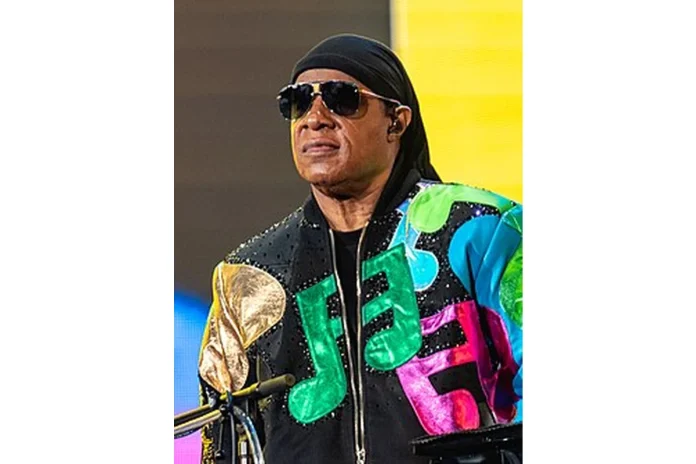
Stevie Wonder Bio
Stevland Hardaway Morris (born Stevland Hardaway Judkins; 13 May 1950), known professionally as Stevie Wonder, is an American singer-songwriter, musician, and record producer. A child prodigy who went blind shortly after birth, Wonder signed with Motown’s Tamla label at the age of 11 and was billed as Little Stevie Wonder before establishing himself as one of the most influential popular musicians of the 20th century.
Wonder pioneered synthesizer-driven rhythm and blues during the 1970s, releasing a celebrated run of albums that reshaped contemporary soul. He has sold more than 100 million records worldwide, earned 25 Grammy Awards and an Academy Award, and has been honored for his longtime activism on civil rights causes.
Early Life and Background
Stevie Wonder was born Stevland Hardaway Judkins on 13 May 1950 in Saginaw, Michigan, the third child of Lula Mae Hardaway and the second of her two children with Calvin Judkins. Born six weeks premature, he was placed in a hospital incubator, where the oxygen-rich atmosphere triggered retinopathy of prematurity and left him blind.
When Wonder was four, his mother divorced his father and moved the family to Detroit, Michigan. He sang in the choir at Whitestone Baptist Church and became a soloist at the age of eight, later learning to play piano, harmonica, and drums. As a young boy, he performed in a singing duo with a friend, playing on Detroit street corners and at local parties and dances.
After the release of his first album, The Jazz Soul of Little Stevie, in 1962, Wonder enrolled at the Michigan School for the Blind in Lansing. He would go on to pursue his career in music without completing a conventional college education, although he has since been awarded multiple honorary degrees.
Path to Music
In 1961, at the age of 11, Wonder auditioned for Berry Gordy at Motown’s Detroit headquarters after singing one of his own compositions to Ronnie White of the Miracles. He was placed under the guidance of producer and songwriter Clarence Paul, who helped him record two early albums and gave him the stage name Little Stevie Wonder. A rolling five-year contract was drawn up, with royalties held in trust until Wonder turned 21.
By the end of 1962, the 12-year-old Wonder had joined the Motortown Revue, performing across the Chitlin’ Circuit of theaters that booked Black artists. A live album, Recorded Live: The 12 Year Old Genius, captured a celebrated performance at the Regal Theater in Chicago, and the single “Fingertips” reached No. 1 on the Billboard Hot 100 in 1963, making him the youngest solo artist ever to top the chart at that time.
During the mid-1960s, Wonder scored a string of hits including “Uptight (Everything’s Alright)”, “I Was Made to Love Her”, “For Once in My Life” and “My Cherie Amour”. He also began writing for other Motown artists, co-writing “The Tears of a Clown” for Smokey Robinson and the Miracles. Reaching his 21st birthday in 1971, Wonder allowed his Motown contract to expire and negotiated an unusually liberal new deal that gave him greater creative control and a higher royalty rate.
Stevie Wonder Career
Early Career (1961–1971)
Wonder’s first decade at Motown produced a remarkable run of singles, beginning with the 1963 No. 1 hit “Fingertips” and continuing through 1960s favorites such as “Uptight (Everything’s Alright)”, “With a Child’s Heart”, “I Was Made to Love Her” and “For Once in My Life”. He also branched out as a songwriter, co-writing hits for his label mates and experimenting with the instrumental album Eivets Rednow in 1968.
By the time he reached 21, Wonder had already established himself as one of Motown’s most successful artists, having been named a Grammy winner and earning a dedicated following for his harmonica playing and distinctive vocals. His 1970 marriage to Motown singer-songwriter Syreeta Wright, a frequent collaborator, also marked the beginning of a new, more experimental creative phase.
Breakthrough (1972–1976)
Wonder’s “classic period” began in 1972 with the release of Music of My Mind, his first album recorded after regaining creative control from Motown. The album marked the start of a groundbreaking collaboration with electronic musicians Robert Margouleff and Malcolm Cecil and introduced a synthesizer-driven sound that would define the decade. Talking Book, released later in 1972, included the No. 1 hits “Superstition” and “You Are the Sunshine of My Life” and earned three Grammy Awards.
The 1973 album Innervisions deepened Wonder’s exploration of social and spiritual themes, with the singles “Higher Ground” and “Living for the City” reaching the top of the R&B chart. The album won the Grammy Award for Album of the Year, a feat he would repeat with Fulfillingness’ First Finale in 1974 and Songs in the Key of Life in 1976, making him the only artist to win the award with three consecutive album releases.
On 6 August 1973, three days after the release of Innervisions, Wonder was seriously injured in a car accident in North Carolina that left him in a coma for four days, but he recovered to continue recording. Songs in the Key of Life became the first American album to debut at No. 1 on the Billboard 200, produced two No. 1 singles in “I Wish” and “Sir Duke”, and is widely regarded as his crowning achievement.
Notable Works and Milestones
Wonder’s signature works include Music of My Mind (1972), Talking Book (1972), Innervisions (1973), Fulfillingness’ First Finale (1974) and Songs in the Key of Life (1976), the five albums that constitute his celebrated classic period. Other signature songs include “Superstition”, “Living for the City”, “Higher Ground”, “You Are the Sunshine of My Life”, “I Wish” and “Sir Duke”. He has recorded more than 30 U.S. top-ten hits, including ten No. 1 pop singles and 20 No. 1 R&B singles.
Stevie Wonder Award Nominations
Across his six-decade career, Stevie Wonder has received more than 70 Grammy Award nominations, in addition to recognition from the Academy Awards, the Rock and Roll Hall of Fame, the Songwriters Hall of Fame and the Rhythm and Blues Music Hall of Fame. He is a multi-time nominee in categories including Album of the Year, Record of the Year, Best R&B Song, Best Pop Vocal Performance and Producer of the Year.
Stevie Wonder Awards Won
Stevie Wonder has won 25 competitive Grammy Awards, the most ever awarded to a solo artist, along with a Grammy Lifetime Achievement Award presented in 1996. He also won the Academy Award for Best Original Song for “I Just Called to Say I Love You” in 1985, becoming the first Motown artist and second African American musician to receive the honor.
Wonder’s honors also include the Presidential Medal of Freedom, presented by President Barack Obama in 2014, the Polar Music Prize, a star on the Hollywood Walk of Fame, and induction into the Rock and Roll Hall of Fame, the Songwriters Hall of Fame and the Rhythm and Blues Music Hall of Fame. In 2009, he was designated a United Nations Messenger of Peace.
Stevie Wonder Family
Wonder is the son of Calvin Judkins and Lula Mae Hardaway. After his parents separated, his mother raised him and his siblings in Detroit, and her encouragement was central to his early musical development. His mother Lula Mae Hardaway died on 31 May 2006 in Los Angeles at the age of 76.
Personal Life
Wonder has been married three times: to Motown singer-songwriter Syreeta Wright from 1970 to 1972, to fashion designer Kai Millard Morris from 2001 to 2015, and to Tomeeka Robyn Bracy beginning in 2017. He has nine children with five women, including Aisha Morris (born 1975), Keita Morris (born 1977), Mumtaz Morris (born 1983), Sophia Morris, Kwame Morris, Kailand Morris, Mandla Kadjay Carl Stevland Morris (born 2005), Zaiah Morris and Nia Morris (born 2014).
Blind since infancy, Wonder became an early user of the Kurzweil Reading Machine and has long been an advocate for accessibility. A longtime Baptist, he has also been associated with Transcendental Meditation and identifies as a vegan. Believing himself to be of Ghanaian ancestry, he was conferred Ghanaian citizenship on 13 May 2024, his 74th birthday, by President Nana Akufo-Addo.