
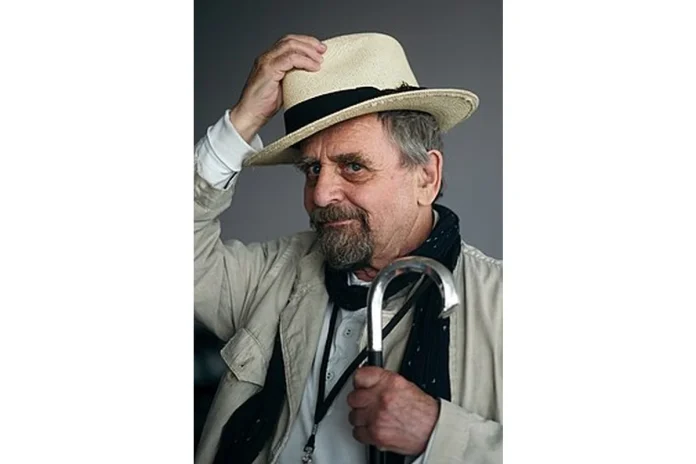
Sylvester McCoy Bio
Percy James Patrick Kent-Smith, known professionally as Sylvester McCoy, was born on 20 August 1943 in Dunoon, Argyll, Scotland. He is a Scottish actor and former physical comedian whose career spans stage, screen and audio work from the 1960s to the present. McCoy rose to prominence with the Ken Campbell Roadshow for his daring physical comedy and later became internationally known for portraying the Seventh Doctor in the BBC series Doctor Who and the wizard Radagast in Peter Jackson’s The Hobbit films.
Early Life and Background
Percy James Patrick Kent-Smith was born to Molly Sheridan and Percy James Kent-Smith in Dunoon. His upbringing included time at Blairs College, a seminary in Aberdeen, early schooling in Scotland and later attendance at Dunoon Grammar School. Family circumstances shaped his childhood: his father served in the Royal Navy and died during the Second World War, and his mother experienced serious illness when he was a child.
McCoy moved to London as a young man and worked in a variety of jobs, including at the box office of The Roundhouse. It was there that he was noticed by theatre director Ken Campbell, an encounter that led him into experimental theatre and a distinctive career in physical comedy and character work on stage and television.
Path to Celebrity
McCoy came to wider attention as a member of The Ken Campbell Roadshow, where he performed physically risky and memorable stunts in a one-man segment titled An Evening with Sylveste McCoy. The stage persona called Sylveste McCoy — later adapted to the stage name Sylvester McCoy — featured stunt-based comedy, physical juggling and a wild, anarchic presence that distinguished him from contemporary comic performers.
He expanded his range through television and stage roles in the 1970s and 1980s, including appearances in Vision On and the 1979 film Dracula, working alongside established screen actors. That combination of vaudeville technique, character work and theatrical discipline positioned him for casting in more prominent dramatic roles that would follow.
Sylvester McCoy Career
Early Career (1964–1986)
Beginning his professional career in the mid-1960s, McCoy built a reputation in experimental theatre and children’s television before moving into mainstream drama. His early credits include work with the Ken Campbell troupe and television appearances that showcased his physical skills and comic timing. He also performed one-man shows portraying classic screen comedians such as Stan Laurel and Buster Keaton, drawing on their silent-era techniques and physicality.
Across the 1970s and 1980s McCoy took on character roles in film and television, including Dracula (1979) and the television serial The Last Place on Earth (1985). Those roles demonstrated his ability to shift between grotesque comedy and straight dramatic performance, establishing a versatile profile that extended beyond his earlier stunt-based acts.
Doctor Who Breakthrough (1987–1989)
McCoy succeeded Colin Baker as the Seventh Doctor in Doctor Who in 1987, becoming the final lead of the original run of the series. His early interpretation drew on his background in physical comedy, presenting a playful, clown-like Doctor; over time the character evolved into a darker, more manipulative figure who often appeared to be several moves ahead of his companions and adversaries.
He remained the Doctor until the series’ 1989 conclusion, with Survival recorded as his final televised serial in that original era. McCoy later reprised the role for charity and special television appearances, including the 1993 charity special Dimensions in Time and a brief appearance in the television movie continuity in 1996, and he continued the role extensively in licensed audio dramas from 1999 onward.
The Hobbit Era (2011–2014)
In the early 2010s McCoy joined the cast of Peter Jackson’s The Hobbit film trilogy as the wizard Radagast, with filming beginning in 2011 and the three films released between 2012 and 2014. Although Radagast is a relatively minor figure in the original novel, the film adaptation expanded the role and placed McCoy alongside high-profile colleagues from stage and screen.
The casting marked a return to large-scale cinematic production for McCoy and brought his work to new international audiences, complementing his continuing stage and audio career and reaffirming his status as a character actor capable of inhabiting eccentric, memorable roles.
Stage and Screen (2000s–Present)
McCoy sustained a broad career across theatre and television in the 2000s and 2010s. He appeared with the Royal Shakespeare Company in adaptations such as The Lion, the Witch and the Wardrobe and played the Fool opposite Ian McKellen in King Lear in 2007, a production that toured internationally and transferred to the New London Theatre. His stage roles also included musical and comedic fare, from Gilbert and Sullivan’s The Mikado to Little Shop of Horrors and new writing at the Edinburgh Festival Fringe.
Television guest roles and documentary appearances continued to feature in his portfolio, including dramatic parts and reality-style projects that followed senior actors to international locations. He also took part in Doctor Who anniversary homages and returned to the franchise for the 2022 special The Power of the Doctor and subsequent licensed audio and anthology projects.
Acting Style and Strengths
McCoy’s acting style combines trained physical comedy, precise timing and a talent for character transformation. He is noted for using his Scottish accent and a distinctive rhythm and rolling of consonants to shape character voices, and for integrating physical stunts, prop work and musical spoons into performances when appropriate. His range encompasses anarchic comedy, seasonal farce and darker, psychologically layered roles.
Notable Events and Milestones
Major milestones in McCoy’s career include his selection as the Seventh Doctor, his role in Peter Jackson’s Hobbit films, a high-profile collaboration with Ian McKellen at the Royal Shakespeare Company and ongoing portrayal of the Doctor in audio dramas. In 1990 readers of Doctor Who Magazine voted his Doctor the magazine’s top choice in a fan poll, reflecting sustained appreciation for his interpretation.
Sylvester McCoy Career Wins
Across stage, television and film, McCoy’s most widely recognized achievements are rooted in long-running and iconic roles rather than awards totals. His professional wins are evident in durable audience recognition for Doctor Who, the visibility gained from a major film trilogy and a respected record of stage work with leading companies such as the Royal Shakespeare Company.
Doctor Who Highlights
McCoy debuted as the Seventh Doctor in 1987 and concluded his original televised tenure in 1989 with the serial Survival. He later returned to the role for charity specials and audio productions, continuing to shape the character in new stories produced by Big Finish Productions. His Doctor is remembered for a tonal shift that moved from clownish surfaces to deeper, more strategic characterisation.
Other Wins & Perfromances
Beyond science fiction, McCoy’s career highlights include film appearances such as Dracula (1979) and the Radagast role in The Hobbit trilogy, extensive theatre work including the Fool in King Lear with Ian McKellen, and numerous festival and fringe performances. His skill set has allowed him to move fluidly between comic and dramatic genres.
Sylvester McCoy Family
Family Background and Acting Lineage
Born to Molly Sheridan and Percy James Kent-Smith, McCoy grew up in Scotland with an Irish maternal background and an English paternal line. Family events in his early years, including the wartime death of his father and his mother’s illness, shaped his childhood and early development.
Personal Life
McCoy is married to Agnes Verkaik. He and his wife have two sons, who have lived abroad. He was raised Catholic by relatives but has spoken publicly about no longer holding religious belief. During the COVID-19 pandemic he spent part of lockdown living in France.