
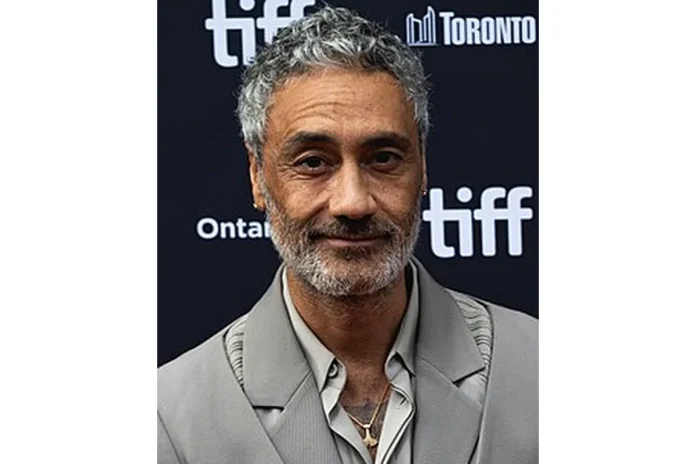
Taika Waititi Bio
Taika David Cohen, born 16 August 1975 and known professionally as Taika Waititi, is a New Zealand filmmaker, actor, and comedian. He has received numerous accolades including an Academy Award, a British Academy Film Award, and a Grammy Award. Time magazine named him one of the 100 most influential people in the world in 2022, recognizing his impact on contemporary cinema and his distinctive blend of humor with cultural storytelling.
Working as a director, producer, screenwriter, actor, and comedian, Waititi has shaped a body of work that ranges from independent New Zealand comedies to major Hollywood blockbusters. His films Boy (2010) and Hunt for the Wilderpeople (2016) each became the top-grossing film produced entirely within New Zealand, a rare accomplishment that placed him at the center of his country’s modern film industry.
Early Life and Background
Taika David Cohen was born on 16 August 1975 in Wellington, New Zealand. His Māori father was an artist of French Canadian and Te Whānau-ā-Apanui descent, while his mother, Robin Cohen, was a schoolteacher of European background. Through his mother’s side, he has Russian Jewish and Irish ancestry, and he has described himself as a Polynesian Jew who identifies with both Māori and Jewish heritage.
Waititi grew up in Wellington’s Aro Valley suburb and in Raukokore, a small town in the Bay of Plenty. Although his legal surname is Cohen, he has been known primarily by his father’s surname for most of his life. He originally used Cohen for film and writing projects and Waititi for visual arts, before settling on Taika Waititi professionally after his early short films gained recognition.
His parents divorced when he was around five, and he was raised primarily by his mother. He attended Onslow College and later studied theatre at Victoria University of Wellington, where he graduated with a Bachelor of Arts in 1997.
Path to Directing
While still a student at Victoria University of Wellington, Waititi joined the five-member comedy ensemble So You’re a Man, which toured New Zealand and Australia. With Jemaine Clement, he formed the comedy duo The Humourbeasts and received New Zealand’s highest comedy accolade, the Billy T Award, in 1999. That same year, using the surname Cohen, he appeared in the black comedy film Scarfies, marking his first screen role.
Waititi also began directing comical short films for New Zealand’s annual 48Hours film contest. His 2003 short Two Cars, One Night, set in the carpark of a rural pub in Te Kaha, earned an Academy Award nomination for Best Live Action Short Film in 2005. The recognition helped him secure backing for his first feature, the romantic comedy Eagle vs Shark, released in the United States in limited theatres in 2007.
Taika Waititi Career
Early Career (1999–2012)
Waititi’s early career combined acting, writing, and directing across New Zealand television and film. In 2007, he wrote and directed an episode of the comedy series Flight of the Conchords and directed another, building his reputation as a sharp comedic voice. He also acted in the improv sketch comedy show Radiradirah alongside frequent collaborators Rhys Darby and Jemaine Clement.
His second feature film, Boy, premiered at the Sundance Film Festival in January 2010 and was nominated for the Grand Jury Prize. Waititi also took one of the main roles as the ex-con father who returns to his family. On its release in New Zealand, Boy broke several local box office records and became the top-grossing New Zealand film. In 2011, he directed the TV series Super City and appeared in the superhero film Green Lantern as Thomas Kalmaku.
Breakthrough (2013–2020)
In 2013, Waititi co-wrote, co-directed, and acted in the vampire comedy mockumentary What We Do in the Shadows with Jemaine Clement. The film premiered at the Sundance Film Festival in January 2014 and later inspired a television series of the same name, which premiered on FX in March 2019. The series received a Primetime Emmy Award nomination for Outstanding Comedy Series.
His 2016 film Hunt for the Wilderpeople, based on a book by Barry Crump, broke his own record for a New Zealand film in its opening weekend. In 2017, Waititi won the New Zealander of the Year award and directed his first major studio film, Marvel Studios’s Thor: Ragnarok, in which he also portrayed the alien Korg through motion capture. The film earned critical praise and strong box office results.
In 2019, Waititi wrote and directed Jojo Rabbit, adapted from the novel Caging Skies by Christine Leunens. He also played a buffoonish imaginary version of Adolf Hitler. The film earned Academy Award nominations for Best Picture and Best Adapted Screenplay, winning the latter and making Waititi the first person of Māori descent to win an Academy Award in a screenplay category. He also directed the first-season finale of The Mandalorian and voiced the droid bounty hunter IG-11, earning a Primetime Emmy Award nomination for Outstanding Character Voice-Over Performance.
Notable Works and Milestones
Among Waititi’s signature works are the comedies Boy, What We Do in the Shadows, and Hunt for the Wilderpeople, along with the superhero films Thor: Ragnarok and Thor: Love and Thunder. His Oscar win for Jojo Rabbit, his Grammy Award for the Jojo Rabbit soundtrack, and his appointment as an Officer of the New Zealand Order of Merit stand among his most defining achievements.
Taika Waititi Award Nominations
Taika Waititi has earned a wide range of nominations across film and television, including a nomination for the Academy Award for Best Live Action Short Film for Two Cars, One Night in 2005. Jojo Rabbit brought him Academy Award nominations for Best Picture and Best Adapted Screenplay, a Golden Globe Award nomination for Best Motion Picture – Musical or Comedy, and a Directors Guild of America Award nomination for Outstanding Directing in a Feature Film.
Taika Waititi Awards Won
Waititi’s verified awards include the 2020 Academy Award for Best Adapted Screenplay for Jojo Rabbit and the 2021 Grammy Award for Best Compilation Soundtrack for Visual Media for the same film. He also won the BAFTA Award for Best Adapted Screenplay and the Writers Guild of America Award for Jojo Rabbit, along with the Billy T Award for comedy in 1999 and the New Zealander of the Year award in 2017.
| Award | Wins | Year |
|---|---|---|
| Academy Award for Best Adapted Screenplay | 1 | 2020 |
| Grammy Award for Best Compilation Soundtrack for Visual Media | 1 | 2021 |
Taika Waititi Family
Waititi’s father is of Māori descent and was an artist, while his mother, Robin Cohen, is a schoolteacher of European background with Russian Jewish and Irish ancestry. Waititi married New Zealand film producer Chelsea Winstanley in 2011, and together they have two daughters. The couple separated in 2018.
Personal Life
Waititi was previously in a long-term relationship with New Zealand actress and writer Loren Horsley, who co-wrote and acted in Eagle vs Shark. After his separation from Chelsea Winstanley, he began a relationship with British singer Rita Ora in 2021, and the couple married in August 2022.