
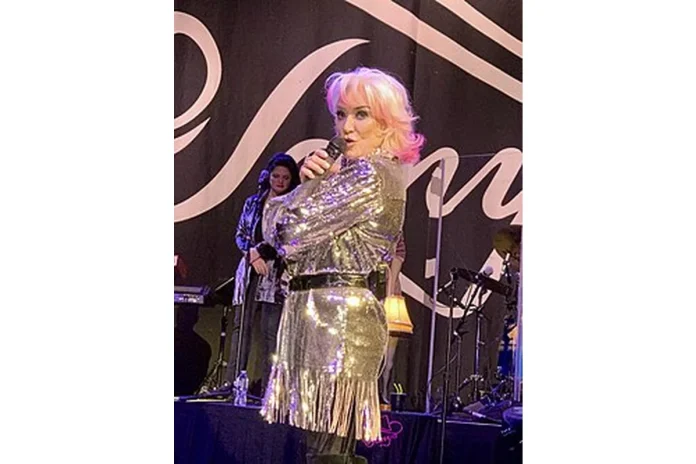
Tanya Tucker Bio
Tanya Denise Tucker (born October 10, 1958) is an American country singer and songwriter who first reached national fame as a teenager with the 1972 single “Delta Dawn.” Over a career beginning in 1971, she built one of the longest-running records in country music, scoring numerous top-10 country hits across the 1970s, 1980s, and 1990s. Tucker is also known for her outlaw country image, her personal struggles in the 1980s, and a celebrated comeback in the late 1980s and early 1990s. In 2019, the album While I’m Livin’ brought her two Grammy Awards, and in 2023 she was inducted into the Country Music Hall of Fame.
Early Life and Background
Tanya Denise Tucker was born on October 10, 1958, in Seminole, Texas, the youngest of three children born to Alma Juanita (née Cunningham; 1927–2012) and Jesse Melvin “Beau” Tucker (1927–2006). Before managing his daughter’s career, Beau Tucker worked as a heavy equipment operator, and the family moved often as he searched for better work. Tucker’s early childhood was spent largely in Willcox, Arizona, where the local radio station, KHIL, played country music almost exclusively. The family attended concerts by country stars such as Ernest Tubb and Mel Tillis, and Tucker’s older sister LaCosta was praised around the home for her vocal ability. At the age of eight, Tucker told her father that she wanted to become a country singer too.
When the Tuckers relocated to St. George, Utah, her mother took her to audition for the film Jeremiah Johnson. She did not win the larger role she tried out for, but she was hired, along with her horse, as a bit player playing Quallen’s oldest daughter. Around the same period, she received one of her first real musical breaks when her father drove the family to Phoenix for the Arizona State Fair, hoping that featured performer Judy Lynn could use her in the show. Tucker sang for the fair’s entertainment managers and was engaged to perform at the fair itself.
Tucker made her earliest stage appearances with Mel Tillis, who was so impressed by her talent that he invited her onstage to perform. In 1969, the family moved to Henderson, Nevada, where she continued to perform regularly. She eventually recorded a demonstration tape that caught the attention of songwriter Dolores Fuller, who passed it along to Billy Sherrill, then head of artists and repertoire at CBS Records. Sherrill was impressed and signed the teenage vocalist to Columbia Records, setting the stage for her professional career.
Path to Country Music
Billy Sherrill originally planned to record Tucker on “The Happiest Girl in the Whole U.S.A.,” but she chose “Delta Dawn” instead, a song Sherrill had heard Bette Midler perform on The Tonight Show. Released in May 1972, “Delta Dawn” became a hit, peaking at number six on the country chart and reaching the lower reaches of the pop chart. Columbia initially tried to downplay Tucker’s age, but once her youth became public, she emerged as a full-fledged sensation. Her second single, “Love’s the Answer,” also reached the country top 10 later in 1972, and in 1973 “What’s Your Mama’s Name” became her first number-one country hit.
Tucker’s rapid rise continued with two more number-one country singles, “Blood Red and Goin’ Down” and “Would You Lay with Me (In a Field of Stone),” firmly establishing her as a major star. In 1975, she signed with MCA Records, where she enjoyed a long run of hits into the late 1970s, including “Lizzie and the Rainman,” “San Antonio Stroll,” “Here’s Some Love,” and “It’s a Cowboy Lovin’ Night.” She also recorded the duet “You Taught Me How to Cry” with Hoyt Axton in 1977, then surprised the industry in 1978 with the rock-leaning TNT album. Despite controversy over its cover, TNT went gold the following year, and tracks like “I’m a Singer, You’re the Song” and “Texas (When I Die)” reinforced her outlaw country identity.
Tanya Tucker Career
Early Career (1972–1979)
Tucker’s earliest professional years revolved around Columbia Records and producer Billy Sherrill, who helped shape her sound and her image as a confident young country vocalist. Her first three singles all reached the country top 10, and “What’s Your Mama’s Name,” “Blood Red and Goin’ Down,” and “Would You Lay with Me (In a Field of Stone)” each climbed to number one on the country chart. By the mid-1970s, after moving to MCA Records, she was a consistent presence on country radio and on the road.
She also expanded beyond music, auditioning for and appearing in small roles in Jeremiah Johnson (1972) and the television miniseries The Rebels (1979), and making her feature-film debut in Hard Country. Her gold-certified 1978 album TNT, complete with its controversial cover, marked a deliberate shift toward a more rock-influenced, outlaw country sound and set the tone for the next phase of her career.
Breakthrough (1979–1997)
The early 1980s were marked by declining sales and personal struggles, including heavy drinking that eventually led her to enter the Betty Ford Center in 1988 after her family intervened. Tucker signed with Capitol Records in 1986, and her comeback album Girls Like Me produced four top-10 country singles. In 1988 alone, she scored three number-one country hits: “I Won’t Take Less Than Your Love” (with Paul Davis and Paul Overstreet), “If It Don’t Come Easy,” and “Strong Enough to Bend.” Between 1988 and 1989, she placed eight consecutive country singles in the top 10.
Her resurgence brought industry recognition: she was nominated for Country Music Association Female Vocalist of the Year in 1988 and won the honor in 1991. CMT named her Female Video Artist of the Year in 1990, and she continued to land major singles such as “Down to My Last Teardrop,” “(Without You) What Do I Do with Me,” and “Two Sparrows in a Hurricane.” In 1993, Greatest Hits 1990-1992 reached the Top Country Albums chart, and in 1994 she performed at the Super Bowl XXVIII halftime show. In 1997, “Little Things” gave her a final top-10 country hit of the decade, and she was inducted into the Texas Country Music Hall of Fame.
Notable Works and Milestones
Tucker’s signature recordings include “Delta Dawn,” “What’s Your Mama’s Name,” “Blood Red and Goin’ Down,” “Lizzie and the Rainman,” “Strong Enough to Bend,” and “Two Sparrows in a Hurricane.” She is one of the few child country performers to sustain success into adulthood, and she was the only woman named to CMT’s Greatest Outlaws: The Dirty Dozen, ranking number nine.
Later Career (2000–Present)
In 2002, Tucker founded Tuckertime Records and released the album Tanya, her first in five years. She contributed two songs to the 2005 tribute album A Tribute to Bob Wills 100th Anniversary and released the book 100 Ways to Beat the Blues the same year. Her TLC reality series Tuckerville aired in 2005 for two seasons. She returned to the country charts in 2009 with the cover album My Turn on Saguaro Road Records, which included her version of Buck Owens’s “Love’s Gonna Live Here.”
In 2019, Tucker released While I’m Livin’, her first album of original material since 2002, produced by Shooter Jennings and Brandi Carlile and issued on Fantasy Records. On January 26, 2020, she won her first two Grammy Awards: Best Country Album for While I’m Livin’ and Best Country Song for “Bring My Flowers Now,” co-written with Carlile. A documentary titled The Return of Tanya Tucker was released in 2022, and in June 2023 she released the album Sweet Western Sound, again produced with Carlile and Jennings. Tucker was inducted into the Country Music Hall of Fame on October 22, 2023.
Tanya Tucker Award Nominations
Across her career, Tanya Tucker has earned multiple Country Music Association nominations and additional major industry recognition for her vocal work, songwriting, and contributions to country music. She was nominated by the CMA for Female Vocalist of the Year in 1988 before winning the award in 1991, and she has collected additional nominations tied to her singles and albums throughout the 1980s, 1990s, and 2010s.
Tanya Tucker Awards Won
Tucker has received two Grammy Awards, multiple Country Music Association honors, and induction into two major halls of fame. Her Grammy wins came in 2020 for Best Country Album (While I’m Livin’) and Best Country Song (“Bring My Flowers Now”). She won the CMA Female Vocalist of the Year award in 1991, was inducted into the Texas Country Music Hall of Fame in 1997, and was inducted into the Country Music Hall of Fame on October 22, 2023.
| Award | Wins | Year |
|---|---|---|
| Grammy Award for Best Country Album (While I’m Livin’) | 1 | 2020 |
| Grammy Award for Best Country Song (“Bring My Flowers Now”) | 1 | 2020 |
| Country Music Association Female Vocalist of the Year | 1 | 1991 |
| Texas Country Music Hall of Fame (Induction) | 1 | 1997 |
| Country Music Hall of Fame (Induction) | 1 | 2023 |
Tanya Tucker Family
Tucker is the youngest of three children born to Jesse Melvin “Beau” Tucker (1927–2006) and Alma Juanita (née Cunningham; 1927–2012). Her brother Don is deceased, and her older sister LaCosta is also a country singer. Tucker’s father managed her early career, and her family later played a central role in encouraging her to seek treatment for alcohol addiction, an intervention that helped her stage a major comeback in the late 1980s.
Personal Life
Tucker has been romantically linked to several high-profile figures, including Glen Campbell in the early 1980s, as well as Merle Haggard, Andy Gibb, and Don Johnson. She had two children with actor Ben Reed: daughter Presley Tanita (born July 5, 1989) and son Beau “Grayson” (born October 2, 1991). She has had an on-again, off-again relationship with Nashville musician Jerry Laseter, to whom she was engaged in 1997 and again in 1999. Days before their planned 1999 wedding, Tucker canceled the ceremony after discovering she was pregnant with her third child, daughter Layla LaCosta (born June 25, 1999), saying she did not want to walk down the aisle pregnant in her wedding dress.