
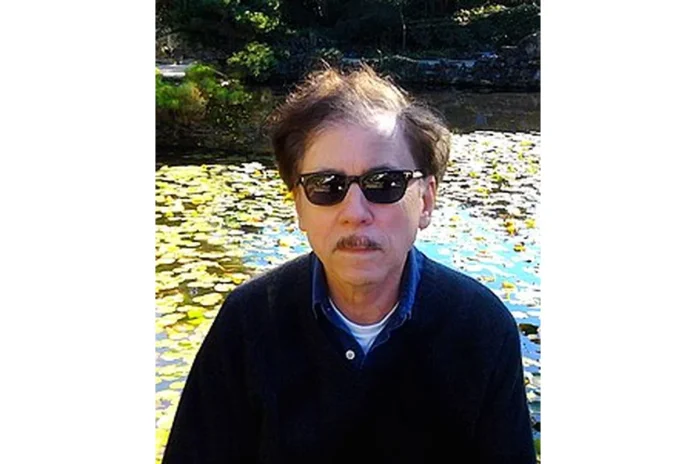
Terry Zwigoff Bio
Terry Zwigoff (born May 18, 1949) is an American film director and producer whose work often centers on misfits, antiheroes, and themes of alienation. He first gained attention through documentary filmmaking with Louie Bluie (1985) and Crumb (1995), which showcased his talent for intimate, character-driven portraits. Moving into fiction, Zwigoff achieved wider recognition with Ghost World (2001), an Academy Award-nominated adaptation of Daniel Clowes’s graphic novel, and later the dark comedy Bad Santa (2003). His collaboration with Clowes continued on Art School Confidential. Across his career, Zwigoff’s films blend offbeat humor with empathy for outsiders, exploring ordinary lives against unusual cultural backdrops.
Early Life and Background
Terry Zwigoff was born on May 18, 1949, in Appleton, Wisconsin, United States, into a Jewish family of dairy farmers. After his early years in the Midwest, he was raised in Chicago, where he spent much of his formative childhood and adolescence. The cultural contrasts between small-town Wisconsin life and urban Chicago informed the sense of outsiders and misfits that would later dominate his films.
Zwigoff developed an early love of American roots music and a fascination with outsider art and storytelling. He played cello and mandolin, as well as the saw and the Stroh violin, skills that connected him to pre-war string band traditions. These early creative interests shaped the artistic sensibility that would later define his documentary and fiction work.
Path to Filmmaking
In the 1970s, Zwigoff moved to San Francisco, where he met underground cartoonist Robert Crumb. The two shared a deep interest in pre-war American roots music, and Zwigoff joined Crumb’s string band, R. Crumb and His Cheap Suit Serenaders, recording several albums with the group. His immersion in this countercultural world eventually drew him into the underground comix scene.
Zwigoff edited the landmark Funny Aminals #1 in 1972, the comic in which Art Spiegelman first introduced the characters and themes that would become Maus. Between 1972 and 1973, he ran Golden Gate, a small retailer and underground comix publisher in San Francisco. He also wrote the column “Weirdo’s Advice to the Lovelorn” for the comics anthology Weirdo from 1981 to 1984 under the pen name “Prof. T. E. Zwigoff.” These experiences in publishing and music sharpened his observational eye and prepared him for a transition into documentary filmmaking, where he began directing in 1979.
Terry Zwigoff Career
Early Career (1979–1994)
Terry Zwigoff began his film career with documentary work, starting with Louie Bluie in 1985. The one-hour film profiled the blues and string band musician Howard Armstrong, whom Zwigoff tracked down after hearing a 1930s recording called “State Street Rag.” The documentary established his gift for patiently revealing eccentric, overlooked artists.
Following Louie Bluie, Zwigoff spent roughly nine years working on a documentary about cartoonist Robert Crumb and his two brothers. During this extended production period, he lived on a very limited income and struggled with severe back pain. The completed film, Crumb, was released in 1995 after premiering in 1994, and it quickly earned widespread critical praise.
Breakthrough (1995–2006)
Crumb won the Grand Jury Prize at the Sundance Film Festival, the Directors Guild of America Award, the New York Film Critics Circle Award, the Los Angeles Film Critics Association Award, and the National Society of Film Critics Award. Prominent critic Gene Siskel and more than ten other major film critics named it the best film of 1995. When Crumb failed to receive an Academy Award nomination, the resulting public outcry prompted the Academy of Motion Picture Arts and Sciences to revamp its documentary nomination process.
Zwigoff’s first fiction feature film was the comedy-drama Ghost World in 2001, adapted from Daniel Clowes’s graphic novel of the same name. He and Clowes co-wrote the screenplay and earned a nomination for the Academy Award for Best Adapted Screenplay, along with a win at the Independent Spirit Awards for Best Screenplay. The film also earned two Golden Globe nominations and two AFI nominations, and it appeared on more than 150 Ten Best Lists.
His next feature, the 2003 black comedy Bad Santa, starred Billy Bob Thornton, whose performance earned a Golden Globe nomination. Made on a $23 million budget, the film went on to gross over $76 million worldwide, cementing Zwigoff’s reputation for finding large audiences with offbeat material. He then reunited with writer Daniel Clowes on Art School Confidential, starring John Malkovich, Jim Broadbent, and Anjelica Huston.
Notable Works and Milestones
Across his career, Terry Zwigoff has built a body of work defined by Crumb, Ghost World, Bad Santa, Art School Confidential, and Louie Bluie. His films are marked by dry humor, sharp observation, and a deep empathy for characters who live on the margins of society. The success of Bad Santa proved that his offbeat sensibility could also translate into mainstream box-office success.
Terry Zwigoff Award Nominations
Terry Zwigoff has earned recognition from several of the most respected institutions in film. His Academy Award nomination came for Best Adapted Screenplay for Ghost World, which was also nominated for two Golden Globe Awards and two AFI Awards. In addition, his leading actor in Bad Santa, Billy Bob Thornton, earned a Golden Globe nomination for his performance in the film.
Terry Zwigoff Awards Won
Terry Zwigoff has won multiple major awards for his work as a documentary and fiction filmmaker. His documentary Crumb won the Grand Jury Prize at the Sundance Film Festival, the Directors Guild of America Award, the New York Film Critics Circle Award, the Los Angeles Film Critics Association Award, and the National Society of Film Critics Award. He later won the Independent Spirit Award for Best Screenplay for Ghost World.
| Award | Wins | Year |
|---|---|---|
| Sundance Film Festival Grand Jury Prize (Crumb) | 1 | 1995 |
| Directors Guild of America Award (Crumb) | 1 | 1995 |
| New York Film Critics Circle Award (Crumb) | 1 | 1995 |
| Los Angeles Film Critics Association Award (Crumb) | 1 | 1995 |
| National Society of Film Critics Award (Crumb) | 1 | 1995 |
| Independent Spirit Award for Best Screenplay (Ghost World) | 1 | 2002 |
Terry Zwigoff Family
Terry Zwigoff was raised in a Jewish family of dairy farmers in Appleton, Wisconsin, before being brought up in Chicago. His Midwest upbringing and family roots shaped the recurring themes of alienation, outsider identity, and ordinary American life that run through his films. His brother appears in his documentary work and family relationships continue to inform his storytelling.
Personal Life
Terry Zwigoff is married to Melissa Axelrod, a fact that has been publicly noted in connection with his life and career. He is a trained musician who plays cello, mandolin, the saw, and the Stroh violin, and he has long been associated with the American roots music scene through his earlier work with R. Crumb and His Cheap Suit Serenaders. Outside of filmmaking, Zwigoff has remained closely tied to the underground comix community that helped launch his artistic life.