
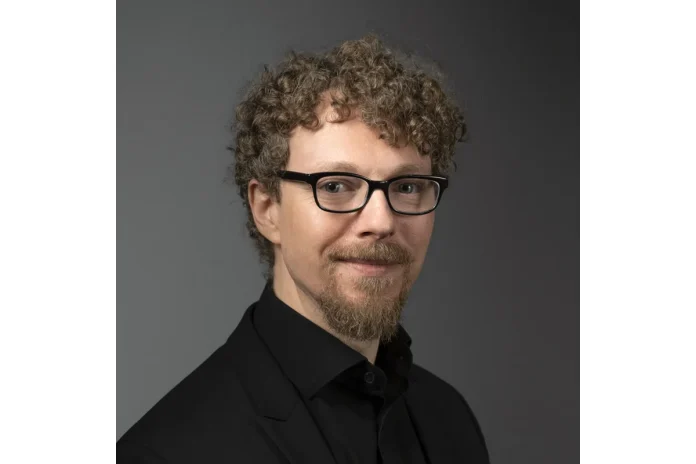
Thomas Hampson Bio
Walter Thomas Hampson (born June 28, 1955) is an American lyric baritone whose international career has placed him on the stages of the world’s leading opera houses, recital halls and concert venues. He has sung more than 80 operatic roles and appears on more than 170 recordings, building a reputation as one of the most versatile classical singers of his generation. Hampson is equally recognized as a scholar, educator and advocate for American song, working closely with institutions such as the Library of Congress and the Manhattan School of Music to expand the reach of vocal repertoire.
His performances range from Mozart and Verdi to Wagner and contemporary opera, while his recital programming has made him a leading interpreter of Gustav Mahler and an ambassador for the American art song tradition. Beyond performing, Hampson directs educational initiatives including the Hampsong Foundation and the Lied Academy at the Heidelberger Frühling Festival, combining artistic excellence with research-driven scholarship.
Early Life and Background
Walter Thomas Hampson was born in Elkhart, Indiana, and grew up in Spokane, Washington, where he and his two older sisters sang together in church as children. These early experiences in choral and sacred music shaped his lifelong relationship with the voice and laid the groundwork for his future career in classical performance.
He enrolled at Eastern Washington State College (now Eastern Washington University) in Cheney, majoring in political science and government, while simultaneously earning a Bachelor of Fine Arts in Voice Performance at Fort Wright College under the guidance of Sister Marietta Coyle. During the summers of 1978 and 1979, Hampson studied with Gwendolyn Koldowsky and Martial Singher at the Music Academy of the West, where he won the Lotte Lehmann Award.
He continued his training at the University of Southern California Thornton School of Music, studying with vocal coach Jack Metz and the baritone Horst Günter, who became a lifelong mentor. In 1980, after winning the San Francisco Opera audition, Hampson entered the Merola Opera Program, where he met the celebrated soprano Dame Elisabeth Schwarzkopf, who would become a formative influence on his artistic development.
Path to Singer
Hampson’s professional path began in 1981 when he was one of the winners at the Metropolitan Opera National Council Auditions national finals. An audition tour of Europe in the early 1980s led to a contract with the Deutsche Oper am Rhein in Düsseldorf, where he spent three years as a member of the ensemble from 1981 to 1984. During this period he studied with Schwarzkopf and gained valuable stage experience through smaller roles while also taking on larger assignments in Darmstadt and at the Opera Theatre of Saint Louis.
His 1986 United States recital debut at The Town Hall in New York drew praise from The New York Times for his commanding stage presence and theatricality. That same year he made his Metropolitan Opera debut as the Count in Le nozze di Figaro. A pivotal moment came in 1986 when he auditioned for Leonard Bernstein, leading to performances of Puccini’s La bohème in Rome and celebrated collaborations with the Vienna Philharmonic in Mahler’s Kindertotenlieder, Rückert-Lieder and Lieder eines fahrenden Gesellen.
By the late 1980s, Hampson was widely recognized as one of the leading lyric baritones of his era, having debuted at major European houses including the Opernhaus Zürich and the Royal Opera House, while also building a notable presence in the international recital circuit with his 1984 Wigmore Hall debut.
Thomas Hampson Career
Early Career (1981–1990)
Hampson’s early career was defined by rapid advancement through European opera houses and important mentorship. His time as a principal lyric baritone at the Opernhaus Zürich beginning in 1984 included participation in Nikolaus Harnoncourt and Jean-Pierre Ponnelle’s legendary Mozart cycle, culminating in the acclaimed 1987 production of Don Giovanni. He also appeared with companies in Hamburg, Cologne and Vienna during this period.
His 1990 solo recital album Des Knaben Wunderhorn on Teldec, recorded with Geoffrey Parsons on Mahler’s own piano, earned praise from The New York Times for performances of luminous beauty. That same year he made his San Francisco Opera debut in Monteverdi’s Il ritorno d’Ulisse in patria and his Metropolitan Opera role debut as Don Giovanni.
Breakthrough (1990–2009)
The 1990s cemented Hampson’s international stature. In 1992 he was named Musical America’s Singer of the Year, sharing the honor with figures such as Yo-Yo Ma and Christoph von Dohnányi. The following year he gave his first master classes at the Tanglewood Festival and received an honorary doctorate from Whitworth College. His commitment to Mahler scholarship deepened through his collaboration with Dr. Renate Hilmar-Voit on a new critical edition of the composer’s songs.
In 1994 Hampson was named Male Singer of the Year by the International Classical Music Awards, and in 1995 he received both the Cannes Classical Music Award and the Echo Music Prize for Best Male Singer. His commitment to American song emerged with the 1996 I Hear America Singing project, followed in 1997 by the PBS special Thomas Hampson: I Hear America Singing, for which he served as artistic director and performer. His 1997 debut as Eugene Onegin at the Vienna State Opera further demonstrated his command of the Russian repertoire.
The 2000s brought role debuts as Amfortas in Parsifal at the Paris Opera and the Royal Opera House, the title role in Friedrich Cerha’s Der Riese vom Steinfeld, and Simon Boccanegra at the Vienna State Opera. His 2002 Grammy Award for Best Opera Recording came for Wagner’s Tannhäuser. In 2004 he began his collaboration with the Library of Congress, leading to the creation of the Hampsong Foundation in 2005. He launched Song of America in 2009 alongside the launch of the songofamerica.net interactive database, and was named the New York Philharmonic’s first Artist-in-Residence.
Notable Works and Milestones
Hampson’s signature recordings include Des Knaben Wunderhorn (1990), Thomas Hampson: I Hear America Singing (1997) and Song of America (2009). His Grammy Award win for Wagner’s Tannhäuser, his Edison Award for Lifetime Achievement and his Hugo-Wolf-Medaille in 2017 underscore a career defined by artistic depth, scholarly rigor and a commitment to expanding the vocal repertoire.
Thomas Hampson Award Nominations
Thomas Hampson has received six Grammy Award nominations throughout his career, spanning categories that reflect his range across opera, recital and concert repertoire. He has also been recognized with multiple nominations across the Edison Awards, the Echo Prizes and the Gramophone Awards, consistent with a discography that exceeds 170 recordings.
Thomas Hampson Awards Won
Thomas Hampson’s recorded legacy has earned him an Edison Award for Lifetime Achievement, additional Edison Awards, and Echo Prizes. He is the recipient of a Grammy Award (for Wagner’s Tannhäuser in 2002), the Cannes Classical Music Award for Singer of the Year (1994), the Echo Music Prize for Best Male Singer (1995), Musical America’s Singer of the Year (1992), the Hugo-Wolf-Medaille (2017) and the Heidelberger Frühling Music Award (2020). He was inducted into the Gramophone Hall of Fame in 2013 and elected to the American Academy of Arts and Sciences in 2010.
Thomas Hampson Family
Hampson is married to Andrea Herberstein, with whom he has three stepchildren. He has one daughter, Meghan, from his first marriage, which ended in divorce in 1986. His eldest stepdaughter, Catherine, was married to the bass-baritone Luca Pisaroni; that marriage ended in divorce in 2023.
Personal Life
Having settled in Vienna long-term, Hampson divides his time between New York City and Zürich. His commitment to vocal education continues through his work with the Manhattan School of Music, the Hampsong Foundation and the Lied Academy at the Heidelberger Frühling Festival, where he mentors singers through master classes and curated programming.