
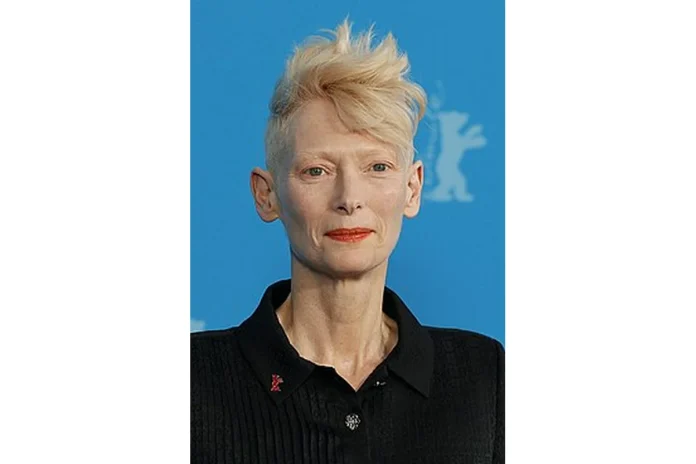
Tilda Swinton Bio
Katherine Matilda Swinton (born 5 November 1960) is a British actress celebrated for her chameleon-like, physically transformative performances across stage and screen. Known for playing eccentric and enigmatic characters, she has earned acclaim and numerous awards, including an Academy Award and two BAFTA Awards, as well as a Volpi Cup. Swinton began her career with the Royal Shakespeare Company in the 1980s and gained international recognition in films such as Orlando (1992) and The Deep End (2001) before winning the Oscar for Best Supporting Actress for Michael Clayton (2007). A frequent collaborator with directors including Derek Jarman and Wes Anderson, she has also engaged in film production and theatre work, and is noted for her provocative, boundary-pushing choices and long-standing influence in contemporary cinema.
Early Life and Background
Katherine Matilda Swinton was born on 5 November 1960 in London, England, to Sir John Swinton of Kimmerghame and Judith Balfour (née Killen). She grew up at the family’s estate, Kimmerghame House, with three brothers. Her father was a retired major-general in the British Army and served as Lord Lieutenant of Berwickshire from 1989 to 2000. Although born in England, Swinton considers herself Scottish, citing her childhood and aristocratic family background. The Swintons are an ancient Scots family whose lineage can be traced to the 9th century.
Swinton attended three independent schools: Queen’s Gate School in London, West Heath Girls’ School, and Fettes College for a brief period. At West Heath, she was classmates with Lady Diana Spencer, who later became the Princess of Wales. Swinton has spoken out against boarding schools, describing her time at West Heath as “a very lonely and isolating environment.” Before university, she spent two years as a volunteer in South Africa and Kenya.
In 1983, Swinton graduated from New Hall at the University of Cambridge with a degree in social and political sciences. While at Cambridge, she joined the Communist Party and began performing on stage, marking the beginning of her acting career.
Path to Actress
Swinton joined the Royal Shakespeare Company in 1984, appearing in Measure for Measure. She also worked with the Traverse Theatre in Edinburgh, starring in productions including No Son of Mine (1985) and Mann ist Mann (1987). Her first film appearance came in Derek Jarman’s Caravaggio (1986), beginning a significant artistic partnership that would span several films.
In 1987, Swinton starred in Peter Wollen’s Friendship’s Death, playing a female extraterrestrial robot on a peace mission to Earth. She continued collaborating with Jarman in films including The Last of England (1987), War Requiem (1989) opposite Laurence Olivier, and Edward II (1991), for which she won the Volpi Cup for Best Actress at the Venice Film Festival.
Tilda Swinton Career
Early Career (1984–1991)
Swinton’s early career was defined by her work with avant-garde filmmaker Derek Jarman. After her debut in Caravaggio (1986), she appeared in several experimental films that established her reputation for unconventional performances. Her portrayal of Isabella of France in Edward II (1991) earned her international recognition and the Volpi Cup for Best Actress at the Venice Film Festival, marking her first major award win.
Breakthrough (1992–2006)
Swinton achieved wider recognition with the title role in Sally Potter’s Orlando (1992), a film adaptation of Virginia Woolf’s novel that allowed her to explore gender presentation on screen. The role reflected her lifelong interest in androgynous style. In 1995, with producer Joanna Scanlan, she developed The Maybe, a performance art piece at the Serpentine Gallery in London where she was displayed to the public for a week, asleep in a glass case. The piece was repeated in Rome in 1996 and at the Museum of Modern Art in New York in 2013.
Swinton began moving toward mainstream projects in the early 2000s. She starred in The Deep End (2001), receiving a Golden Globe nomination for her portrayal of a desperate mother. She appeared in The Beach (2000) alongside Leonardo DiCaprio, Vanilla Sky (2001), and played the archangel Gabriel in Constantine (2005). In 2005, she portrayed the White Witch Jadis in The Chronicles of Narnia: The Lion, the Witch and the Wardrobe, earning further mainstream recognition.
Notable Works and Milestones
In 2007, Swinton played ruthless corporate attorney Karen Crowder in Michael Clayton. Her performance earned her nominations from the Golden Globe, Screen Actors Guild, Critics’ Choice, BAFTA, and Oscar committees. She went on to win both the BAFTA and Oscar for Best Supporting Actress. She collaborated with Wes Anderson in Moonrise Kingdom (2012) and appeared in The Grand Budapest Hotel (2014). She starred as the Ancient One in the Marvel Cinematic Universe, appearing in Doctor Strange (2016) and Avengers: Endgame (2019).
Tilda Swinton Award Nominations
Swinton has received five Critics’ Choice Award nominations and four Golden Globe nominations throughout her career. Her Golden Globe nominations include Best Actress for The Deep End (2001) and Best Supporting Actress for Michael Clayton (2007), as well as nominations for her roles in Julia (2008) and The Eternal Daughter (2022). She earned Critics’ Choice nominations for Michael Clayton (2007), Snowpiercer (2014), and The Eternal Daughter (2022).
Tilda Swinton Awards Won
Swinton has won multiple prestigious awards, including an Academy Award, two BAFTA Awards, and a Volpi Cup. Her career accolades span independent film festivals and major industry recognition.
| Award | Wins | Year |
|---|---|---|
| Academy Awards (Best Supporting Actress) | 1 | 2007 |
| BAFTA Awards (Best Actress in a Supporting Role) | 1 | 2007 |
| BAFTA Awards Scotland (Best Actress) | 1 | 2003 |
| Volpi Cup for Best Actress | 1 | 1991 |
Tilda Swinton Family
Swinton has two children with John Byrne, a Scottish artist and playwright she was in a relationship with from 1989 to 2003. Their daughter Honor Swinton Byrne was born in 1997, and their son Xavier Swinton Byrne was also born in 1997. Swinton co-founded Drumduan Upper School in Findhorn, Scotland in 2013 with Ian Sutherland McCook, partly to allow their children to continue their Steiner educations. She resigned as a director of Drumduan in April 2019.
Personal Life
Swinton moved to Scotland in 1997 and has lived in Nairn, overlooking the Moray Firth in the Highland region, since then. She resides there with her children and her partner Sandro Kopp, a German painter 18 years her junior, with whom she has been in a relationship since 2004. In a 2021 interview with Vogue, Swinton mentioned that she identifies as queer, stating that she always felt she was queer and had been looking for her “queer circus.” She has been open about her recovery from long COVID in 2022, mentioning symptoms including vertigo and memory loss.