
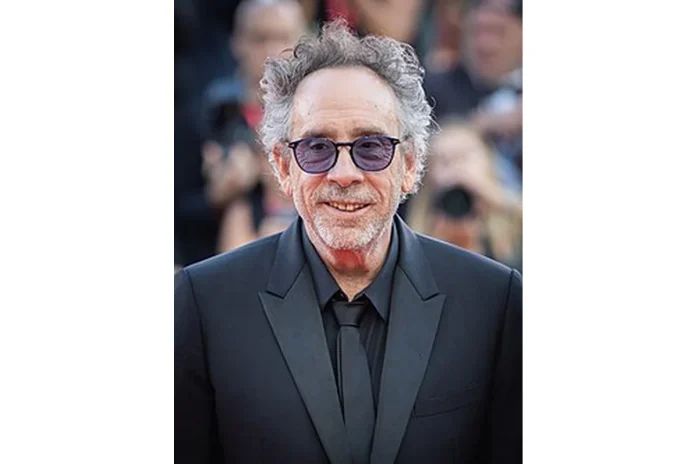
Tim Burton Bio
Timothy Walter Burton (born August 25, 1958) is an American filmmaker, animator, and writer whose career has reshaped the visual language of modern Hollywood. He is widely recognized for pioneering goth subculture in mainstream cinema, blending gothic horror and dark fantasy aesthetics with whimsical and surreal storytelling. Across feature films, stop-motion animation, and television, Burton has built a singular body of work that includes Pee-wee’s Big Adventure, Beetlejuice, Batman, Edward Scissorhands, Sleepy Hollow, Charlie and the Chocolate Factory, Sweeney Todd: The Demon Barber of Fleet Street, and Alice in Wonderland, as well as the produced stop-motion classic The Nightmare Before Christmas. His enduring collaboration with composer Danny Elfman has become one of the most recognizable partnerships in contemporary film music.
Early Life and Background
Timothy Walter Burton was born in Burbank, California, on August 25, 1958. He is the son of Jean Burton (née Erickson), who later owned a cat-themed gift shop, and William “Bill” Burton, a former minor league baseball player who worked for the Burbank Parks and Recreation Department. The baseball field at Burbank’s Olive Recreation Center is named for Bill Burton, a tribute to his long service to the local community.
As a preteen, Burton began making short films in his backyard using crude stop-motion techniques and shooting on 8 mm film without sound. One of his earliest known films, The Island of Doctor Agor, adapted an H. G. Wells novel when he was just thirteen years old. He attended Providencia Elementary School, Luther Burbank Middle School, and Burbank High School in California, where he was not a particularly strong student but played on the water polo team.
Burton grew up as an introspective child who found comfort in drawing, painting, and watching movies. His creative imagination was shaped early by the books of Dr. Seuss and Roald Dahl, the gothic horror films of the silent and Universal Monsters eras, and the horror work of Vincent Price, a figure who would later appear in several of his own productions. He has also cited Japanese monster movies and Ray Harryhausen’s stop-motion work as major influences on his artistic direction.
Path to Directing
After graduating from Burbank High School in 1976, Burton enrolled at the California Institute of the Arts in Valencia, where he studied character animation until 1979. As a student, he produced the short films Stalk of the Celery Monster and King and Octopus, both of which displayed the dark, quirky sensibility that would later define his feature work. Stalk of the Celery Monster caught the attention of Walt Disney Productions, which offered him an animator’s apprenticeship in its animation division.
At Disney, Burton worked as an animator, storyboard artist, graphic designer, art director, and concept artist on films such as The Fox and the Hound (1981), Tron (1982), and The Black Cauldron (1985), though much of his concept art was not used in the final productions. While at the studio in 1982, he made his first short, Vincent, a six-minute black-and-white stop-motion film narrated by Vincent Price himself. The film was screened at the Chicago Film Festival and briefly released theatrically in Los Angeles. His next short, the live-action Frankenweenie (1984), drew the attention of actor Paul Reubens, who chose Burton to direct the feature film Pee-wee’s Big Adventure.
Burton also directed episodes of the 1985 revival of Alfred Hitchcock Presents and Shelley Duvall’s Faerie Tale Theatre during these formative years, building the range and confidence that would carry him into the next decade of feature filmmaking.
Tim Burton Career
Early Career (1981–1987)
Burton’s earliest professional years were spent inside Disney, where he developed his craft as a conceptual artist and animator on several studio productions. Although his concepts rarely made it to the screen, the experience sharpened his visual storytelling and prepared him for independent work. His personal short films, especially Vincent (1982) and Frankenweenie (1984), revealed an auteur voice rooted in gothic imagery, outsider characters, and a deep affection for vintage horror.
The success of Pee-wee’s Big Adventure in 1985 established Burton as a feature director with a marketable vision. Made on a budget of about $8 million, the comedy grossed more than $40 million at the North American box office and marked the beginning of his long collaboration with composer Danny Elfman. Elfman has since scored nearly every Burton-directed film.
Breakthrough (1988–1994)
Burton’s profile rose sharply with Beetlejuice (1988), a supernatural comedy horror starring Alec Baldwin, Geena Davis, Winona Ryder, and Michael Keaton. The film grossed around $80 million on a modest budget and won the Academy Award for Best Makeup. That same year, Burton won a chance to direct his first big-budget production, Batman (1989), starring Michael Keaton and Jack Nicholson. The film became one of the biggest box-office hits of its era, grossing more than $400 million worldwide and earning the Academy Award for Best Art Direction.
In 1990, Burton directed Edward Scissorhands, re-teaming with Winona Ryder and casting Johnny Depp in the title role. The film, often viewed as Burton’s most personal work, drew on memories of his own adolescence in Burbank. He followed this success with Batman Returns (1992), a darker sequel that introduced Danny DeVito as the Penguin, Michelle Pfeiffer as Catwoman, and Christopher Walken as Max Shreck. Burton also produced the stop-motion classic The Nightmare Before Christmas (1993), based on a poem and characters he created.
Burton capped this prolific period with Ed Wood (1994), a black-and-white biopic starring Johnny Depp as the cult filmmaker Ed Wood. While a commercial disappointment on its initial release, Ed Wood earned Martin Landau an Academy Award for Best Supporting Actor for his portrayal of Bela Lugosi.
Notable Works and Milestones
Signature films from this breakthrough era include Edward Scissorhands, often called Burton’s most personal project, and Batman, which helped redefine the modern superhero genre. Martin Landau’s Academy Award for Best Supporting Actor in Ed Wood is among the most celebrated performances under Burton’s direction.
Tim Burton Award Nominations
Throughout his career, Timothy Walter Burton has earned nominations from many of the entertainment industry’s most respected institutions. He has received multiple Emmy nominations for his directing work on the Netflix series Wednesday, including a Primetime Emmy nomination for Outstanding Directing for a Comedy Series. Burton has also earned Golden Globe nominations for directing films such as Big Fish and Sweeney Todd: The Demon Barber of Fleet Street, and has received BAFTA nominations across his career for films including Sleepy Hollow and Charlie and the Chocolate Factory.
Tim Burton Awards Won
Burton has collected a number of prestigious honors over the decades. He received one Emmy Award and was honored with the Venice International Film Festival’s Golden Lion for Lifetime Achievement in 2007. France’s Order of Arts and Letters was awarded to him in 2010, recognizing his contribution to international cinema. He also won the National Board of Review Award for Best Director for Sweeney Todd: The Demon Barber of Fleet Street. Several Burton-directed films have won Academy Awards in technical categories, including Best Makeup for Beetlejuice, and Best Art Direction for Batman, Sleepy Hollow, and Sweeney Todd.
Tim Burton Family
Timothy Walter Burton is the son of William “Bill” Burton, a former minor league baseball player who worked for the Burbank Parks and Recreation Department, and Jean Burton (née Erickson), who later owned a cat-themed gift shop. The baseball field at Burbank’s Olive Recreation Center is named for Bill Burton in recognition of his service to the city. Burton has spoken fondly of his Burbank upbringing, which has long informed the suburban, nostalgic settings in his films.
Personal Life
Burton was married to German artist Lena Gieseke from 1987 until their divorce in 1991. He then had a long relationship with American actress Lisa Marie from 1993 to 2001, during which time she appeared in several of his films. In 2001, he began a relationship with English actress Helena Bonham Carter, having met her while filming Planet of the Apes. Together, they had a son born in 2003 and a daughter born in 2007 before the couple separated in 2014. Burton began a relationship with Italian actress Monica Bellucci after they met at the Lumière Film Festival in October 2022, and the couple publicly confirmed their romance in 2023 before separating in September 2025.